<?xml version="1.0" encoding="UTF-8"?>
<rss version="2.0"
	xmlns:content="http://purl.org/rss/1.0/modules/content/"
	xmlns:wfw="http://wellformedweb.org/CommentAPI/"
	xmlns:dc="http://purl.org/dc/elements/1.1/"
	xmlns:atom="http://www.w3.org/2005/Atom"
	xmlns:sy="http://purl.org/rss/1.0/modules/syndication/"
	xmlns:slash="http://purl.org/rss/1.0/modules/slash/"
	>

<channel>
	<title>LandReport.com &#187; wind energy</title>
	<atom:link href="http://www.landreport.com/tag/wind-energy/feed/" rel="self" type="application/rss+xml" />
	<link>http://www.landreport.com</link>
	<description>The Magazine of the American Landowner</description>
	<lastBuildDate>Tue, 07 Feb 2012 12:00:58 +0000</lastBuildDate>
	<language>en</language>
	<sy:updatePeriod>hourly</sy:updatePeriod>
	<sy:updateFrequency>1</sy:updateFrequency>
	<generator>http://wordpress.org/?v=3.3</generator>
		<item>
		<title>Minnesota Power to Expand Bison Wind Farm</title>
		<link>http://www.landreport.com/2011/03/minnesota-power-to-expand-bison-wind-farm/</link>
		<comments>http://www.landreport.com/2011/03/minnesota-power-to-expand-bison-wind-farm/#comments</comments>
		<pubDate>Mon, 28 Mar 2011 17:22:12 +0000</pubDate>
		<dc:creator>Stephen O'Keefe</dc:creator>
				<category><![CDATA[Energy]]></category>
		<category><![CDATA[Feature]]></category>
		<category><![CDATA[Field Reporters]]></category>
		<category><![CDATA[Great Lakes]]></category>
		<category><![CDATA[Great Plains]]></category>
		<category><![CDATA[Stephen OKeefe]]></category>
		<category><![CDATA[energy policy]]></category>
		<category><![CDATA[Minnesota]]></category>
		<category><![CDATA[Minnesota Power]]></category>
		<category><![CDATA[North Dakota]]></category>
		<category><![CDATA[Renewable Energy]]></category>
		<category><![CDATA[wind energy]]></category>

		<guid isPermaLink="false">http://www.landreport.com/?p=3605</guid>
		<description><![CDATA[Minnesota Power has notified the North Dakota Public Service Commission of its intent to begin the second phase of the Bison Wind Farm project in central North Dakota. The additional capacity will increase total power generation to 185 MW. The Bison 2 wind project  will use 35 3-megawatt turbines manufactured by Siemens AG. Further expansion of [...]
Related posts:<ol>
<li><a href='http://www.landreport.com/2011/02/power-struggle/' rel='bookmark' title='Power Struggle'>Power Struggle</a><small>Louis Bacon fends off utility companies as they try to...</small></li>
</ol>]]></description>
			<content:encoded><![CDATA[<p><a href="http://www.landreport.com/2011/03/minnesota-power-to-expand-bison-wind-farm/"><img class="aligncenter size-full wp-image-2751" title="Wind Farm" src="http://www.landreport.com/wp-content/uploads/2009/10/Wind-Turbines-lg.jpg" alt="Wind Farm" width="588" height="325" /></a></p>
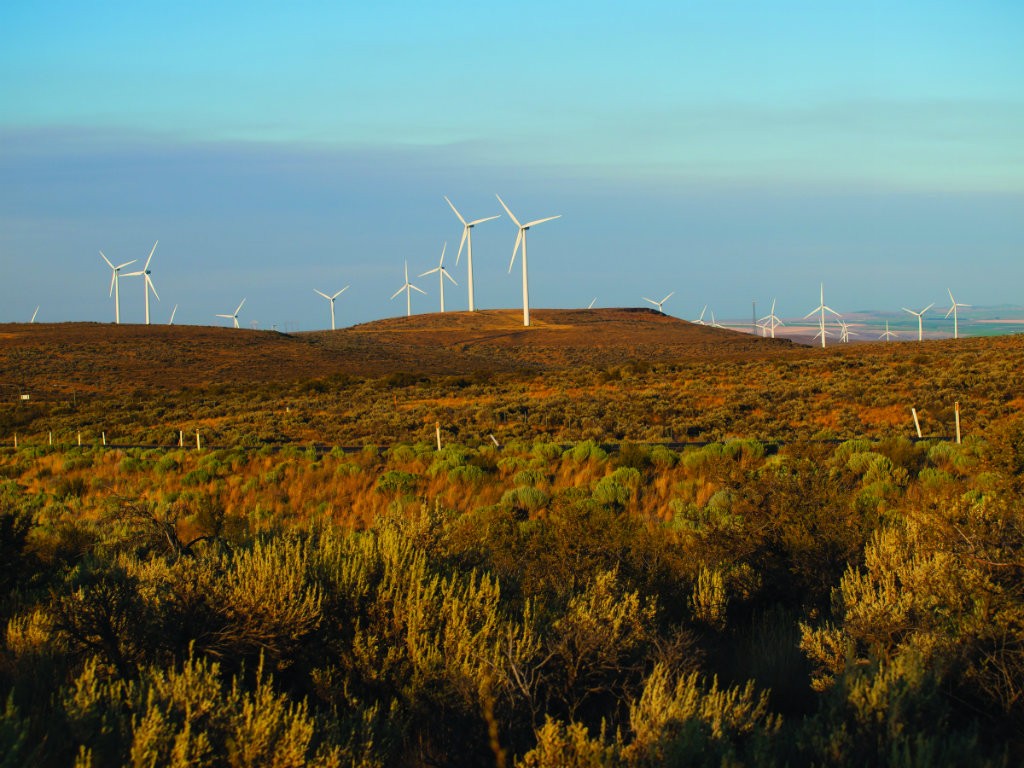
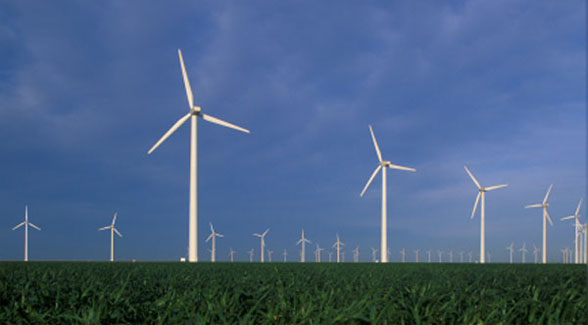
<p>Minnesota Power has notified the North Dakota Public Service Commission of its intent to begin the second phase of the Bison Wind Farm project in central North Dakota. The additional capacity will increase total power generation to 185 MW. The Bison 2 wind project  will use 35 3-megawatt turbines manufactured by Siemens AG. Further expansion of the Great Plains wind farm is planned to meet Minnesota’s mandate for 25 percent of its electricity from renewable resources by 2025.</p>
<p>&#8220;The timing is fortunate for expanding our renewable energy production,&#8221; said Alan Hodnik, president and CEO of Minnesota Power&#8217;s parent company, ALLETE. &#8220;Development of Bison 2 will leverage substantial investments we’ve already made in North Dakota and take advantage of the federal production tax credit and a very competitive wind turbine market.&#8221;</p>
<p>&#8220;Bison 2 will be very economical for our customers,” Hodnik added. “This project is an example of our larger strategy of meeting the demands of a changing energy landscape, reducing our overall reliance on fossil fuels, and making effective use of existing transmission capacity.&#8221;</p>
<p>Electricity generated by the Bison Wind Farm travels to Minnesota via transmission lines used for coal-generated power from the Milton Young station near Center, North Dakota.</p>
<p>Read more <a href="http://www.mnpower.com/news/articles/2011/MP_new_wind_development.3.25.11.pdf" target="_blank">HERE</a>.</p>
<p>&nbsp;</p>
<p>Related posts:<ol>
<li><a href='http://www.landreport.com/2011/02/power-struggle/' rel='bookmark' title='Power Struggle'>Power Struggle</a><small>Louis Bacon fends off utility companies as they try to...</small></li>
</ol></p>]]></content:encoded>
			<wfw:commentRss>http://www.landreport.com/2011/03/minnesota-power-to-expand-bison-wind-farm/feed/</wfw:commentRss>
		<slash:comments>0</slash:comments>
		</item>
		<item>
		<title>Nebraska Governor to Address Wind Conference</title>
		<link>http://www.landreport.com/2009/10/nebraska-governor-to-address-wind-conference/</link>
		<comments>http://www.landreport.com/2009/10/nebraska-governor-to-address-wind-conference/#comments</comments>
		<pubDate>Sun, 25 Oct 2009 16:20:30 +0000</pubDate>
		<dc:creator>Eric OKeefe</dc:creator>
				<category><![CDATA[Energy]]></category>
		<category><![CDATA[Eric OKeefe]]></category>
		<category><![CDATA[Feature]]></category>
		<category><![CDATA[Federal Policy]]></category>
		<category><![CDATA[Field Reporters]]></category>
		<category><![CDATA[Great Plains]]></category>
		<category><![CDATA[Regional News]]></category>
		<category><![CDATA[Topics]]></category>
		<category><![CDATA[Dave Heineman]]></category>
		<category><![CDATA[Nebraska]]></category>
		<category><![CDATA[wind energy]]></category>

		<guid isPermaLink="false">http://www.landreport.com/?p=2268</guid>
		<description><![CDATA[Gov. Dave Heineman is slated as one of the keynote speakers next month at the Nebraska Wind Power 2009 Conference. Scheduled for Nov. 9-10 in Kearney, the conference will feature nationally known experts on wind and wind power and focus on numerous issues of vital interest to landowners seeking to capitalize on this opportunity to [...]
No related posts.]]></description>
			<content:encoded><![CDATA[<p><a href="http://www.landreport.com/2009/10/nebraska-governor-to-address-wind-conference/"><img class="aligncenter size-full wp-image-2235" title="Nebraska Governor to Address Wind Conference" src="http://www.landreport.com/wp-content/uploads/2009/10/Wind-Turbines-lg.jpg" alt="Nebraska Governor to Address Wind Conference" width="588" height="325" /></a><br />
Gov. Dave Heineman is slated as one of the keynote speakers next month at the Nebraska Wind Power 2009 Conference. Scheduled for Nov. 9-10 in Kearney, the conference will feature nationally known experts on wind and wind power and focus on numerous issues of vital interest to landowners seeking to capitalize on this opportunity to generate revenues from renewable energy.</p>
<p>According to the National Renewable Energy Laboratory, wind energy is one of the fastest-growing forms of electricity generation in the world. The United States can currently generate more than 25,000 megawatts (MW) of electricity from the wind, which is enough to power about 7 million average American homes. Industry experts predict that, with proper development, wind energy could provide 20 percent of U.S. energy needs.</p>
<p>For more information on the Nebraska Wind Power 2009 Conference, read <a href="http://www.neo.ne.gov/renew/wind-working-group/2009conference/conferencesignup.htm" target="_blank">HERE</a>.</p>
<p>No related posts.</p>]]></content:encoded>
			<wfw:commentRss>http://www.landreport.com/2009/10/nebraska-governor-to-address-wind-conference/feed/</wfw:commentRss>
		<slash:comments>0</slash:comments>
		</item>
		<item>
		<title>68,000-acre Onyx Ranch in California Sells for $48 million</title>
		<link>http://www.landreport.com/2008/10/68000-acre-onyx-ranch-in-california-sells-for-48-million/</link>
		<comments>http://www.landreport.com/2008/10/68000-acre-onyx-ranch-in-california-sells-for-48-million/#comments</comments>
		<pubDate>Thu, 16 Oct 2008 13:57:08 +0000</pubDate>
		<dc:creator>Grant Gannon</dc:creator>
				<category><![CDATA[Cattle]]></category>
		<category><![CDATA[Energy]]></category>
		<category><![CDATA[Feature]]></category>
		<category><![CDATA[Grant Gannon]]></category>
		<category><![CDATA[Pacific]]></category>
		<category><![CDATA[Regional News]]></category>
		<category><![CDATA[Topics]]></category>
		<category><![CDATA[California]]></category>
		<category><![CDATA[Onyx Ranch]]></category>
		<category><![CDATA[Pickens Plan]]></category>
		<category><![CDATA[Renewable Resources Group]]></category>
		<category><![CDATA[Steptoe & Johnson LLP]]></category>
		<category><![CDATA[wind energy]]></category>
		<category><![CDATA[Wind power]]></category>

		<guid isPermaLink="false">http://www.landreport.com/?p=309</guid>
		<description><![CDATA[The Wall Street Journal reports this morning on a huge transaction in California: the 68,000-acre Onyx Ranch in the Sierra Nevada Mountains just outside of Bakersfield sold for $48 million ($705 per acre) to a joint partnership of the CIM Group, a leading urban development group, and Los Angeles-based Renewable Resources Group. Given present credit markets, the acquisition [...]
No related posts.]]></description>
			<content:encoded><![CDATA[<p><a href="http://www.landreport.com/wp-content/uploads/2008/10/wind-onyx.jpg"><a href="http://www.landreport.com/2008/10/68000-acre-onyx-ranch-in-california-sells-for-48-million/"><img class="alignnone size-medium wp-image-310" title="wind-onyx" src="http://www.landreport.com/wp-content/uploads/2008/10/wind-onyx.jpg" alt="" width="290" height="200" /></a></a>The Wall Street Journal <a href="http://online.wsj.com/article/SB122412852383339755.html?mod=googlenews_wsj" target="_blank">reports this morning </a>on a huge transaction in California: the 68,000-acre Onyx Ranch in the Sierra Nevada Mountains just outside of Bakersfield sold for $48 million ($705 per acre) to a joint partnership of the CIM Group, a leading urban development group, and Los Angeles-based Renewable Resources Group. Given present credit markets, the acquisition was funded by equity.<span id="more-309"></span></p>
<p>News of the closing was first reported last week by the Bakersfield Californian. Cole Frates, a partner in Renewable Resources Group, told the Californian that the ranch, located in Kern County, could eventually become a wind farm capable of producing between 300 and 500 MW. The ranch had been owned by Rudnick family members. Their Rudnick Estates Trust was represented by Steptoe &amp; Johnson LLP.</p>
<p><strong>More:<br />
</strong><a href="http://www.bakersfield.com/102/story/557233.html">LA Company close to buying part of Onyx Ranch</a><br />
<a href="http://www.renewablegroup.com/">LA energy firm closes purchase of Onyx Ranch</a></p>
<p><strong><a href="http://www.renewablegroup.com/">Renewable Resource Group</a><br />
<a href="http://www.cimgroup.com/">CIM Group</a></strong></p>
<p><strong>Onyx Ranch Map</strong><br />
<small><a style="color:#0000FF;text-align:left" href="http://maps.google.com/maps?f=q&amp;hl=en&amp;geocode=&amp;q=35.69528+-118.24111&amp;ie=UTF8&amp;t=h&amp;ll=35.703241,-118.236923&amp;spn=0.032689,0.076904&amp;z=14&amp;iwloc=addr&amp;source=embed">View Larger Map</a></small></p>
<p>No related posts.</p>]]></content:encoded>
			<wfw:commentRss>http://www.landreport.com/2008/10/68000-acre-onyx-ranch-in-california-sells-for-48-million/feed/</wfw:commentRss>
		<slash:comments>0</slash:comments>
		</item>
		<item>
		<title>T. Boone Pickens: The Land Report&#8217;s Exclusive Interview</title>
		<link>http://www.landreport.com/2008/10/t-boone-pickens-the-land-report-interview/</link>
		<comments>http://www.landreport.com/2008/10/t-boone-pickens-the-land-report-interview/#comments</comments>
		<pubDate>Wed, 01 Oct 2008 07:00:06 +0000</pubDate>
		<dc:creator>Eric OKeefe</dc:creator>
				<category><![CDATA[2008 Fall]]></category>
		<category><![CDATA[Energy]]></category>
		<category><![CDATA[Eric OKeefe]]></category>
		<category><![CDATA[Feature]]></category>
		<category><![CDATA[Field Reporters]]></category>
		<category><![CDATA[Hunting]]></category>
		<category><![CDATA[Minerals]]></category>
		<category><![CDATA[Southwest]]></category>
		<category><![CDATA[Water]]></category>
		<category><![CDATA[Bobby Stillwell]]></category>
		<category><![CDATA[Boone Pickens]]></category>
		<category><![CDATA[Chris Busbee]]></category>
		<category><![CDATA[energy policy]]></category>
		<category><![CDATA[Eric O'Keefe]]></category>
		<category><![CDATA[Kansas]]></category>
		<category><![CDATA[Kathleen Sebelius]]></category>
		<category><![CDATA[Madeleine Pickens]]></category>
		<category><![CDATA[Mesa Vista Ranch]]></category>
		<category><![CDATA[Pickens Plan]]></category>
		<category><![CDATA[Roberts County]]></category>
		<category><![CDATA[solar energy]]></category>
		<category><![CDATA[Ted Turner]]></category>
		<category><![CDATA[Texas Panhandle]]></category>
		<category><![CDATA[The First Billion]]></category>
		<category><![CDATA[Wind Belt]]></category>
		<category><![CDATA[wind energy]]></category>

		<guid isPermaLink="false">http://www.landreport.com/?p=291</guid>
		<description><![CDATA[Join Land Report Editor Eric O&#8217;Keefe as he goes behind the scenes with the legendary Texas oil man on his Roberts County ranch and in his quest to wean America off foreign oil. Outside, the Midwest summer sun has pushed the temperature well above 100. Inside Topeka’s Heritage Hall, it’s standing room only, and there’s still [...]
No related posts.]]></description>
			<content:encoded><![CDATA[<p><a href="http://www.landreport.com/wp-content/uploads/2008/10/boone-cover2.jpg"><a href="http://www.landreport.com/2008/10/t-boone-pickens-the-land-report-interview/"><img class="alignnone size-full wp-image-295" title="boone-cover2" src="http://www.landreport.com/wp-content/uploads/2008/10/boone-cover2.jpg" alt="" width="290" height="362" /></a></a><em><br />
Join</em> Land Report <em>Editor Eric O&#8217;Keefe as he goes behind the scenes with the legendary Texas oil man on his Roberts County ranch and in his quest to wean America off foreign oil.</em><span id="more-291"></span></p>
<p>Outside, the Midwest summer sun has pushed the temperature well above 100. Inside Topeka’s Heritage Hall, it’s standing room only, and there’s still half an hour to go before Kansas Gov. Kathleen Sebelius takes the stage to introduce T. Boone Pickens at the very first Pickens Plan town hall meeting. The fire marshal has already collared building personnel and informed them that the capacity crowd of 500 exceeds the city’s fire code. Over the next half hour, hundreds more show up. All are barred from entering, yet not one of them turns away. Instead, they choose to sit outside in the scorching heat and listen in over the public address system.</p>
<p>Farmers in overalls and work boots, school kids in jeans, a Senate candidate in the requisite blue blazer and repp tie—the Pickens army is mustering for its first official review. The focus of its mission—to develop renewable energy sources such as wind and solar power and use them along with other domestic fuels to curb America’s addiction to foreign oil—is a natural fit for Kansas.</p>
<p>Crops, cattle, oil and gas—the Sunshine State is a commodities-producing powerhouse, and today’s gathering lures Republicans and Democrats, rural folk and city slickers, entrepreneurs and environmentalists. Furthermore, the state sits smack-dab in the middle of the nation’s Wind Belt, a 1,000-mile corridor extending the length of the Great Plains from West Texas to the Canadian border that according to Department of Energy estimates can produce 20 percent of the country’s electrical needs.</p>
<p>This enormous untapped power plant is one of the central pillars of the Pickens Plan, and its importance is emphasized by Gov. Sebelius as she introduces Pickens. Confident and easygoing with her constituents, she puts the “town” in town hall meeting by setting a comfortable, conversational tone. The governor points out that Kansas is one of the windiest states in the country “even when the legislature is not in session.”</p>
<p>After the laughter subsides, Pickens accepts the microphone. He spends the next hour briefing his troops: detailing the progress of the Pickens Plan, emphasizing how he hopes the country’s energy plight will take center stage in the presidential campaign, and encouraging the audience to monitor developments in real time at <a href="http://www.PickensPlan.com">www.PickensPlan.com</a>.</p>
<p>He acts anything but his 80 years, pacing back and forth on stage as he cites an endless list of figures off the top of his head, ranging from the demand for oil domestically and around the world to production percentages for energy in the U.S. In his trademark whiteboard presentation, he details the possibilities for reducing America’s dependence on imported oil by more than 30 percent by the end of the next decade. His solution? Use wind energy for power generation, and shift part of the country’s natural gas production into transportation for fleet operators and mass transit.</p>
<p>A good portion of the meeting is reserved for questions from the audience. A wide array of topics is broached. As the Q&amp;A progresses, it becomes apparent that the Pickens Plan is starting to take on a life of its own. The idea of securing America’s energy security casts a wide net. Trained as a geologist at Oklahoma State, Pickens has spent five decades in the petrochemical industry. Now he’s being asked to discuss a much broader range of topics: rechargeable power cells, specific local utility regulations, and the possibility of utilizing geothermal energy.</p>
<p>On several occasions, Pickens hammers home a point by bringing up his wife, Madeleine, and the key role she played in instigating the Pickens Plan. At home late at night or during their travels, she was the one most likely to have to listen to his insistent complaints about the country’s lack of an energy plan. “Why are you always telling me about this?” he tells the crowd she would ask him. “Why don’t you just do something about it yourself?” Heads nod among the couples in the audience. The fact that the Texas billionaire has a wife who tells him to put up or shut up wins big points.</p>
<p>The biggest applause line occurs when the career oil man is faced with a question about fuel cells and alternative energies. Caught flat-footed, he admits his ignorance and then quickly parries with a question of his own about the energy source. “Is it American?” he asks. When informed that it is, he responds, “Then I’m for it. I’m for anything American.” The crowded hall bursts into cheers.</p>
<p>Although a great deal of effort went into the logistics and planning of the first Pickens Plan town meeting, in essence it was a throwback to the sort of political barnstorming rarely seen nowadays. Unscripted,<br />
deeply personal, and punctuated by quick wit and pithy quips, it was as close to Harry Truman’s 1948 Whistle Stop Tour as America is likely to see in this day and age. The populist appeal of the messenger has proven to be a crucial factor in the success of the Pickens Plan.</p>
<p>Backing it up, however, is a $58 million marketing campaign funded by Pickens himself that is built around a barrage of TV commercials and a full-out assault on the Internet. Pickens and his plan can be accessed via his Facebook page, his MySpace profile, LinkedIn, Twitter, and YouTube. Newsweek has labeled the 80-year-old “the Web’s first senior blog star,” and the success of his website proves it. Since its launch in early July, <a href="http://www.PickensPlan.com">www.PickensPlan.com</a> has become one of the most popular sites on the Internet. More than 250,000 have signed up as supporters; the number of visits has surpassed 6 million. According to Quantcast, it ranks as one of the top 1,000 worldwide.</p>
<div style="float: left; margin: 5px 0px 5px 5px; width: 300px;"><object classid="clsid:d27cdb6e-ae6d-11cf-96b8-444553540000" width="300" height="256" codebase="http://download.macromedia.com/pub/shockwave/cabs/flash/swflash.cab#version=6,0,40,0"><param name="name" value="flashObj" /><param name="bgcolor" value="#FFFFFF" /><param name="flashvars" value="videoId=1650060434&amp;playerId=1632654798&amp;viewerSecureGatewayURL=https://console.brightcove.com/services/amfgateway&amp;servicesURL=http://services.brightcove.com/services&amp;cdnURL=http://admin.brightcove.com&amp;domain=embed&amp;autoStart=false&amp;" /><param name="src" value="http://services.brightcove.com/services/viewer/federated_f8/1632654798" /><embed type="application/x-shockwave-flash" width="300" height="256" src="http://services.brightcove.com/services/viewer/federated_f8/1632654798" flashvars="videoId=1650060434&amp;playerId=1632654798&amp;viewerSecureGatewayURL=https://console.brightcove.com/services/amfgateway&amp;servicesURL=http://services.brightcove.com/services&amp;cdnURL=http://admin.brightcove.com&amp;domain=embed&amp;autoStart=false&amp;" bgcolor="#FFFFFF" name="flashObj"></embed></object></div>
<p>Pickens increases the reach of his message with a torrent of media appearances. Wolf Blitzer, Neil Cavuto, Lou Dobbs, Don Imus, Larry King—he’s appeared on all of their shows as well as ABC’s Nightline, CNN’s American Morning, NBC’s Squawk Box, NPR’s Morning Edition, and CBS Evening News with Katie Couric. The day of the Topeka town hall meeting his first stop was in Wichita, where he sat down for an hour-long meeting with the Op-Ed board of the Wichita Eagle, a process he has repeated with The New York Times, The Wall Street Journal, The Washington Post, The Washington Times, The Los Angeles Times, The San Francisco Chronicle, and the Chicago Tribune, among others.</p>
<p>Throughout his career, Pickens has developed a repertoire of sayings he calls Booneisms. I got to hear many of them firsthand earlier this year when I assisted him by editing his memoir The First Billion is the Hardest (Crown), which has just arrived in bookstores and has already made The New York Times bestseller list. Many of them are straightforward, including this favorite of mine: “As my father used to say, ‘There are three reasons we can’t do it. First, we don’t have the money, and it doesn’t make a damn about the other two.’” Other Booneisms are character builders more in the tradition of Ben Franklin: “Show up early. Work hard. Stay late. Work eight hours and sleep eight hours, and make sure that they are not the same eight hours.”</p>
<p>The one he uses to describe his energy plan goes right to the point: “A fool with a plan can outsmart a genius with no plan any day.” Pickens initially outlined his ideas for reducing the country’s dependency on foreign oil in the final chapter of The First Billion, which he titled “The Big Idea: An Energy Plan for America.” It’s an audacious proposal that relies as much on forward thinking as it does his decades of experience.</p>
<p>“Over the next fifty years the United States is going to need much more wind, solar, and other alternative energies. We have to get into these businesses. There’s no way we can generate the energy we need the way we’re doing things today. The future is in renewables. We need a visionary step forward. We need leadership to say, ‘This is what we must do to win the war against foreign oil and end our dangerous and fatal addiction. Here’s a new idea. A bold idea,’” he writes.</p>
<p>This bold idea came to Pickens on his Mesa Vista ranch in Roberts County, Texas. “It’s where I call home,” he writes. “I honestly cannot tell you how much I enjoy being on my ranch. I’ve given serious thought to living in Roberts County and commuting to Dallas.”</p>
<p>Pickens first set eyes on the Panhandle property in the early 1960s while quail hunting. In 1971 he acquired his initial tract, a 2,940-acre parcel along the Canadian River. Since then the Mesa Vista has grown to more than 68,000 acres with 24 miles of frontage along the Canadian. (Follow the river 300 miles downstream and one arrives at Pickens’ hometown of Holdenville, Oklahoma.)</p>
<p>Pickens has spent millions improving the ranch, putting in more than 50 miles of water lines and planting more than 10,000 mature sycamores, cottonwoods, pines, pears, and lilacs. To accommodate his Gulfstream 550, he installed a 6,000-foot concrete runway complete with adjacent hangar. The Mesa Vista’s two magnificent residences redefine the term “home on the range.”</p>
<p>Pickens long believed that the Mesa Vista’s most important resource was its wildlife: Pronghorn antelope, whitetailed and mule deer, turkey, pheasant, and blue and bobwhite quail. In the eastern reaches of the Texas Panhandle, the demand for outstanding recreational properties is far greater than cattle ranches. Thanks to the rugged terrain, irrigated farming is rarely an option. There was the one critical aspect to the Mesa Vista that the lifelong oil man couldn’t get over. “It’s the only place I’ve ever been where I couldn’t drill a dry hole,” he says. Beneath his 100-section ranch, the same Ogallala Aquifer that waters huge commercial farming operations farther west can be found. Only no one was using it.</p>
<p>Pickens describes this water as “stranded and surplus.” He became so intrigued by the possibilities that he formed Mesa Water to market his holdings and those of other Panhandle landowners. According to the Pickens Plan website, he is now the largest private holder of permitted groundwater rights in the country. Although his water project has become a $3 billion deal, to Pickens its true importance is that it led him to the Big Kahuna. “Wind is a $10 billion deal. It’s easier than water. It’s bigger than water. Best of all, it complements water,” he writes in The First Billion.</p>
<p>His willingness to embrace the possibilities of wind power as a hugely profitable renewable energy offers telling insight into the mindset of the legendary entrepreneur who turned Wall Street on its ear in the 1980s when he began drilling for oil on the floor of the New York Stock Exchange. In his New York Times column, Pulitzer Prize winner Thomas Friedman recently described Pickens as “the green billionaire Texas oilman now obsessed with wind power.” Pickens lives up to that billing when he extols wind as practical. With or without production tax credits, it’s profitable. Unlike oil and gas, it has no decline curve. There’s also a huge patriotic component, which Pickens makes clear when he seizes on the fact that America is enriching its enemies by spending four times the cost of the Iraqi war to buy imported oil.</p>
<p><a href="http://www.landreport.com/wp-content/uploads/2008/10/windfarm.jpg"><img class="alignright size-full wp-image-293" title="windfarm" src="http://www.landreport.com/wp-content/uploads/2008/10/windfarm.jpg" alt="Pickens says the United States is the \'Saudi Arabia of wind.\'" width="250" height="333" /></a>“We are the Saudi Arabia of wind. Look at this here,” he says. It’s the day after his Topeka town hall meeting, and Pickens is pointing to a map of the United States. Although he’s back in Dallas at the corporate headquarters of his investment firm, BP Capital, he’s still pitching the Pickens Plan. This time it’s to America’s largest landowner. Ted Turner is one of many individuals that Pickens has stress-tested his plan with, including Warren Buffett, New York City Mayor Michael Bloomberg, GE’s Jeff Immelt, Carl Pope of the Sierra Club, Presidents Bush and Clinton, Speaker of the House Nancy Pelosi, Senate Majority Leader Harry Reid, and former Vice President Al Gore. But as the owner of 15 ranches in seven states and approximately 2 million acres of land, he is uniquely capable of profiting from the Pickens Plan.</p>
<p>“Boone,” Turner says, shaking his head in disbelief. “You are the map king. I’ve never seen so many maps in my life.” The two are standing in the main conference room at BP Capital. Hydrographic tables, global wind diagrams, solar radiation charts, elevation data, topographic maps, ranch surveys—every inch of wall space is plastered with different schematics. “That’s where my 500,000 acres is, right around there in the reddest part,” Turner says. He’s pointing to a section of a solar map that details western New Mexico, site of his Armendaris and Ladder ranches. “We could take 100,000 acres of it and cover them with solar panels, and I wouldn’t even know it because I hunt on the other 400,000 acres. I’ve already got it; it’s ready to go,” he says.</p>
<p>A buffet lunch follows. In addition to Pickens and Turner, seated at the table are two members of the<br />
BP Capital team: Bobby Stillwell, Pickens’ longtime lawyer, as well as Chris Busbee, who specializes in renewable energies. It’s not the first time Pickens and Stillwell have met with Turner. In the mid 1980s, both MESA and Turner Broadcasting were considering a run at RCA. Several meetings took place. Nothing much came of the endeavor, a point they all laugh off.</p>
<p>In presenting his plan, Pickens recites many of the same reasons he mentioned at the town hall meeting the day before. With Turner, however, he adds an extra consideration, one of great personal significance.</p>
<p>“Revitalizing rural America is very, very important,” he says. “I came from a small town in Oklahoma. I’ve seen everything just go downhill, downhill, downhill, year after year after year. And I’m convinced that half the kids that come from small towns don’t ever adjust to the big city. They really would like to go back home, but they have no opportunity. There are no careers for them,” he says.</p>
<p>Pickens singles out the economic impact of wind energy on Sweetwater, the county seat of Nolan County, Texas. A ranching and farming community, Sweetwater’s population peaked in the 1950s before beginning a precipitous decline. High school graduating classes, which once numbered as many as 200, fell to a low of 90. Beginning in 2000, however, wind farms capable of producing more than 3,000 megawatts of electricity have been constructed by Florida Power &amp; Light, Babcock &amp; Brown, and AES Wind Generation. The economic impact has been astonishing.</p>
<p>This year alone more than 1,100 jobs with a payroll of $45 million were directly related to wind energy. School district property taxes paid by wind energy projects exceeded $12 million, and from 2004 through 2010 a total of $24 million will go into new school construction. Pickens’ own wind project will be substantially larger than Sweetwater’s, and the revitalization of Pampa has already begun. Pickens sees this economic upturn extending the length of Wind Belt from Sweetwater through Pampa and north to Goodland, Kan., Hastings, Neb., and beyond.</p>
<p>Pickens singles out another big winner: landowners. According to a study prepared for the West Texas Wind Energy Consortium, royalties paid to landowners in the Sweetwater/Nolan County region will total more than $12 million in 2008. Turner jumps on the figure and begins to quiz Pickens and Busbee on the number of turbines per section, the amount of electricity generated, its market value, and the royalty structure. Natural gas, timber, livestock, ecotourism — his 2 million acres enjoy numerous revenue streams, but none with the potential of renewable energy.</p>
<p>“I love your attitude. By God, it’s my chance to be Boone Pickens’ partner after 30 years of hiatus,” Turner says, before adding, “There has never been such a win-win situation. And we’d have cleaner air, we’d also combat global warming. There’s no downside to this. There is not any downside for America to do this. Right, Boone?</p>
<p>“That’s right,” Pickens says.</p>
<p>By the end of lunch, Pickens has added one more name to the growing list of supporters of the Pickens Plan. As the two get ready to leave BP Capital and fly out to the Mesa Vista Ranch, Pickens points out that some people take umbrage at the thought of putting up 40-story turbines the length of the Great Plains. Turner disagrees:</p>
<p>“I think they look great, and I’m not talking about money. I think they look great because they look clean, and they make my country free.”</p>
<p><em>Since this story was written, Boone Pickens has subsequently met with both of the presidential candidates, Senators John McCain and Barack Obama, and attended the Democratic and the Republican National Conventions, where he spoke with numerous state caucuses.</em></p>
<p>No related posts.</p>]]></content:encoded>
			<wfw:commentRss>http://www.landreport.com/2008/10/t-boone-pickens-the-land-report-interview/feed/</wfw:commentRss>
		<slash:comments>0</slash:comments>
		</item>
		<item>
		<title>Texas at Vortex of Wind Power Debate</title>
		<link>http://www.landreport.com/2007/11/texas-at-the-center-of-wind-power-debate/</link>
		<comments>http://www.landreport.com/2007/11/texas-at-the-center-of-wind-power-debate/#comments</comments>
		<pubDate>Thu, 01 Nov 2007 07:00:40 +0000</pubDate>
		<dc:creator>Land Report Editors</dc:creator>
				<category><![CDATA[November 2007]]></category>
		<category><![CDATA[Regional News]]></category>
		<category><![CDATA[Southwest]]></category>
		<category><![CDATA[Alternative energy]]></category>
		<category><![CDATA[Babcock & Brown]]></category>
		<category><![CDATA[Baffin Bay]]></category>
		<category><![CDATA[Caesar Kleberg Wildlife Research Institute]]></category>
		<category><![CDATA[Delaware Mountains]]></category>
		<category><![CDATA[El Capitan]]></category>
		<category><![CDATA[Jack Hunt]]></category>
		<category><![CDATA[Kenedy Ranch]]></category>
		<category><![CDATA[King Ranch]]></category>
		<category><![CDATA[Laguna Madre]]></category>
		<category><![CDATA[Mifflin Kenedy]]></category>
		<category><![CDATA[Padre Island]]></category>
		<category><![CDATA[Richard King]]></category>
		<category><![CDATA[Wild Horse Desert]]></category>
		<category><![CDATA[wind energy]]></category>

		<guid isPermaLink="false">http://67.205.9.54/2008/04/01/texas-at-the-center-of-wind-power-debate/</guid>
		<description><![CDATA[BY JOE NICK PATOSKI El Capitan stands as a stone sentinel, a jagged limestone monolith that buttresses the southern flank of the tallest mountain range in Texas. It is imperious and daunting, the most visible landmark for hundreds of miles. Except, that is, from where I’m standing. Here, on a remote ranch in the Delaware [...]
No related posts.]]></description>
			<content:encoded><![CDATA[<p><a href="http://www.joenickp.com/bio.html" target="_blank"><strong>BY JOE NICK PATOSKI</strong></a></p>
<p>El Capitan stands as a stone sentinel, a jagged limestone monolith that buttresses the southern flank of the tallest mountain range in Texas. It is imperious and daunting, the most visible landmark for hundreds of miles. Except, that is, from where I’m standing. Here, on a remote ranch in the Delaware Mountains, the huge massif is obscured by a cluster of Zond wind turbines, 38 of them, each about 200 feet high.</p>
<p>“The neighbors called me when they threw a party celebrating them going up,” Jim Daccus tells me as we eye the swirling steel blades. Daccus is the foreman at the Pezuña del Caballo, a swath of the Chihuahua Desert he tends all by his lonesome. “I told them, ‘I don’t feel like it’s a reason to celebrate.&#8217; &#8221;</p>
<p>Daccus has lost an important intangible, one cherished by landowners from coast to coast: an unobstructed view. He quietly explains that this monstrous eyesore is particularly obnoxious when its blinking red lights and flashing white strobes ruin the starry nights. “I’m just one old cowboy,” he says wistfully. “I don’t count.”</p>
<p>That was seven years ago. Since then, the number of landowners who “don’t count” nationwide and in particular in Texas has grown exponentially. Abilene now touts itself as the wind energy capital of the world, thanks to the Horse Hollow Wind Energy Center, a collection of 421 wind turbines 20 miles southwest of the city. In 2006, the Lone Star State surpassed California to become the nation’s leading source of wind power, with the latest reports putting Texas’ production capacity at 3,352 megawatts—that’s enough to light up more than 800,000 homes. A growing cadre of players in the energy field see wind as the next big play, and no place is better positioned to profit than Texas, where generous tax breaks, subsidies, and incentives sweeten the pot. Best of all, wind farms are a non-polluting, renewable energy source with zero carbon emissions.</p>
<p>Yet wind power has attracted an impressive array of critics. Scientists question wind power’s efficiency as a consistent power source. Number crunchers point out that without subsidies, wind power is a prohibitive energy source. Biologists, birders, and hunters cite the deadly effect of these huge turbines on migrating and permanent populations of birds and bats as well as the destruction of crucial habitat in order to service the elaborate infrastructure.</p>
<p>The technology is so new, and the pressure to create clean energy so intense, there has been little regulatory oversight of the industry nationally, and organizations traditionally thought to oppose such habitat degeneration, such as the Sierra Club and the National Audubon Society, have voiced their support for wind energy. Some states do have land use requirements that apply to wind facilities, but no federal or state laws specifically protect the property rights of landowners adjacent to wind farms. Wind farms have been responsible for significant raptor kills in California and bat kills on ridges in West Virginia. In Massachusetts, local opposition to the Nantucket Sound project has thus far failed to derail plans for an offshore wind farm near the Cape Cod National Seashore.</p>
<p>In Texas, not surprisingly, it is appropriate that the most contentious pissing match pits two storied ranching traditions against each other. On one side of the barbed wire fence stands the 850,000-acre King Ranch, established by Richard King in 1853 (and currently ranked as No. 5 on The Land Report 100). On the other side, the 400,000-acre Kenedy Ranch, founded by King’s mentor and business partner, Mifflin Kenedy. Both King and Kenedy were larger-than-life characters, steamboat captains who established sprawling ranching empires in the Wild Horse Desert. Each played critical roles in birthing the modern cattle industry and creating the modern American cowboy, borrowing heavily from the customs of the Mexican vaqueros who lived and worked on their ranches.</p>
<p>Many changes occurred on both ranches after the deaths of their respective patriarchs. Oil and gas augmented cattle as a revenue stream. A lengthy highway eventually bisected the Wild Horse Desert. The way the ranches were owned and run changed too. The King Ranch became a corporation, one whose stockholders were limited to a group of descendants of one of King’s daughters. The Kenedy line died out, and the ranch was bequeathed to two foundations, the Kenedy Memorial Foundation and the Kenedy Charitable Trust, both with ties to the Catholic Church. Still, the King and the Kenedy, tethered by their shared deep roots, enjoyed friendly relations. Until recently, that is.</p>
<p>The bond began unraveling after the two Kenedy Ranch foundations signed agreements with the Australian investment firm Babcock &amp; Brown and PPM Energy, a subsidiary of the Spanish power company Iberdrola, to build two wind farms on the ranch. The projects, $800 million and $400 million respectively, called for more than 240 60-ton turbines reaching 400 feet high on as many as 30,000 acres of the Kenedy Ranch, including about 10 miles of coastline facing the Laguna Madre and the Gulf of Mexico. If built, the turbines would provide clean, renewable power to 180,000 homes, according to the promoters. The two foundations would benefit to the tune of $3,000 to $5,000 per year per turbine, a substantial windfall for the South Texas charities. Who could argue with that?</p>
<p>Jack Hunt, that’s who. The CEO of King Ranch Inc., Hunt sees the Kenedy Ranch lease as having a direct impact on King Ranch. “Our revenue from wildlife, particularly hunting, is comparable to our cattle business, and these wind machines directly threaten both businesses,” Hunt says. Although Hunt comes across as a tree hugger, he is a conscientious businessman. Both ranches are located in an untamed, lightly populated swath of coastal plains whose biodiversity is considered as rich and complex as Florida’s Everglades. That biodiversity is why King Ranch is world renowned as a hunting destination favored by presidents, foreign dignitaries, and CEOs, and it brings in five times as much per acre as cattle raising does, Hunt says. Rows of giant wind turbines as tall as 30 stories will devalue the wild experience that allows King Ranch to command a premium for hunting access, he contends.</p>
<p>Hunt’s complaint focuses on the site of the wind farms: near Baffin Bay overlooking the Laguna Madre and Padre Island National Seashore, the longest undeveloped stretch of barrier island in the world. Putting wind turbines on the bay is just plain wrong, he says. The lagoon is a fragile ecosystem, one of the only hypersaline bays in the world. More than 350 resident breeding and migrating species of birds use the Central Flyway and depend on the lagoon’s habitat during migrations.</p>
<p>“This area is full of wetlands, endangered species, threatened species, migrating birds, and overwintering birds. Eighty percent of the continent’s redhead duck population winters here,” Hunt points out. “We recognize the value of wildlife. The people running the Kenedy are taking a short view of the value of their land. Once you put those machines in there, the value of the land for any other purpose is as good as gone.”</p>
<p>Hunt is astonished that such large-scale commercial development has virtually no oversight. &#8220;There’s no other industrial use in this state that has no permitting process,” he says. In a state as big as Texas, you’d think the opinion of the head honcho of the largest ranch would carry some weight. You’d be wrong. Hunt unsuccessfully lobbied the Texas Legislature to create some kind of official oversight of wind farms.</p>
<p>“We&#8217;re convinced the benefits outweigh the disadvantages, and we&#8217;re a charity organization, so there&#8217;s a human dimension that hasn&#8217;t been brought into all this,&#8221; Gen. Marc Cisneros of the John G. and Marie Stella Kenedy Memorial Foundation told The Associated Press. Cisneros had a valuable ally in Texas Land Commissioner Jerry Patterson, an unabashed booster of unregulated wind farms as well as an advocate of oil and gas drilling on Padre Island National Seashore and mining groundwater on state lands in arid West Texas. Patterson pooh-poohed the objections to wind power, telling The Associated Press, “This is the King Ranch versus the rest of Texas.”</p>
<p>“This is a private property issue,” says Fred Bryant, director of the Caesar Kleberg Wildlife Research Institute at Texas A&amp;M-Kingsville. Bryant is quick to acknowledge that the owners of the Kenedy Ranch can do whatever they please. “But to put a wind farm in the heart of bird and bat migration routes is almost unbelievable. The state of Texas has hardly talked about a permitting system for something that will have a major impact on the region’s economy.” Bryant cites South Texas as the most popular hunting destination for white-tailed deer and dove statewide. The region is also the epicenter of a growing birding and ecotourism economy that already has a statewide impact of almost $3 billion.</p>
<p>“The state is letting these people run wild,” Bryant complains. “There’s no oversight. I can’t add on to my garage without a permit. The wind generating companies have no conscience where they site them. They’d put one in the Everglades if they could. There are places to put wind turbines and places not to put them, and there’s not a worse place in North America to put one than here. We really don’t know what the impact could be. We need to study it extensively. Until that’s done, you’ve got a state that refuses to accept responsibility and energy companies that don’t have a conscience.” Whatever value wide-open spaces may have, the wind farms on the Kenedy will degrade it, Bryant predicts. “This shoreline and habitat haven’t changed since the Karankawa Indians were here, and those things are eyesores,” he says bluntly.</p>
<p>Studies elsewhere generally have concluded avian mortality from existing wind farms has been minimal, with an impact similar to radio, television, and cellular telephone towers and the guy wires that stabilize them. As many as 4,000 bat fatalities were estimated in a one-year period on a West Virginia wind farm built on a high, forested ridge. On a California wind farm, more than 1,000 raptors, including golden eagles and red-tailed hawks, are killed annually. But no data has been collected in a migratory flyway, among coastal and offshore populations of waterfowl, or about the effects on coastal mammals because no wind farms have been sited in such a region before. What is certain is turbines, their platforms, the roads needed to reach them, and the transmission lines to transfer the power will fragment the habitat with the potential to degrade or destroy it.</p>
<p>To perform a pre-construction environmental study, PPM hired Texas Environmental Studies and Analysis. The study noted that the risk of birds being struck by the turbines is low (because of the height of the propellers). Jim Sinclair, who oversaw the study, says, “The avian work undertaken at the Peñascal Project [the PPM wind farm on the Kenedy Ranch] exceeds any work done for a wind project to date in Texas. We have studied this site intensively for over two and a half years and are comfortable that the site is appropriate for wind development from an environmental perspective. Moreover, the project is self-contained on private land and will not interfere with or be visible from adjacent property owners.”</p>
<p>Cina Alexander Forgason, a stockholder in the King Ranch, begs to differ. “Our land is across Baffin Bay, and those towers will be 300 feet high,” she says. “Visibility is already an issue.” Her bigger complaint was the potential impact on hunting. “We have people paying good money for the entire experience of being in the wild. There’s a reason there’s not many hunting leases around Texas City [home to some of the largest refineries in Texas].”</p>
<p>The Texas Parks &amp; Wildlife Department, along with the Caesar Kleberg Wildlife Research Institute, has launched an extensive four-year peer-reviewed wildlife and migratory bird study in and around the region that will be completed in 2009, says Kathy Boydston, who is heading up the study at TPWD. In lieu of state regulations, she says, TPWD is working to bring together various stakeholders, including wind industry representatives, power companies, landowners, and birding and environmental organizations, to establish guidelines for a voluntary wind power certification program that will take into account appropriate and inappropriate sites for wind farms.</p>
<p>Location can make all the difference in the world. AES Wind Generation recently scuttled a proposed wind farm in the Texas Hill Country, citing concern over its impact on wildlife habitat, including bat colonies in the area; objections from landowners, real estate professionals, and tourism-related business owners also contributed to the company’s decision to pull out. Cost is another factor. The added cost of building offshore led Babcock &amp; Brown to cancel plans for the largest offshore wind farm in the United States.</p>
<p>Both Kenedy Ranch wind farms appear to be done deals. The greatest threat was the 11th-hour formation of the Coastal Habitat Alliance—11 interest groups with a stake in protecting the globally important migratory flyway and coastal habit, including King Ranch Inc., the adjacent 50,000-acre Armstrong Ranch, the American Bird Conservancy, the Coastal Bend Audubon Society, and the Lower Laguna Madre Foundation. The alliance requested the Public Utility Commission of Texas allow the organization to intervene in a permit hearing for a transmission line serving the Kenedy Ranch wind farms. (Unlike wind turbines, power lines are regulated and permitted by the state.) On September 28, the PUC agreed to hear the group&#8217;s appeal. The alliance’s attorney, Jim Blackburn of Houston, says that if the appeal is denied, the court of last resort may be the National Oceanic and Atmospheric Administration, which oversees coastal management plans nationwide. Each participating state must regulate energy production and its environmental impact (including bird mortality) within coastal zones under the federal Coastal Zone Management Act. “These kind of issues are why I became an environmental attorney,” Blackburn says.</p>
<p>If his efforts fail, King Ranch, neighboring landowners, and other interested parties have no choice but to learn to love hundreds of 400-foot-tall wind turbines on the horizon near the Laguna Madre. As for the wildlife, they’ll either have to adjust, move, or perish. Like that old cowboy in West Texas, the only thing one can do is hope for better neighbors.</p>
<p><span style="font-size: xx-small; font-family: Arial;">Joe Nick Patoski has written three coffee table books about his home state: <em>Texas Mountains</em>, <em>Texas Coast</em>, and <em>Big Bend National Park</em>. His biography of Willie Nelson is due out in 2008.</span></p>
<p>No related posts.</p>]]></content:encoded>
			<wfw:commentRss>http://www.landreport.com/2007/11/texas-at-the-center-of-wind-power-debate/feed/</wfw:commentRss>
		<slash:comments>0</slash:comments>
		</item>
	</channel>
</rss>