Historic Dahlstrom Ranch Conservation Easement Finalized

Historic Dahlstrom Ranch Conservation Easement Finalized

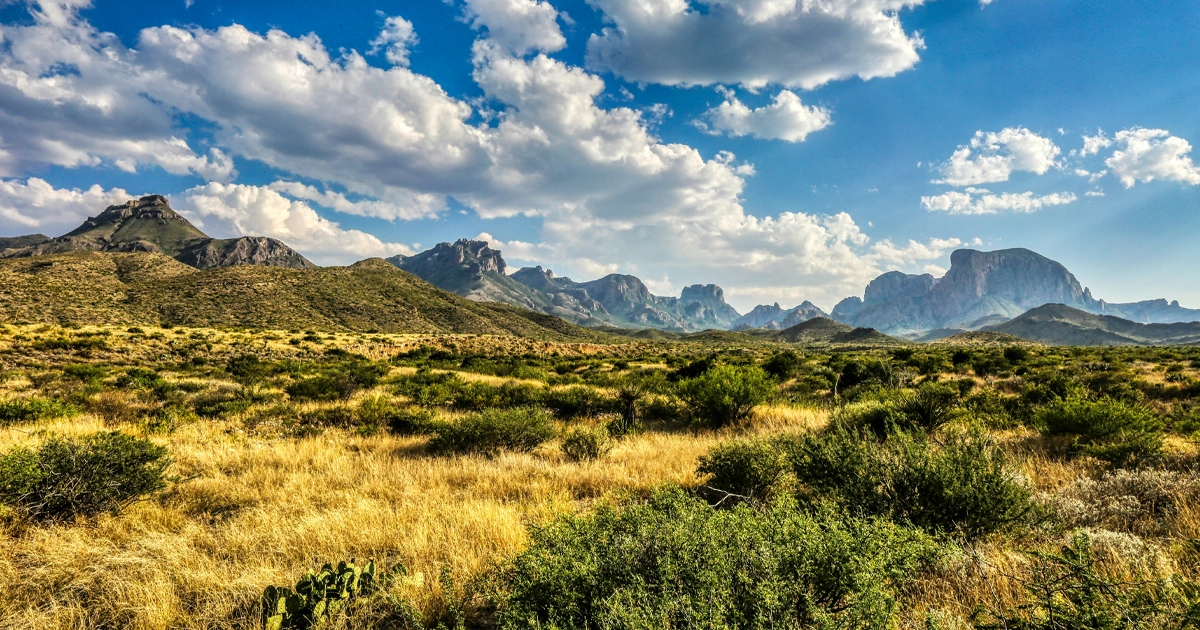
A conservation easement of historic proportions was purchased in the heart of the Texas Hill Country only a short drive from the Capitol of Texas. Hays County, the City of Austin, and the Hill Country Conservancy (HCC), with funding from the federal Natural Resources Conservation Service (NRCS), came together to purchase a conservation easement on the historic Dahlstrom Ranch, a 2,254-acre privately-owned holding located outside of Buda. This rare collaboration between a private landowner, county, federal agency, and city took shape in 2007 and will be the first private land preservation agreement of its kind. The privately-owned ranch will have the unique distinction of providing a 384-acre area for public education and nature programs proposed by a public access committee led by the National Parks Service and managed by Hays County.

“Through this conservation easement, Gay Dahlstrom, in partnership with Hays County, as guided by Precinct 2 Commissioner Jeff Barton, NRCS, HCC, the City of Austin and many others, has ensured that a majestic piece of the Texas Hill Country will not only survive, but allow our native wildlife and natural resources to thrive,” said David Braun of Braun & Associates, attorneys for Gay Dahlstrom. “Gay is an exceedingly modest and private person, but today she and her family have set a proud and important example for all conservation-minded Texas landowners.” The family’s history on the property dates back five generations. The Dahlstrom Ranch on Onion Creek has played an impressive role in Hays County’s heritage. The property also plays a key role in the area’s overal well-being thanks to its abundant aquifer recharge. The historic ranch features an impressive system of caves and sinkholes that directly convey clean water to the aquifer. Also, following a reduction in livestock grazing in 2005, the ranch’s wildlife habitat and native grasses have staged a welcome comeback.

In recent years, the Dahlstroms, like many other Texas families, were faced with the decision on whether to begin selling off their land to developers in order to pay estate taxes. Gay Dahlstrom chose to preserve the family’s heritage and legacy, retaining Braun & Associates to guide her through the process of obtaining a conservation easement that enabled her family to keep the ranch intact. This contract between property owner and conservation organization, while providing critical tax incentives, also allows the owner to protect the water resources, wildlife habitat, natural character, and other conservation values of the land. A conservation easement restricts the amount and type of development allowed on the property, and conveys the right to enforce these restrictions in perpetuity, while preserving the right to traditional agricultural uses and limited residential use.

“This partnership provides multiple benefits, keeping this land intact for the family’s ongoing use and enjoyment while preserving the unique caves and other karst features of the ranch and furthering enhancement of its ecology and wildlife”, said Frank Davis, Director of Land Stewardship at HCC.

“I am very pleased we are able to partner with Hays County and Hill Country Conservancy on this important project,” said City of Austin Mayor Lee Leffingwell, a longtime supporter of the use of voter-approved bonds designated for the acquisition of open space.  “As our region continues to grow, it is important that we lead in the effort to protect our natural resources, and acquisitions like this one ensure we are doing our part to protect and enhance our environment, particularly our water quality, and the heritage of the Aquifer region and Texas Hill Country.”

Gay Dahlstrom’s son, Jack Dahlstrom Jr., has plans for ecotourism and nature and wildlife-related art exhibits on the property, with the ultimate goal to further the community’s understanding of, and respect for, the area’s heritage and environment. The Dahlstrom family has a long-term plan for continuing to restore the land and its native wildlife. “At the end of the day, my mother did this because she loves this land and appreciates all that it has given us,” said Jack Dahlstrom Jr. “Now, it’s our family’s turn to give back to the land, and we appreciate the efforts of everyone who worked so hard to help us make that happen.”

Land Report 100: No. 62 Clayton Williams Jr.

Land Report 100: No. 62 Clayton Williams Jr.
OF THE COUNTRY’S 100 LARGEST LANDOWNERS, FEW ARE AS COLORFUL AS CLAYTIE.

A passionate approach to land stewardship is but one of Clayton Williams’s claims to fame. The diehard Texas Aggie is a born entrepreneur whose many pursuits have ranged from insurance salesman to banker, farmer, rancher, real estate developer, big-game hunter, philanthropist, conservationist, and, at one pivotal point in his career, front-running gubernatorial candidate. And like any self-made man, he can ride out tough times with the best of them—even down to his last bullet.

Williams’s trailblazing traits date to his colorful forebears, who mixed it up with the likes of Kit Carson, Billy the Kid, and Geronimo. The native Texan was born in Alpine in 1931 and raised in Fort Stockton. After attending Texas A&M and fulfilling his military obligations, he cut his teeth selling life insurance in Mineral Wells. But fate called him back to West Texas, where in a Fort Stockton coffee shop he learned about a farm for sale. He struck a deal with its owner to form an oil and gas partnership, and the cornerstone of his career was set. From that small start, his financial empire eventually grew to include a host of companies, from cow-calf operations to a safari company to several entities bearing the ClayDesta moniker, a nod to himself and wife Modesta.

It was in Modesta that the wildcatter found a soul mate who shared his love of the land and sense of adventure. In his book Claytie: The Roller-Coaster Life of a Texas Wildcatter, Mike Cochran describes Williams’s run as “an exciting mix of hard work and great fun, building pipelines and drilling wells one day and branding calves and working cows the next—all embellished with a spectacular marriage. Claytie and Modesta really are bigger than life.”

After an unsuccessful run for governor of Texas in 1990, Claytie turned his considerable energies on going public with Clayton Williams Energy Inc. (CWEI). With an estimated net worth of $100 million, his name was added to the Forbes Four Hundred. Today, he is a fixture on the Land Report 100 and ranked No. 62 in 2009 with 146,655 acres. During the past decade, CWEI has drilled 167 horizontal wells, mostly in the Austin Chalk formation as well as the Cotton Valley Reef in Texas, in Louisiana, in Mississippi, and in New Mexico.

“Claytie is, by all measures, one of a kind,” says Cochran. “He’s an absolutely wonderful character. With his ranch he’s been really innovative and was recognized nationally for some of the innovations to trap water and to get the best use of the land.”

Library: Working Dogs of Texas

Working Dogs of Texas

Both the author and the photographer are valued contributors to The Land Report, and there’s no doubt in my mind that landowners from coast to coast will be able to identify with this book. So let’s begin by getting two misconceptions about this book off the table.

First off, Working Dogs is not a tribute to hunting dogs. Yes, there are great chapters on curs and feists, pointers, retrievers, and the fearless breeds that track wild hogs. The authors even tail a pack of hounds that are bona fide man-hunters à la Paul Newman in Cool Hand Luke. But at its core, Working Dogs is about the countless ways man’s best friend has been bred and trained to serve different masters, which is why this book is such a compelling volume.

Working Dogs of Texas

Working Dogs of Texas by Henry Chappell and Wyman Meinzer

“The one thing these dogs all have in common is that each has a job to perform,” Wyman Meinzer says. “It might be highly specialized task that requires enormous amounts of training like search and rescue or detector dogs. It could be a more traditional one such as herding cattle or guarding against predators. It could even be as important as providing friendship to an elderly person.” To that end the final chapter is titled “The Caretakers.”

The second element that needs to be dismissed is that Working Dogs of Texas suffers from geographic limitations because of its focus on the Lone Star State. On the water, in the woods, on ranches and farms, and at border checkpoint and international airports – Chappell and Meinzer covered an enormous amount of terrain researching this compelling project.

Available online at Amazon.com

Partner Profile: Holistic Management International

holistic-featured

Peter Holter and the fine folks at Holistic Management International (HMI) are valuable partners of The Land Report. We believe in their mission, and once you learn more about them we think you will be supportive as well.

HMI is a non-profit based in Albuquerque that dates back to 1984. Its goal is to restore damaged grasslands while positively impacting land health and productivity. HMI has done this with public land, communal lands, and on private property not just in the U.S. but around the world.

Recently, while on a call with Peter, he told me about an HMI client in West Texas. In 1999, Chris and Laura Gill and their family bought the Circle Ranch in Hudspeth County. They considered the 32,000-acre, high-desert property an investment, and they wanted to improve it through increased wildlife habitat, health, diversity, and number.

After exploring a wide variety of tools to improve their ranch, the family found what they consider to be a sound process by utilizing a planned grazing approach advocated by HMI.

“I was anti-cattle and thought desert grasslands could best be restored by de-stocking,” Gill says. That changed when he learned about HMI planning and practices. Holistic Planned Grazing is “all about getting animals to the right place at the right time for the right reason.” The right reason is to improve desert grassland ecology by concentrating cattle herds, rather than dispersing them, which is the norm in conventional desert range management.

“This intense grazing,” Gill explains, “must always be followed by long-enough periods without grazing to allow complete plant and soil life recovery.” This high-concentration, long-recovery is better for plants since it mimics the natural behavior of large herds of wild herbivores in the presence of their predators, who existed on grasslands and high deserts for millennia until humans arrived.

Gill reports strong, positive results from using planned grazing over the past decade. The animals usually graze about half the ranch, moderately, as the rest recovers from grazing during the previous year. “We have experienced huge gains in stocking rate and range productivity,” while at the same time, achieving “consistent improvements in habitat, which we measure by changes in forage production.”

Bottom line? Thanks to Holistic Management, the Circle Ranch almost tripled its forage production over five years. These Texas landowners increased productivity and wildlife habitat 35 percent or better on an annual basis.

Slowdown Forecast for Texas Land


Ag economists at Texas A&M are predicting that the red-hot Texas land market will lose its sizzle next year. Since 2003, land prices have increased an average of 14.5 percent annually, and with the median price statewide approximately $2,300 per acre, that means the average price would jump to $4,600 per acre by 2013. According to the Aggies, that’s not going to happen. Here’s why: Read more

U.S. Marshals Seize 695-Acre Texas Hill Country Ranch


A few years ago I started noticing all the classifieds that were advertising vehicles for sale. They had been seized by one branch or another of the federal government. Most of the time drugs were involved. Then, thanks to the mortgage meltdown, county sheriffs got busy selling foreclosed homes on the courthouse steps. But close to 700 acres in the Texas Hill Country on the block courtesy of the U.S. Marshals? Here’s the scoop. Read more

Sold: Fortress Cliffs Ranch


Almost 3,000 pristine acres valued at more than $5 million along the rim of Palo Duro Canyon has been sold to The Trust for Public Land (TPL), a nonprofit land conservation organization. After purchasing the Texas Panhandle property, TPL immediately transferred it to Texas Parks & Wildlife, thus increasing the size of Palo Duro Canyon State Park by nearly 10 percent. Read more

Shuttered Texas Silver Mine to Reopen?


First it was ethanol and the price per acre in the Corn Belt. Then oil and gas began propping up land values in mineral-rich areas such as the huge shales found coast to coast. Now other commodities are driving other forgotten or overlooked real estate markets, including an out-of-the-way section in Far West Texas where the state’s richest silver mine is slated to reopen after a seven decades of inactivity, according to this press release. Read more

Nolan Ryan

April 8, 2008 by Eric OKeefe  
Filed under Cattle, Farming, Southwest, Topics, Video

Cheap and close.

Those are the two criteria you use when you’re looking to buy land and you make only $7,000 a year. At least those were the two Nolan Ryan used back in the 1960s when he began buying ranchland in Gonzales County, Texas. To see the Hall of Fame pitcher talk about his experiences from nearly five decades of land buying.

How to Buy a Texas Hunting Ranch

March 18, 2008 by Grant Gannon  
Filed under Field Reporters, Grant Gannon

Regional Spotlight: Texas Hunting Ranch

General Info: As temperatures across the country skyrocket this month, it’s almost inconceivable for hunting to cross anyone’s mind. Dove season is just a few weeks away, followed closely by quail, and then deer season in the winter. It may not be possible to find, buy, and use your own hunting ranch this year, but the arrival of the season could definitely whet your appetite for a personal game retreat. Read more