Sonia Sotomayor & Property Rights

sotomayornew-588

The current issue of The Land Report takes an in-depth look at Obama Administration and the American Landowner. Since that issue came off the press, the President has already been faced with a crucial task: nominating a replacement for Supreme Court Associate Justice David Souter. His choice? Federal appeals court judge Sonia Sotomayor.

Next Monday, July 13, the Senate Judiciary Committee will begin her confirmation hearings. Landowners will be paying particular attention to Judge Sotomayor regarding property rights, in particular, Kelo v. City of New London, the controversial 2005 decision that sparked a national uproar. What will her stance be? Insight can be gleaned from her role in an important test of Kelo that took place in 2006: Didden v. Village of Port Chester.

According to The New York Times:

The case arose from a meeting in 2003 between Mr. Didden, who owned property in Port Chester, N.Y., and an executive of a company that had been designated by the village to develop a 27-acre urban renewal area that included part of the property. What happened at that meeting, Mr. Didden said, amounted to extortion.

Mr. Didden had made arrangements to put a CVS drug store on his lot. At the meeting, the executive, Gregg Wasser, demanded $800,000 as the price for permission to proceed with that project, Mr. Didden said in court papers. The alternative, Mr. Wasser said, according to the papers, was to have the village condemn Mr. Didden’s property so that Mr. Wasser’s company could put a Walgreen’s in the same place.

“Here is a private person standing in the shoes of the government with the power to condemn or not condemn,” Mr. Didden said. “The $800,000 wasn’t going to rehabilitate a public park or build a soccer stadium. It was going into his pocket.”

Mr. Didden refused. The next day the village condemned his property.

As The Times points out, when Didden’s appeal reached the Court of Appeals for the Second Circuit, his case was rejected with a terse, unsigned decision. The response has not been favorable:

The ruling in Didden is not popular among some property rights and constitutional law professors. Eight of them filed a brief in 2006 unsuccessfully urging the Supreme Court to hear an appeal.

“This is the worst federal court takings decision since Kelo,” said Ilya Somin, who teaches property law at George Mason University and helped write the brief. “It’s very extreme, and it is significant as a window into Judge Sotomayor’s attitudes toward private property.”

Read more at:

Issue of Property Rights Is Likely to Arise in Sotomayor’s Confirmation Hearings,” New York Times, June 15, 2009

Kelo Rears Its Greedy Head in Houston

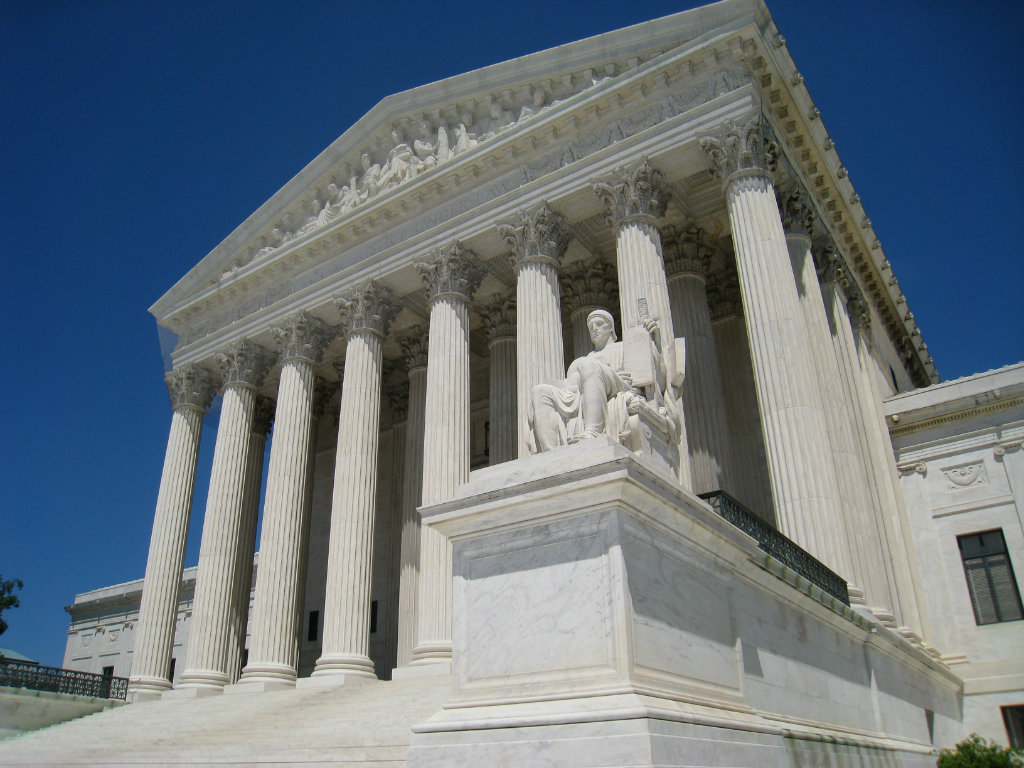
supreme-court-web1
For landowners, their is no more controversial case than the Supreme Court’s 5-4 decision in Kelo v. City of New London permitting the use of eminent domain to transfer private property from one owner to another under the guise of furthering economic development. In response to this 2005 decision, dozens of state legislatures passed bills curbing the effects of Kelo, including Texas, which made it illegal for a municipality to condemn property solely for private economic development. Yet that is exactly what Mayor Bill White and the City of Houston have seemingly done. Read more

Idaho Ranchers Challenge Taylor Grazing Act

BY JOSEPH GUINTO
PUBLISHED NOVEMBER 2007

When the U.S. Supreme Court convened in October, the men (and woman) in black did not discuss landowner water rights. And for a pair of longtime Idaho ranchers—and perhaps other landowners—no news might mean bad news.

For the moment, the court has made no decision on whether to take up the case of Joyce Livestock vs. the United States. Earlier this year, Joyce and LU Ranching won a ruling against the federal government in Idaho’s Supreme Court in a potentially precedent-setting case of grazing rights.

Ranchers have long been subject to the rules set by the Bureau of Land Management under the 1934 Taylor Grazing Act. That act allows federal officials to set the terms under which ranchers can use public lands, including whether and how much water can be used.

But in 2005, Joyce and LU challenged that law as it applied to Idaho’s Snake River Basin. They argued that because they had operated in the area for more than 100 years—long before the Taylor Act—they had established water rights that the government could not remove.

By February of this year, their case reached the Idaho Supreme Court, which ruled in favor of the livestock firms. But the court did not allow the companies’ claim to have the U.S. government pay their $1.3 million court fees. Idaho’s Supreme Court said the government did not act frivolously. The ranchers argued that the Equal Access to Justice Act—a law intended to prevent the government from running roughshod over small businesses and individuals by prolonging expensive litigation—entitled them to court costs. But the Idaho court said it had no jurisdiction to rule on that claim, leaving the U.S. Supreme Court as the last resort.

With the court’s docket already set until next year, precedent-watchers will have to wait on a final outcome.