Minnesota Power to Expand Bison Wind Farm

Wind Farm

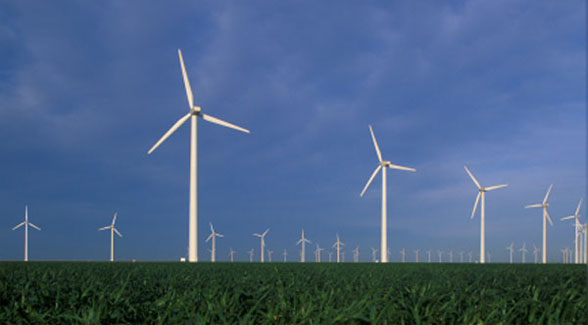
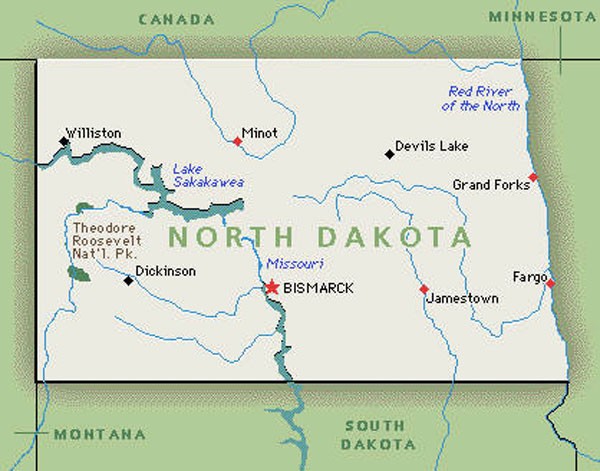
Minnesota Power has notified the North Dakota Public Service Commission of its intent to begin the second phase of the Bison Wind Farm project in central North Dakota. The additional capacity will increase total power generation to 185 MW. The Bison 2 wind project  will use 35 3-megawatt turbines manufactured by Siemens AG. Further expansion of the Great Plains wind farm is planned to meet Minnesota’s mandate for 25 percent of its electricity from renewable resources by 2025.

“The timing is fortunate for expanding our renewable energy production,” said Alan Hodnik, president and CEO of Minnesota Power’s parent company, ALLETE. “Development of Bison 2 will leverage substantial investments we’ve already made in North Dakota and take advantage of the federal production tax credit and a very competitive wind turbine market.”

“Bison 2 will be very economical for our customers,” Hodnik added. “This project is an example of our larger strategy of meeting the demands of a changing energy landscape, reducing our overall reliance on fossil fuels, and making effective use of existing transmission capacity.”

Electricity generated by the Bison Wind Farm travels to Minnesota via transmission lines used for coal-generated power from the Milton Young station near Center, North Dakota.

Read more HERE.


North Dakota Bucks the Recession

The rest of the U.S. may have fallen into a recession, but at the north end of the Great Plains a robust economy and a tight labor supply is keeping North Dakota humming. Unemployment rate? Holding steady at 3.4 percent. New car sales? Up 27 percent. Foreclosure rate? Among the nation’s lowest. And the primary legislative budget issue? What do with a $1.2 billion surplus. What about land prices? Read more

Controversial Sale in North Dakota Badlands

BY JOSEPH GUINTO
PUBLISHED OCTOBER 2007

More than 5,000 acres of federal land in North Dakota’s Badlands could go up for sale. That’s up to Congress. The property is supposed to be offered as a unique offset to a purchase made by the U.S. Forest Service. Last spring, the Forest Service ended a years-long controversy by spending $5.3 million on a 5,200-acre ranch across the Little Missouri River from the Elkhorn Ranch, a property once owned by Theodore Roosevelt and considered by many as the nation’s “cradle of conservation.”

Roosevelt retreated to the ranch in the late 1880s and emerged three and a half years later as an avowed environmentalist who would, as president, go on to add millions of acres to the government’s holdings for use as national forests, parks, and wildlife refuges. But adding to the government’s holdings was just what the Forest Service didn’t want to do when it bought the neighboring Blacktail Creek Ranch. After all, the government already owns 1.2 million acres in North Dakota. Some local ranchers and officials vehemently opposed taking a working ranch out of production just so Roosevelt’s property could continue to enjoy an unspoiled view.

So, in a unique compromise, the Forest Service said it would buy the Blacktail Creek Ranch and sell an equivalent amount of land it already owns in North Dakota, but that it would sell that land only to about 40 ranchers who currently own property in Billings County, where Elkhorn Ranch is located. And that’s where Congress gets involved. Or not. Sen. Byron Dorgan, D-North Dakota and a proponent of the ranch purchase, says he doesn’t support legislation with such restrictions.