<?xml version="1.0" encoding="UTF-8"?>
<rss version="2.0"
	xmlns:content="http://purl.org/rss/1.0/modules/content/"
	xmlns:wfw="http://wellformedweb.org/CommentAPI/"
	xmlns:dc="http://purl.org/dc/elements/1.1/"
	xmlns:atom="http://www.w3.org/2005/Atom"
	xmlns:sy="http://purl.org/rss/1.0/modules/syndication/"
	xmlns:slash="http://purl.org/rss/1.0/modules/slash/"
	>

<channel>
	<title>LandReport.com &#187; New Mexico</title>
	<atom:link href="http://www.landreport.com/tag/new-mexico/feed/" rel="self" type="application/rss+xml" />
	<link>http://www.landreport.com</link>
	<description>The Magazine of the American Landowner</description>
	<lastBuildDate>Tue, 07 Feb 2012 12:00:58 +0000</lastBuildDate>
	<language>en</language>
	<sy:updatePeriod>hourly</sy:updatePeriod>
	<sy:updateFrequency>1</sy:updateFrequency>
	<generator>http://wordpress.org/?v=3.3</generator>
		<item>
		<title>Trail Boss &#8211; The Bob Funk Story</title>
		<link>http://www.landreport.com/2011/10/bob-funk/</link>
		<comments>http://www.landreport.com/2011/10/bob-funk/#comments</comments>
		<pubDate>Fri, 28 Oct 2011 14:18:22 +0000</pubDate>
		<dc:creator>Eric OKeefe</dc:creator>
				<category><![CDATA[2010 Fall]]></category>
		<category><![CDATA[Cattle]]></category>
		<category><![CDATA[Eric OKeefe]]></category>
		<category><![CDATA[Feature]]></category>
		<category><![CDATA[Great Plains]]></category>
		<category><![CDATA[Gustav Schmiege]]></category>
		<category><![CDATA[West]]></category>
		<category><![CDATA[Angus cattle]]></category>
		<category><![CDATA[Bob Funk]]></category>
		<category><![CDATA[Cathy Keating]]></category>
		<category><![CDATA[Duchess of Cambridge]]></category>
		<category><![CDATA[Eddie Sims]]></category>
		<category><![CDATA[Express Employment Professionals]]></category>
		<category><![CDATA[Express Ranches]]></category>
		<category><![CDATA[Frank Keating]]></category>
		<category><![CDATA[Kansas City Fed]]></category>
		<category><![CDATA[Maxwell Land Grant]]></category>
		<category><![CDATA[New Mexico]]></category>
		<category><![CDATA[Oklahoma]]></category>
		<category><![CDATA[Prince Philip]]></category>
		<category><![CDATA[Prince William]]></category>
		<category><![CDATA[UU Bar]]></category>
		<category><![CDATA[UU Bar Ranch]]></category>

		<guid isPermaLink="false">http://www.landreport.com/?p=5019</guid>
		<description><![CDATA[The name says it all: The Big Event. Those who have never had the good fortune to set foot in the Express Ranches Sale Barn have no inkling of the beehive buzzing under the big top. In one corner, eager servers tote trays of tri-tip, biscuits, and brownies to buffet tables where more than 400 [...]
Related posts:<ol>
<li><a href='http://www.landreport.com/2011/10/the-land-report-fall-2011/' rel='bookmark' title='The Land Report Fall 2011'>The Land Report Fall 2011</a><small>The nation&#8217;s leading landowners are buying more land! That&#8217;s one...</small></li>
</ol>]]></description>
			<content:encoded><![CDATA[<p><a href="http://www.landreport.com/2011/10/bob-funk/"><img class="aligncenter size-full wp-image-2751" title="Trail Boss - The Bob Funk Story" src="http://www.landreport.com/wp-content/uploads/2011/10/bobwife_lg.jpg" alt="Trail Boss - The Bob Funk Story" width="588" height="325" /></a></p>
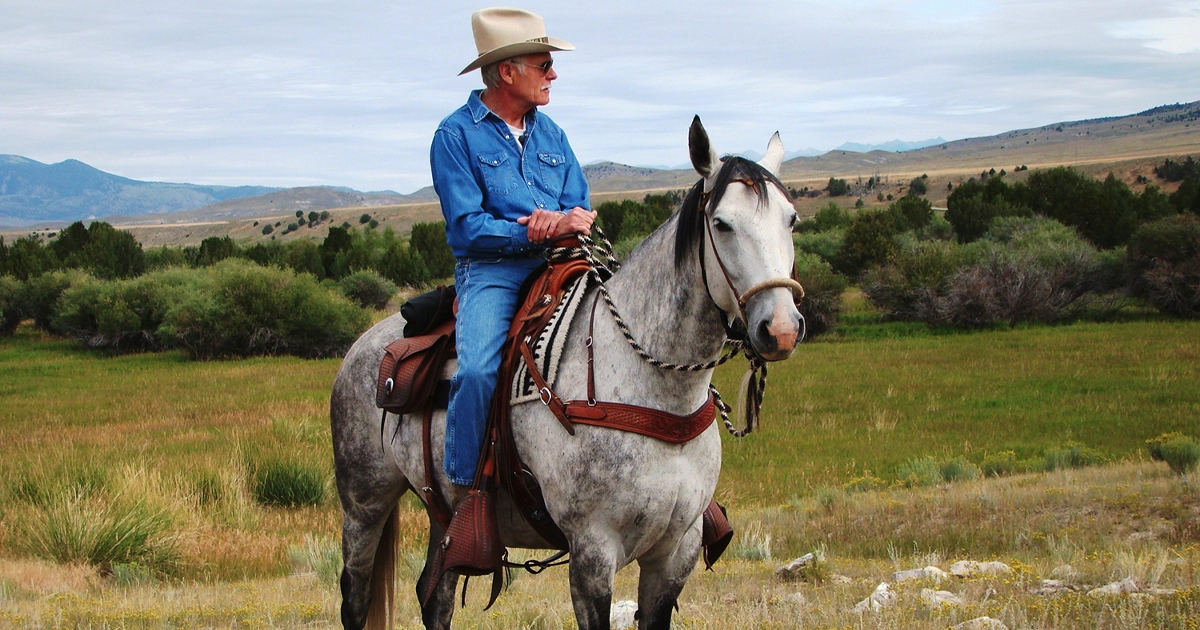
<p>The name says it all: The Big Event. Those who have never had the good fortune to set foot in the Express Ranches Sale Barn have no inkling of the beehive buzzing under the big top. In one corner, eager servers tote trays of tri-tip, biscuits, and brownies to buffet tables where more than 400 will break bread in the next 90 minutes. At the shoeshine stand, cattlemen and their brides queue up two and three deep to have their boots given that like-new look. Lording over the entire affair, auctioneer Eddie Sims barks out bids as the price of a half-interest in an Angus cow and her calf soars past $100,000.</p>
<p><a href="http://www.landreport.com/wp-content/uploads/2011/10/Side-view-angus.jpg"><img class="alignright size-medium wp-image-5034" title="Side view angus" src="http://www.landreport.com/wp-content/uploads/2011/10/Side-view-angus-300x200.jpg" alt="" width="300" height="200" /></a>Arms folded, eyes twinkling, Bob Funk sits in the middle of this extravaganza. Garbed in true cowman style, Funk’s distinguishing trait is actually his smile. Could it be because he’s chatting with his girlfriend and his son? Or is his contagious grin because friends have flown in from across the country? Then again, there’s a pretty good chance that Funk’s smile might be directly tied to the sound of Sims’s gavel, which just came down at $195,000.</p>
<p>At first glance, Funk’s credentials stand out as boardroom caliber, not the sales-barn sort. As the chairman and the chief executive officer of Express Employment Professionals, Funk oversees a thriving organization with more than 550 offices in four countries and projected revenues in excess of $2 billion this year.</p>
<p>The largest privately-held staffing company in the U.S., Express Employment is a heavyweight in the human resource industry. Unlike many of its competitors, Express Employment has gained market share during the economic uncertainties of the Great Recession. Through the second quarter of 2011, Express has seen double-digit growth for six consecutive quarters. Since 2009, the Oklahoma City company has nearly doubled in size. Sales are up a robust 92 percent.</p>
<p>Given this track record, it’s no surprise that the number of boards that vie for Funk’s time and support is mind boggling. Churches, schools, and even Uncle Sam have come calling. Funk was chosen as a director of the Tenth Federal Reserve District, the seven-state region that anchors the heart of the Great Plains. Initially appointed to the Oklahoma City branch, he then joined the board of directors of the Kansas City Fed, was chosen chairman, re-elected chairman, and, in 2007, selected as the chairman of the Federal Reserve’s Conference of Chairmen. Funk advised the Board of Governors of the Federal Reserve System, including former Fed chair Alan Greenspan and current chair Ben Bernanke. “Don’t go telling too many people that. They might hold it against me,” he says and bursts out laughing.</p>
<p>Yet the truth is Funk is equally at home on the range or behind a desk. For that matter, he can hold his own on the altar as well. Few people realize that this civic leader, this rancher and cowman is also an ordained minister who earned undergraduate and graduate degrees in theology from Seattle Pacific University while studying business. His broad range of interests is fueled by a level of energy that can best be described as boundless.</p>
<p>During a three-month span this summer, the 71-year-old journeyed to Italy to officiate at the wedding of a close friend, traveled to Scotland to dine with Prince Philip, landed not one but two hundred-pound halibut off Canada’s Queen Charlotte Islands, and escorted the Duke and the Duchess of Cambridge to the Calgary Stampede aboard an Express Ranches stagecoach that was drawn by four of his champion black-and-white Clydesdales.</p>
<p>The secret of his success? No matter the venue, Funk applies the lessons he learned from those he loved growing up on the land. These building blocks have led to a series of successes he readily admits he could never have imagined. They have allowed him to make countless acts of generosity. Most of all, they have given him a mission, one he pursues day in and day out: Bob Funk believes it is absolutely essential to instill those same lessons in the hearts and the minds of youngsters growing up today.</p>
<p>So it’s safe to assume that Funk grew up enjoying the many activities he endeavors to share with kids across Oklahoma, right? Think again.</p>
<p>“We were very poor at home,” says Bob’s older sister, Joanne Benton. “Bob didn’t get to go and participate in county fairs like most kids we knew growing up. He was too busy working for Adolph.”</p>
<p>The mere mention of this older cousin’s name puts a smile on Funk’s face. This tough taskmaster was the wellspring of Funk’s ferocious work ethic. In his barns and on his fields, Funk learned leadership tenets that would build a multi-billion-dollar company.</p>
<p>“Adolph Hanish started at 6:00 a.m. and finished milking 60 cows at midnight every night, seven days a week. And he didn’t think that was working too hard. He loved his cows. They were his life. Adolph taught me a good work ethic. So did Dad. Dad just loved to work. He loved the land. He loved his cattle. My dad worked cows at all times, even after he went broke in the dairy business. He spent more money on his cattle than he should have: the best hay, the best grain. After he went to work for the highway department, he still kept some cows. He’d go milk four cows by hand every morning, start his job at 8:00, finish at 4:30, and milk cows until 7:00 every night. And that was just standard for our family. Dad was a hard worker. He was a wonderful man,” Funk says.</p>
<p>The formative influence of these hardworking men had some unexpected consequences, namely, cheap shots from childhood friends. “Some of our cousins used to call Bob ‘nothing but a dumb farm boy,’” says his sister. “They would make fun of him for working so hard for Adolph.”</p>
<p>There are two sides to this anecdote, and they reveal the mettle of the man. Ask Bob Funk about his cousins’ taunts and he dismisses the personal discomfort that every adolescent endures. Instead, he speaks of the journey of a fellow human being.</p>
<p>“Adolph was a single man who never took a day off. His whole life was his cows. When I started working for him, he had gone 17 years without a day off. The Fourth of July, Thanksgiving, Christmas — he worked holidays, he worked when he was sick, he worked no matter what. I was glad to give him a break,” Funk says.</p>
<p>Ask his sister, however, and another side to her younger brother emerges. “Those boys couldn’t have known it, but what they were doing was challenging Bob. They challenged him to make something of himself, and he sure did,” Joanne says.</p>
<p>For some inexplicable reason, cousins have shaped Funk’s life. Hanish, his father’s cousin, helped mold the young boy into manhood. Decades later, one of his mother’s cousins opened a new chapter in his life by steering him out west.</p>
<p>Most Americans know Ed Pease for his service as an Indiana Congressman. But in Northern New Mexico, the Eagle Scout is known for his service at the legendary Philmont Scout Ranch. The 137,000-acre ranch is nestled in the Sangre de Cristo Mountains, the heart of the historic Maxwell Land Grant (see “Lucien Maxwell,” <em>Land Report</em> Fall 2008). The grant’s 1.7 million acres had been divvied up into a series of enormous ranches, and some 300,000 acres were acquired by legendary Oklahoma oilman Waite Phillips. It was his bequest that created the Scout Ranch.</p>
<p>In 1996, Pease learned that a key inholding was about to change hands. “Word got out that the Atmore Ranch was going to be sold and then cut up into 20-acre parcels. I support a landholder’s rights to do what they see fit with their property, but the idea of walking through a subdivision to get to the biggest mountain on Philmont ruins the concept of hiking through the wilderness, doesn’t it?” Pease asks.</p>
<p>Pease knew the clock was ticking. “In all the time I’ve known Bob, I never ever asked him to do anything financial. But this time I had to. I called him and made the pitch. Bob had never been a Scout as a kid. Growing up he was too busy working to have time to be a Scout. There was no reason for him to buy this ranch. But he knew what it would mean to generations of Scouts to come, so he went ahead and bought it,” Pease says.</p>
<p>Ten years after acquiring the Atmore, Funk expanded his New Mexico holdings when he bought from Brad Kelley the portion of Philmont that Waite Phillips kept for himself. Called the UU Bar Ranch, it is a Rocky Mountain paradise that rises from the high-desert rangeland at 6,000 feet to more than 11,000 feet above sea level in the Sangre de Cristos.</p>
<p><a href="http://www.landreport.com/wp-content/uploads/2011/10/frontscenic-2.jpg"><img class="alignleft size-medium wp-image-5032" title="frontscenic 2" src="http://www.landreport.com/wp-content/uploads/2011/10/frontscenic-2-300x200.jpg" alt="" width="300" height="200" /></a>“The UU Bar is more like a state than a ranch,” says former Oklahoma Governor Frank Keating. “You have those alpine meadows, the beautiful forests, the abundant wildlife. It’s absolutely a colorful affirmation of the beauty of America, a spectacular picture-postcard ranch.”</p>
<p>Keating’s wife, Cathy, concurs. Like her husband, Oklahoma’s former First Lady has been a regular at the UU Bar since before Funk bought it.</p>
<p>“We’ve been elk hunting with Bob every year since he bought the Atmore. There’s really just nothing quite like that country out there. It’s just a very special place. You’re in God’s country. I love those moments at the UU Bar &#8211; the early morning breakfasts at the lodge that Ralph [Knighton] prepares, driving up to the meadows and waiting for the bugling to start. Then you hear the bugling and the thrill of the chase. I really don’t care if I shoot or not,” she says.</p>
<p>As memorable as a visit to the UU Bar may be, the vast property is an integral element of the Express Ranches portfolio. This multifaceted beef production entity is driven by one goal: better cattle. On a trip to New Mexico, Funk points out that yearling bulls are conditioned on the UU Bar before being taken back to Yukon and sold.</p>
<p>“Jarold likes to tell me we beta test our genetics at the UU Bar,” Funk says, referring to Jarold Callahan, president of Express Ranches. The two teamed up in the mid-1990s when Funk negotiated the purchase of the B&amp;L Ranch and the B&amp;L Angus cow herd near Shawnee from the Oklahoma Cattlemen’s Association Foundation. Up till then, Funk had focused primarily on Limousin cattle. With the purchase of the B&amp;L, Angus cattle became the driver in the expansion of the Express Ranches brand and Callahan was put in charge. “I told Jarold, ‘You sold me these suckers. You come and make them pay,’” Funk says. And that’s exactly what those black-faced cattle have done. According to National Cattleman, Express Ranches is the nation’s largest seedstock operation. Judging from the strong sales numbers at this year’s Big Event, that ranking is safe and secure.</p>
<p><a href="http://www.landreport.com/wp-content/uploads/2011/10/rodeo.jpg"><img class="alignright size-medium wp-image-5033" title="rodeo" src="http://www.landreport.com/wp-content/uploads/2011/10/rodeo-200x300.jpg" alt="" width="200" height="300" /></a>So what does this mean to Bob Funk? It goes without saying that there’s a sense of accomplishment. Back in 1996, he, Callahan, and their team set out to become No. 1, and they’ve done exactly that. It’s the same exact approach that Funk has taken at Express Employment Professionals: putting a team together, setting a high bar, and doggedly pursuing that goal. In three or four years, Express Pros will also be No. 1, Funk tells me.</p>
<p>Bob Funk Jr. is also drawn to the rhythm of the cattle business. His day job may be president of the Oklahoma City Barons, but in the back of his mind are lessons he learned years ago.</p>
<p>Like his father, he insists those lessons be shared. Both men are passionate supporters of the Oklahoma Youth Expo. The organization’s director, Jeremy Rich, tells me that thanks to the Funks, the Expo has gone from near extinction in 2001 to the largest junior livestock show in the nation. I think I know why.</p>
<p>“Growing up in Piedmont, I actually enjoyed working cattle,” Bob Funk Jr. tells me. “Dad used to take me out to feed. It was a hobby, for him and for us, getting up and going to feed the cattle in the morning. It was always fun. It never seemed like work. The best part was really just spending time with Dad.”</p>
<p>&nbsp;</p>
<p>Related posts:<ol>
<li><a href='http://www.landreport.com/2011/10/the-land-report-fall-2011/' rel='bookmark' title='The Land Report Fall 2011'>The Land Report Fall 2011</a><small>The nation&#8217;s leading landowners are buying more land! That&#8217;s one...</small></li>
</ol></p>]]></content:encoded>
			<wfw:commentRss>http://www.landreport.com/2011/10/bob-funk/feed/</wfw:commentRss>
		<slash:comments>0</slash:comments>
		</item>
		<item>
		<title>The Land Report Fall 2011</title>
		<link>http://www.landreport.com/2011/10/the-land-report-fall-2011/</link>
		<comments>http://www.landreport.com/2011/10/the-land-report-fall-2011/#comments</comments>
		<pubDate>Sat, 01 Oct 2011 07:00:59 +0000</pubDate>
		<dc:creator>Eric OKeefe</dc:creator>
				<category><![CDATA[Back Issues]]></category>
		<category><![CDATA[Field Reporters]]></category>
		<category><![CDATA[Land Report 100]]></category>
		<category><![CDATA[Topics]]></category>
		<category><![CDATA[John Malone]]></category>
		<category><![CDATA[New Mexico]]></category>
		<category><![CDATA[Ted Turner]]></category>

		<guid isPermaLink="false">http://www.landreport.com/?p=4927</guid>
		<description><![CDATA[The nation&#8217;s leading landowners are buying more land! That&#8217;s one of the many conclusions to be drawn from the 2011 Land Report 100 now on newsstands. Thanks to his acquisition of more than 1 million acres of timberland, Liberty Media chairman John Malone vaulted in the No. 1 spot, unseating his good friend and business partner [...]
Related posts:<ol>
<li><a href='http://www.landreport.com/2011/03/the-land-report-spring-2011/' rel='bookmark' title='The Land Report Spring 2011'>The Land Report Spring 2011</a><small>NFL Hall of Famer Joe Montana headlines the Spring 2011...</small></li>
<li><a href='http://www.landreport.com/2011/04/malones-millions/' rel='bookmark' title='Malone&#8217;s Millions'>Malone&#8217;s Millions</a><small>Liberty Media CEO John Malone goes long on land and...</small></li>
<li><a href='http://www.landreport.com/2011/06/the-land-report-summer-2011/' rel='bookmark' title='The Land Report Summer 2011'>The Land Report Summer 2011</a><small>The Summer 2011 issue of the Magazine of the American...</small></li>
<li><a href='http://www.landreport.com/2011/03/land-report-march-2011-newsletter/' rel='bookmark' title='Land Report March 2011 Newsletter'>Land Report March 2011 Newsletter</a><small>Take a look at this month&#8217;s edition of The Land...</small></li>
</ol>]]></description>
			<content:encoded><![CDATA[<p><a href="http://www.landreport.com/wp-content/uploads/2011/10/Fall2011Cover.jpg"><a href="http://www.landreport.com/2011/10/the-land-report-fall-2011/"><img class="alignright size-full wp-image-4956" style="border: 0pt none; margin: 10px;" title="Fall2011Cover" src="http://www.landreport.com/wp-content/uploads/2011/10/Fall2011Cover.jpg" alt="The Land Report Fall 2011" width="244" height="300" /></a></a>The nation&#8217;s leading landowners are buying more land! That&#8217;s one of the many conclusions to be drawn from the 2011 Land Report 100 now on newsstands.</p>
<p>Thanks to his acquisition of more than 1 million acres of timberland, Liberty Media chairman John Malone vaulted in the No. 1 spot, unseating his good friend and business partner Ted Turner. Malone readily admits that he got the &#8220;land-buying disease&#8221; after touring a Turner ranch. In addition to Malone and Turner, other high-profile landowners featured in the 2011 Land Report 100 include Amazon.com founder Jeff Bezos at No. 28, hedge fund manager Louis Bacon at No. 45,  and the Hearst family at No. 63.</p>
<p>The cover story features Oklahoma&#8217;s Bob Funk, whose Express Ranches is recognized as one of the top seedstock producers in the cattle industry. Readers will journey with Funk to the UU Bar Ranch, a New Mexico landmark that straddles the historic Santa Fe Trail at the base of the Sangre de Cristo Mountains.</p>
<p>The <a href="http://read.dmtmag.com/issue/44511" target="_blank">digital version</a> of The Land Report can be accessed via your laptop, on your iPad or iPhone, with your Blackberry, as well as on your Android.</p>
<p>Click <a href="http://read.dmtmag.com/issue/44511" target="_blank">HERE </a>or just type in the following URL: <a href="http://read.dmtmag.com/issue/44511" target="_blank">http://read.dmtmag.com/issue/44511</a></p>
<p>&nbsp;</p>
<p>Related posts:<ol>
<li><a href='http://www.landreport.com/2011/03/the-land-report-spring-2011/' rel='bookmark' title='The Land Report Spring 2011'>The Land Report Spring 2011</a><small>NFL Hall of Famer Joe Montana headlines the Spring 2011...</small></li>
<li><a href='http://www.landreport.com/2011/04/malones-millions/' rel='bookmark' title='Malone&#8217;s Millions'>Malone&#8217;s Millions</a><small>Liberty Media CEO John Malone goes long on land and...</small></li>
<li><a href='http://www.landreport.com/2011/06/the-land-report-summer-2011/' rel='bookmark' title='The Land Report Summer 2011'>The Land Report Summer 2011</a><small>The Summer 2011 issue of the Magazine of the American...</small></li>
<li><a href='http://www.landreport.com/2011/03/land-report-march-2011-newsletter/' rel='bookmark' title='Land Report March 2011 Newsletter'>Land Report March 2011 Newsletter</a><small>Take a look at this month&#8217;s edition of The Land...</small></li>
</ol></p>]]></content:encoded>
			<wfw:commentRss>http://www.landreport.com/2011/10/the-land-report-fall-2011/feed/</wfw:commentRss>
		<slash:comments>0</slash:comments>
		</item>
		<item>
		<title>For Sale: New Mexico&#8217;s Southern Cross Ranch</title>
		<link>http://www.landreport.com/2011/05/for-sale-new-mexicos-southern-cross-ranch/</link>
		<comments>http://www.landreport.com/2011/05/for-sale-new-mexicos-southern-cross-ranch/#comments</comments>
		<pubDate>Sun, 29 May 2011 17:43:37 +0000</pubDate>
		<dc:creator>Land Report Editors</dc:creator>
				<category><![CDATA[Cattle]]></category>
		<category><![CDATA[Feature]]></category>
		<category><![CDATA[Field Reporters]]></category>
		<category><![CDATA[Hunting]]></category>
		<category><![CDATA[Recreation]]></category>
		<category><![CDATA[Southwest]]></category>
		<category><![CDATA[Dave Harrigan]]></category>
		<category><![CDATA[elk hunting]]></category>
		<category><![CDATA[Harrigan Land Company]]></category>
		<category><![CDATA[Hunter Harrigan]]></category>
		<category><![CDATA[New Mexico]]></category>
		<category><![CDATA[Southern Cross Ranch]]></category>

		<guid isPermaLink="false">http://www.landreport.com/?p=4154</guid>
		<description><![CDATA[The Southern Cross controls over 70 square miles of the finest trophy elk habitat in North America: a total of 47,309 acres of which 33,514 are deeded. On this trophy property in western New Mexico, geography, genetics, and habitat combine to create an ecosystem that produces some of the largest bull elk anywhere. The Southern Cross [...]
Related posts:<ol>
<li><a href='http://www.landreport.com/2011/02/americas-best-brokerages-harrigan-land-company/' rel='bookmark' title='America&#8217;s Best Brokerages: Harrigan Land Company'>America&#8217;s Best Brokerages: Harrigan Land Company</a><small>Dave and Hunter Harrigan (pictured here) are the father-and-son team...</small></li>
<li><a href='http://www.landreport.com/2011/02/vistas-jubilee-ranch-texas/' rel='bookmark' title='For Sale: Texas&#8217;s Jubilee Ranch'>For Sale: Texas&#8217;s Jubilee Ranch</a><small>In addition to its many improvements, this Bosque County ranch...</small></li>
<li><a href='http://www.landreport.com/2011/04/for-sale-texass-beck-ranch/' rel='bookmark' title='For Sale: Texas&#8217;s Beck Ranch'>For Sale: Texas&#8217;s Beck Ranch</a><small>This diverse Texas Panhandle ranch has been owned by the...</small></li>
<li><a href='http://www.landreport.com/2011/05/on-the-block-kansass-twin-peaks-ranch/' rel='bookmark' title='On the Block: Kansas&#8217;s Twin Peaks Ranch'>On the Block: Kansas&#8217;s Twin Peaks Ranch</a><small>United Country Nixon Auction &amp; Realty will auction the Twin...</small></li>
<li><a href='http://www.landreport.com/2011/04/for-sale-hollow-top-ranch/' rel='bookmark' title='For Sale: Hollow Top Ranch'>For Sale: Hollow Top Ranch</a><small>Nestled at the base of the Tobacco Root Mountains in...</small></li>
</ol>]]></description>
			<content:encoded><![CDATA[<p><a href="http://www.landreport.com/2011/05/for-sale-new-mexicos-southern-cross-ranch/"><img class="aligncenter size-full wp-image-2751" title="Southern Cross Ranch" src="http://www.landreport.com/wp-content/uploads/2011/05/SouthernCrossRanch.jpg" alt="Southern Cross Ranch" width="588" height="325" /></a></p>
<p>The Southern Cross controls over 70 square miles of the finest trophy elk habitat in North America: a total of 47,309 acres of which 33,514 are deeded. On this trophy property in western New Mexico, geography, genetics, and habitat combine to create an ecosystem that produces some of the largest bull elk anywhere. The Southern Cross is renowned for amazing numbers of 350- to 400-class bulls.</p>
<p>The Southern Cross has been superbly managed to maintain its status as one of America&#8217;s premier hunting destinations. A spectacular 6,000-square-foot log lodge is the centerpiece of the ranch. With six bedrooms, five and one half baths, and wraparound deck, the lodge treats guests luxuriously. A caretaker&#8217;s house, corrals, barn and meat cooler completes the outstanding facilities on the ranch. Southern Cross Ranch was recently allotted 49 bull elk tags and 14 cow elk tags.</p>
<p>Straddling both sides of the Continental Divide, the Southern Cross ranges in elevation from 7,300 to 8,200 feet, which makes it ideally situated for supporting thousands of acres of pinion pine and alligator juniper forest, interspersed with grassy meadows. Parts of the eastern portion of the ranch adjoin the Cibola National Forest. Much of the ranch&#8217;s terrain is rolling, and a good network of ranch roads provides vehicular access throughout. With wildlife and livestock management in mind, dozens of water sources have been developed throughout the ranch, utilizing both wind and solar power.</p>
<p>The Southern Cross is best known for its elk hunting, but its superb mule deer and antelope hunting are also available. As a combination cattle/hunting ranch or a hunting resort alone, the potential for this spectacular piece of western New Mexico may be unmatched anywhere in the United States. With excellent year-round access, the &#8220;land of giants&#8221; is located only 2.5 hours from Albuquerque and 3.5 hours from Santa Fe.</p>
<p>Dave Harrigan / Hunter Harrigan<br />
<a href="http://harriganland.com/listings/index.html">www.harriganland.com</a><br />
(800) 524-1818</p>
<p>Related posts:<ol>
<li><a href='http://www.landreport.com/2011/02/americas-best-brokerages-harrigan-land-company/' rel='bookmark' title='America&#8217;s Best Brokerages: Harrigan Land Company'>America&#8217;s Best Brokerages: Harrigan Land Company</a><small>Dave and Hunter Harrigan (pictured here) are the father-and-son team...</small></li>
<li><a href='http://www.landreport.com/2011/02/vistas-jubilee-ranch-texas/' rel='bookmark' title='For Sale: Texas&#8217;s Jubilee Ranch'>For Sale: Texas&#8217;s Jubilee Ranch</a><small>In addition to its many improvements, this Bosque County ranch...</small></li>
<li><a href='http://www.landreport.com/2011/04/for-sale-texass-beck-ranch/' rel='bookmark' title='For Sale: Texas&#8217;s Beck Ranch'>For Sale: Texas&#8217;s Beck Ranch</a><small>This diverse Texas Panhandle ranch has been owned by the...</small></li>
<li><a href='http://www.landreport.com/2011/05/on-the-block-kansass-twin-peaks-ranch/' rel='bookmark' title='On the Block: Kansas&#8217;s Twin Peaks Ranch'>On the Block: Kansas&#8217;s Twin Peaks Ranch</a><small>United Country Nixon Auction &amp; Realty will auction the Twin...</small></li>
<li><a href='http://www.landreport.com/2011/04/for-sale-hollow-top-ranch/' rel='bookmark' title='For Sale: Hollow Top Ranch'>For Sale: Hollow Top Ranch</a><small>Nestled at the base of the Tobacco Root Mountains in...</small></li>
</ol></p>]]></content:encoded>
			<wfw:commentRss>http://www.landreport.com/2011/05/for-sale-new-mexicos-southern-cross-ranch/feed/</wfw:commentRss>
		<slash:comments>0</slash:comments>
		</item>
		<item>
		<title>Land Report 100: D.K. Boyd</title>
		<link>http://www.landreport.com/2011/03/land-report-100-d-k-boyd/</link>
		<comments>http://www.landreport.com/2011/03/land-report-100-d-k-boyd/#comments</comments>
		<pubDate>Wed, 16 Mar 2011 20:05:05 +0000</pubDate>
		<dc:creator>Land Report Editors</dc:creator>
				<category><![CDATA[2011 Spring]]></category>
		<category><![CDATA[Feature]]></category>
		<category><![CDATA[D. K. Boyd]]></category>
		<category><![CDATA[Frying Pan Ranch]]></category>
		<category><![CDATA[Land Report 100]]></category>
		<category><![CDATA[New Mexico]]></category>
		<category><![CDATA[West Texas]]></category>

		<guid isPermaLink="false">http://www.landreport.com/?p=3563</guid>
		<description><![CDATA[Long before there was The Social Network, there was D.K. Boyd, pictured here with mentor Ted Gray (left) and wife T.J. (center). Passionate about property rights, Boyd places great value on shared knowledge. “It’s kind of the old cowboy approach to life,” he says. Boyd trades tips with fellow landowners about laws, rules, regulations, and rights, [...]
No related posts.]]></description>
			<content:encoded><![CDATA[<p><a href="http://www.landreport.com/2011/03/land-report-100-d-k-boyd/"><img class="aligncenter size-full wp-image-2751" title="D.K. Boyd" src=" http://www.landreport.com/wp-content/uploads/2011/03/Boyd.jpg" alt="D.K. Boyd" width="588" height="325" /></a></p>
<p>Long before there was <em>The Social Network</em>, there was D.K. Boyd, pictured here with mentor Ted Gray (left) and wife T.J. (center).</p>
<p>Passionate about property rights, Boyd places great value on shared knowledge. “It’s kind of the old cowboy approach to life,” he says. Boyd trades tips with fellow landowners about laws, rules, regulations, and rights, including the rights of oil and gas, pipeline, and utility companies. “We give up 100 percent of the knowledge we have and are pretty bold about asking for theirs. The way I approach it is network, network, network. We tend to migrate toward like-minded individuals and try to distance ourselves from the rest. If they have similar ethics and integrity it’s a beautiful arrangement.”</p>
<p>As a teenager, he recognized the rewards of land ownership doing day work for Fort Stockton-area ranchers. “It allowed me to be exposed to a tremendous amount land in that part of the world and learn a lot about ranching. That’s really where it all started.”</p>
<p>Boyd’s father worked for Exxon. His mother was in the banking business. His mentors were property owners and landowners, including rancher Ted Gray, who was based out of Alpine. Boyd’s favorite read is Barney Nelson’s The Last Campfire, a chronicle of Gray’s decades-long career. “At the time that I was first started getting to know Ted, he owned ranches, banks, and was one of the largest ranchers in the Davis Mountains/West Texas area. That he would take time to work with a young guy like me … you can’t put a value on that. He’s kind of my John Wayne.”</p>
<p>Boyd pieced together his land portfolio with wife T.J. at his side. He acquired the 137,372-acre Frying Pan Ranch in 1996 and the 106,065-acre LE Ranch in 1998. The two cattle operations are among the most historic in West Texas/Southeast New Mexico.</p>
<p>Boyd ranked 34th on the 2010 Land Report 100. His holdings top out at 290,624: 243,664 deeded acres mixed in with some state and private leases. He pursues additional landholdings every day.  He and T.J. live part-time at the Frying Pan. She’s involved in office and ranch operations, and son Clay (one of five offspring) deals primarily with surface agreements, pipeline right-of-ways, and environmental assessment.</p>
<p>Boyd subscribes to the Boy Scout approach: “We need to leave something for future generations that’s better than what we have. If someone is a slash-and-burn type operator, coming in and breaking up land and selling it to the highest bidder, or selling off small parcels, they’re not interested in the preservation of the body of the land or environmental and resource development. So there’s really very little we have in common. You have to look at the long-term. Because the land’s going to be there forever.”</p>
<p>No related posts.</p>]]></content:encoded>
			<wfw:commentRss>http://www.landreport.com/2011/03/land-report-100-d-k-boyd/feed/</wfw:commentRss>
		<slash:comments>0</slash:comments>
		</item>
		<item>
		<title>Sold! The Bell Ranch</title>
		<link>http://www.landreport.com/2010/10/sold-the-bell-ranch/</link>
		<comments>http://www.landreport.com/2010/10/sold-the-bell-ranch/#comments</comments>
		<pubDate>Tue, 05 Oct 2010 04:00:31 +0000</pubDate>
		<dc:creator>Eric OKeefe</dc:creator>
				<category><![CDATA[Feature]]></category>
		<category><![CDATA[Field Reporters]]></category>
		<category><![CDATA[Albert Mitchell]]></category>
		<category><![CDATA[Bates Sanders Swan]]></category>
		<category><![CDATA[Bell Mountain]]></category>
		<category><![CDATA[Bell Ranch]]></category>
		<category><![CDATA[Bert Ancell]]></category>
		<category><![CDATA[Bill Lane]]></category>
		<category><![CDATA[Don Hofman]]></category>
		<category><![CDATA[Eric O'Keefe]]></category>
		<category><![CDATA[George Ellis]]></category>
		<category><![CDATA[John Malone]]></category>
		<category><![CDATA[La Cinta Creek]]></category>
		<category><![CDATA[Mexico]]></category>
		<category><![CDATA[Montoya Grant]]></category>
		<category><![CDATA[New Mexico]]></category>
		<category><![CDATA[New Mexico Territory]]></category>
		<category><![CDATA[Pablo Montoya]]></category>
		<category><![CDATA[Patrick Bates]]></category>
		<category><![CDATA[Ranch Marketing Associates]]></category>
		<category><![CDATA[RedBell]]></category>
		<category><![CDATA[Ron Morris]]></category>
		<category><![CDATA[Rusty Tinnin]]></category>
		<category><![CDATA[San Miguel County]]></category>
		<category><![CDATA[Ted Turner]]></category>
		<category><![CDATA[William Lane II]]></category>

		<guid isPermaLink="false">http://www.landreport.com/?p=2888</guid>
		<description><![CDATA[On August 17, Liberty Media CEO John Malone bought the 290,100-acre Bell Ranch, an event that qualifies as the largest single ranch sale since Ted Turner bought Vermejo Park from Pennzoil in 1996.  Price and terms on the $83-million listing were not disclosed. Odds are you already know New Mexico’s Bell Ranch. At 453 square [...]
No related posts.]]></description>
			<content:encoded><![CDATA[<p><a href="http://www.landreport.com/2010/10/sold-the-bell-ranch/"><img class="aligncenter size-full wp-image-2751" title="The Land Report 100" src="http://www.landreport.com/wp-content/uploads/2010/10/BellRanch-LR100-lg.jpg" alt="The Land Report 100" width="588" height="325" /></a></p>
<p>On August 17, Liberty Media CEO John Malone bought the 290,100-acre Bell Ranch, an event that qualifies as the largest single ranch sale since Ted Turner bought Vermejo Park from Pennzoil in 1996.  Price and terms on the $83-million listing were not disclosed.</p>
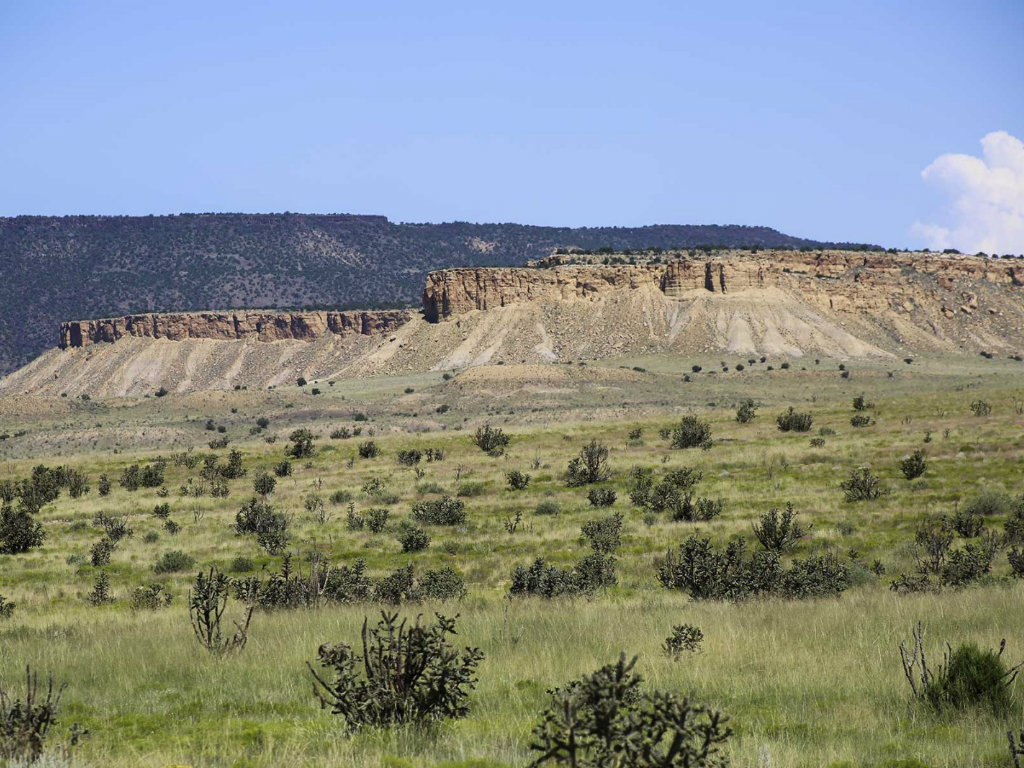
<p>Odds are you already know New Mexico’s Bell Ranch. At 453 square miles, it’s kind of hard to overlook. But to focus on size alone is to overlook a much richer story. The Bell has been featured in countless Westerns and dramatically depicted on millions of Stetson hatboxes. If you’re old enough to remember when tobacco companies could advertise, the ranch’s mesas and pastures were the timeless backdrop in many a Marlboro print campaign. Few venues epitomize the American West like the gorgeous grasslands, stunning mesas, and rugged rimrock canyons surrounding the distinctive bell-shaped mountain a short ride north of the Canadian River.</p>
<p>The Bell Ranch is a place of lore and legend whose contemporary history dates back to an impossibly large land grant of some 656,000 acres by the Mexican government to Pablo Montoya in 1824. Only the hills know how long the Comanche, the Kiowa, and the Apache made camp along the banks of La Cinta Creek before the Spanish army officer petitioned Mexico City for his lands.</p>
<p>Almost two centuries have passed since Don Pablo took title to more than 1,000 square miles of what eventually became the New Mexico Territory. Its ideal setting—the ranch ranges in elevation from 4,200 to 5,600 feet above sea level—is more reminiscent of the African Serengeti than the Great Plains or the Llano Estacado. Top-notch cowmen such as the pioneering trailblazer Charlie Goodnight have long marveled at the ranch’s plentiful waters, its protein-rich grasses, and the temperate climate. The lure of this remote cattle kingdom is so strong that the Bell has enticed five formidable men to commit themselves to shepherding the ranch since 1933: Albert Mitchell, George Ellis, Don Hofman, Rusty Tinnin, and Bert Ancell, the general manager, who had 41 years of experience on the Bell. Half a dozen hands with an average of 15 years service on the Bell worked with Ancell.</p>
<p>This peerless legacy is one of the many priceless assets that make the Bell more than simply another big spread. Take, for instance, the ranch’s horse breeding program, which can be traced back to a remount herd used by the U.S. cavalry almost a century ago. The ranch has also developed a closed composite breed of cattle. Known as RedBell, the breed consists of carefully selected Red Angus and Hereford bloodlines, plus smaller percentages of Brahma and Gelbvieh. And of course there is also the ranch’s iconic one-iron brand. First registered in San Miguel County in 1875, it has been in continuous use ever since.</p>
<p>After more than a century in operation, the Bell was carved into six tracts and parceled off after the end of the Second World War. But for William Lane II, its legacy would have ended with this dissolution. In 1970, the chairman and chief executive of General Binding Corporation purchased the 130,000-acre headquarters tract near the center of the Montoya Grant, and over the next six years he dedicated himself to rebuilding the great ranch. Ultimately, he acquired a total of 290,100 acres, an astounding 44 percent of the original grant.</p>
<p>Lane and his family also put in place improvements that dramatically enhanced beef production. Seven large operating units are cordoned off by 342 miles of fence and connected by 530 miles of interior roads. Ninety miles of pipeline water 206 stock tanks and 117 wells and windmills. The end result is a world-class working cattle ranch that can support 5,000 animal units.</p>
<p>In 2006, the Lane family began its quest to find another steward for the Bell. Several leading brokerages marketed the property, including Mason and Morse Ranch Company and Orvis Cushman &amp; Wakefield. But the Great Recession took its toll. The original asking price of $110 million was lowered to $99 million and then to $83 million in 2010 (not including livestock).</p>
<p>The one constant throughout this process was Patrick Bates of Bates Sanders Swan Land Company, who was brought on to consult for the Lane family in 2006; by 2010 he was the broker of record. In March, Ron Morris of Ranch Marketing Associates contacted him. Like Bates, Morris is a veteran ranch broker with an impressive C.V. His client was none other than John Malone, Liberty Media’s CEO and one of the most respected stewards of the land in Rockies. A new chapter in the history of the Bell was about to begin.</p>
<p>Download the 2010 Land Report 100 <a href="../americas-100-largest-landowners/">HERE</a>.</p>
<p>No related posts.</p>]]></content:encoded>
			<wfw:commentRss>http://www.landreport.com/2010/10/sold-the-bell-ranch/feed/</wfw:commentRss>
		<slash:comments>2</slash:comments>
		</item>
		<item>
		<title>Turner Renewable Energy Acquires Solar Power Project</title>
		<link>http://www.landreport.com/2010/03/turner-renewable-energy-acquires-solar-power-project/</link>
		<comments>http://www.landreport.com/2010/03/turner-renewable-energy-acquires-solar-power-project/#comments</comments>
		<pubDate>Wed, 31 Mar 2010 21:38:57 +0000</pubDate>
		<dc:creator>Eric OKeefe</dc:creator>
				<category><![CDATA[Energy]]></category>
		<category><![CDATA[Eric OKeefe]]></category>
		<category><![CDATA[Feature]]></category>
		<category><![CDATA[Field Reporters]]></category>
		<category><![CDATA[Regional News]]></category>
		<category><![CDATA[Southwest]]></category>
		<category><![CDATA[Topics]]></category>
		<category><![CDATA[First Solar]]></category>
		<category><![CDATA[New Mexico]]></category>
		<category><![CDATA[sola]]></category>
		<category><![CDATA[solar energy]]></category>
		<category><![CDATA[solar power]]></category>
		<category><![CDATA[Southern Co.]]></category>
		<category><![CDATA[Ted Turner]]></category>
		<category><![CDATA[Vermejo Park]]></category>

		<guid isPermaLink="false">http://www.landreport.com/?p=2532</guid>
		<description><![CDATA[America&#8217;s largest landowner is full speed ahead on his renewable energy venture. Turner Renewable Energy and Southern Co. acquired a 30 megawatt (AC) photovoltaic solar power project that is being developed by First Solar (FSLR) adjacent to Ted Turner&#8217;s Vermejo Park Ranch in northern New Mexico. Financial terms of the transaction were not disclosed. The [...]
No related posts.]]></description>
			<content:encoded><![CDATA[<p><a href="http://www.landreport.com/2010/03/turner-renewable-energy-acquires-solar-power-project/"><img class="size-full wp-image-2235 aligncenter" title="Turner Renewable Energy Acquires Solar Power Project" src="http://www.landreport.com/wp-content/uploads/2010/03/VermejoParkBigCostilla_lg.jpg" alt="Turner Renewable Energy Acquires Solar Power Project" width="588" height="325" /></a></p>
<p>America&#8217;s largest landowner is full speed ahead on his renewable energy venture. Turner Renewable Energy and Southern Co. acquired a <span>30 megawatt (AC) photovoltaic solar power project </span><span>that is being developed by First Solar (FSLR) adjacent to Ted Turner&#8217;s Vermejo Park Ranch in northern New  Mexico. </span><span>Financial terms of the transaction were not  disclosed. </span></p>
<p><span>The Cimarron I Solar Project </span><span>will supply power to approximately 9,000 homes, or  18,000 residents, and displace over 45,000 tons of CO<sub>2</sub> per  year. </span>Electricity generated by the plant will serve a 25-year power  purchase  agreement with the Tri-State Generation and Transmission  Association, a  not-for-profit wholesale power supplier to 44 electric  cooperatives  serving 1.4 million customers across New Mexico, Colorado, Nebraska, and  Wyoming.<span> First Solar will also provide operation and  maintenance services under a 25-year contract.</span></p>
<p><span>Construction of <span>Cimarron I</span> will began this month. Commercial operation is expected to commence by year  end 2010. The solar project will employ approximately 500,000 photovoltaic modules  manufactured by First Solar using its advanced thin film technology and will create more than 200 jobs during peak construction.</span></p>
<p>No related posts.</p>]]></content:encoded>
			<wfw:commentRss>http://www.landreport.com/2010/03/turner-renewable-energy-acquires-solar-power-project/feed/</wfw:commentRss>
		<slash:comments>0</slash:comments>
		</item>
		<item>
		<title>For Sale: Val Kilmer&#8217;s New Mexico Ranch for $33 Million</title>
		<link>http://www.landreport.com/2009/04/val-kilmers-ranch-on-the-market-for-33-million/</link>
		<comments>http://www.landreport.com/2009/04/val-kilmers-ranch-on-the-market-for-33-million/#comments</comments>
		<pubDate>Mon, 20 Apr 2009 07:00:05 +0000</pubDate>
		<dc:creator>Grant Gannon</dc:creator>
				<category><![CDATA[Conservation]]></category>
		<category><![CDATA[Equestrian]]></category>
		<category><![CDATA[Feature]]></category>
		<category><![CDATA[Grant Gannon]]></category>
		<category><![CDATA[Hunting]]></category>
		<category><![CDATA[Southwest]]></category>
		<category><![CDATA[Fishing]]></category>
		<category><![CDATA[New Mexico]]></category>
		<category><![CDATA[Pecos River]]></category>
		<category><![CDATA[San Miguel County]]></category>
		<category><![CDATA[Val Kilmer]]></category>

		<guid isPermaLink="false">http://www.landreport.com/?p=1631</guid>
		<description><![CDATA[Val Kilmer, star of Top Gun, Tombstone and Willow, has put his 5,970-acre Pecos River Ranch on the market for $33 million. John Watson of Orvis/Cushman &#38; Wakefield has the listing. The Pecos River Ranch features more than five miles of frontage on its namesake river. Kilmer&#8217;s 5,550-square-foot adobe home as well as an 1,800-square-foot [...]
No related posts.]]></description>
			<content:encoded><![CDATA[<p><a href="http://www.landreport.com/2009/04/val-kilmers-ranch-on-the-market-for-33-million/"><img class="alignnone size-full wp-image-1632" title="kilmer-ranch" src="http://www.landreport.com/wp-content/uploads/2009/04/kilmer-ranch.jpg" alt="kilmer-ranch" width="588" height="325" /></a></p>
<p>Val Kilmer, star of Top Gun, Tombstone and Willow, has <a href="http://online.wsj.com/article/SB123991311548126479.html#project%3DSLIDESHOW08%26s%3DSB123990441728625873%26articleTabs%3Darticle" target="_blank">put his 5,970-acre Pecos River Ranch on the market</a> for $33 million. John Watson of Orvis/Cushman &amp; Wakefield <a href="http://www.orviscw.com/listings/detail/Val-Kilmers-Pecos-River-Ranch-34/" target="_blank">has the listing</a>.</p>
<p>The Pecos River Ranch features more than five miles of frontage on its namesake river. Kilmer&#8217;s 5,550-square-foot adobe home as well as an 1,800-square-foot caretaker&#8217;s home, additional guest homes, barns, garages, and outbuildings are included in the sale.</p>
<p>The ranch is located 8 miles from Pecos, 22 miles from Santa Fe, and 90 miles from Albuquerque.</p>
<p>Kilmer, who is rumored to be considering a run for governor of New Mexico, has owned the property for nearly 15 years. He previously listed portions of the ranch for sale in 2006, but found no buyers.</p>
<p>No related posts.</p>]]></content:encoded>
			<wfw:commentRss>http://www.landreport.com/2009/04/val-kilmers-ranch-on-the-market-for-33-million/feed/</wfw:commentRss>
		<slash:comments>1</slash:comments>
		</item>
		<item>
		<title>For Sale: Bell Ranch Gets Bigger</title>
		<link>http://www.landreport.com/2009/04/bell-ranch-gets-bigger/</link>
		<comments>http://www.landreport.com/2009/04/bell-ranch-gets-bigger/#comments</comments>
		<pubDate>Thu, 16 Apr 2009 23:00:37 +0000</pubDate>
		<dc:creator>Eric OKeefe</dc:creator>
				<category><![CDATA[Cattle]]></category>
		<category><![CDATA[Conservation]]></category>
		<category><![CDATA[Eric OKeefe]]></category>
		<category><![CDATA[Feature]]></category>
		<category><![CDATA[Field Reporters]]></category>
		<category><![CDATA[Hunting]]></category>
		<category><![CDATA[Regional News]]></category>
		<category><![CDATA[Southwest]]></category>
		<category><![CDATA[Topics]]></category>
		<category><![CDATA[Water]]></category>
		<category><![CDATA[Apache]]></category>
		<category><![CDATA[Bell Ranch]]></category>
		<category><![CDATA[Canadian River]]></category>
		<category><![CDATA[Comanche]]></category>
		<category><![CDATA[Eric O'Keefe]]></category>
		<category><![CDATA[Lane family]]></category>
		<category><![CDATA[National Registry of Historic Places]]></category>
		<category><![CDATA[New Mexico]]></category>
		<category><![CDATA[Orvis/Cushman & Wakefield]]></category>
		<category><![CDATA[San Miguel County]]></category>
		<category><![CDATA[William Lane]]></category>

		<guid isPermaLink="false">http://www.landreport.com/?p=1603</guid>
		<description><![CDATA[The biggest ranch on the market in America just got bigger. The heirs of William Lane, who assembled New Mexico&#8217;s Bell Ranch 40 years ago, have elected to include an additional 40,100 acres of canyon country and pastureland in the offering, which now totals 290,100 contiguous deeded acres or 453 square miles. Carrying capacity for the ranch [...]
No related posts.]]></description>
			<content:encoded><![CDATA[<p><a href="http://www.landreport.com/2009/04/bell-ranch-gets-bigger/"><img class="alignnone size-full wp-image-1617" title="bellranch-featured" src="http://www.landreport.com/wp-content/uploads/2009/04/bellranch-featured.jpg" alt="bellranch-featured" width="588" height="325" /></a></p>
<p>The biggest ranch on the market in America just got bigger. The heirs of William Lane, who assembled New Mexico&#8217;s Bell Ranch 40 years ago, have elected to include an additional 40,100 acres of canyon country and pastureland in the offering, which now totals 290,100 contiguous deeded acres or 453 square miles. Carrying capacity for the ranch is 5,000AU.</p>
<p>The new price for the Bell is $103 million &#8211; $99 million for the land and $4 million for the livestock and equipment &#8211; or $341 per acre, according to the <a href="http://www.orviscw.com/listings/detail/The-Bell-Ranch-7/" target="_blank">Orvis/Cushman &amp; Wakefield website</a>. The price represents a 22 percent reduction below the original asking price. Contact John Watson or Rye Austin at 888-541-4300 for additional details.</p>
<p>Property Details include:</p>
<p>290,100(+/-) deeded acres in northeastern New Mexico featuring Bell Mountain, a dramatic butte punctuating the landscape.</p>
<p>Located east of Santa Fe primarily in San Miguel County.</p>
<p>The Canadian River flows through the ranch for over 13 river miles.</p>
<p>Ranch is adjacent to 9,600-acre Conchas Lake with lake house and boat storage.</p>
<p>Carrying capacity for cattle operation is 5,000AU.</p>
<p>Headquarters includes general manager residence, ranch offices, stables, barns, garage and storage facilities.</p>
<p>10,832-square foot, 8-bedroom Hacienda with swimming pool and tennis court.</p>
<p>Four cowboy camps across the property.</p>
<p>Bell Ranch airfield has storage for 100LL avgas and a large hangar for its 8,200&#8242; x 75&#8242; lighted dirt airstrip.</p>
<p>No related posts.</p>]]></content:encoded>
			<wfw:commentRss>http://www.landreport.com/2009/04/bell-ranch-gets-bigger/feed/</wfw:commentRss>
		<slash:comments>0</slash:comments>
		</item>
		<item>
		<title>Developer&#8217;s Diary: Canyon Ridge</title>
		<link>http://www.landreport.com/2009/04/developers-diary-canyon-ridge/</link>
		<comments>http://www.landreport.com/2009/04/developers-diary-canyon-ridge/#comments</comments>
		<pubDate>Mon, 13 Apr 2009 21:30:30 +0000</pubDate>
		<dc:creator>Eddie Lee</dc:creator>
				<category><![CDATA[Conservation]]></category>
		<category><![CDATA[Developers]]></category>
		<category><![CDATA[Eddie Lee Rider]]></category>
		<category><![CDATA[Feature]]></category>
		<category><![CDATA[Field Reporters]]></category>
		<category><![CDATA[Recreation]]></category>
		<category><![CDATA[Topics]]></category>
		<category><![CDATA[Atlanta Braves]]></category>
		<category><![CDATA[Chama]]></category>
		<category><![CDATA[Chama River]]></category>
		<category><![CDATA[Discovery Ridge]]></category>
		<category><![CDATA[Mike Plant]]></category>
		<category><![CDATA[New Mexico]]></category>
		<category><![CDATA[Northern New Mexico]]></category>
		<category><![CDATA[Rio Arriba County]]></category>

		<guid isPermaLink="false">http://www.landreport.com/?p=1559</guid>
		<description><![CDATA[When Mike Plant first set foot on the 5,700 breathtakingly beautiful acres of Northern New Mexico that would become Canyon Ridge, he knew he had found a gem. “I’m blessed, I’ve been around a lot of beauty, and anyone who spends a day and touches a mere sliver of Canyon Ridge will tell you it [...]
No related posts.]]></description>
			<content:encoded><![CDATA[<p><a href="http://www.landreport.com/2009/04/developers-diary-canyon-ridge/"><img class="alignnone size-full wp-image-1547" title="canyon_ridge_scenic1" src="http://www.landreport.com/wp-content/uploads/2009/04/canyon_ridge_scenic1.jpg" alt="canyon_ridge_scenic1" width="581" height="244" /></a></p>
<p>When Mike Plant first set foot on the 5,700 breathtakingly beautiful acres of Northern New Mexico that would become <a href="http://www.discovercanyonridge.com/" target="_blank">Canyon Ridge</a>, he knew he had found a gem.</p>
<p>“I’m blessed, I’ve been around a lot of beauty, and anyone who spends a day and touches a mere sliver of <a href="http://www.discovercanyonridge.com/" target="_blank">Canyon Ridge</a> will tell you it is one of the most beautiful places in the world,” says Plant, a lifelong outdoorsman who also happens to be an executive vice president with the Atlanta Braves.</p>
<p>“It’s where I go to get away, to be immersed in nature, to get energized,” Plant says, adding, “You can hike for miles and miles, ride a horse or mountain bike, cross country ski, and enjoy unbelievable hunting and fishing.”</p>
<p>Overlooking the Chama River Valley in Northern New Mexico, <a href="http://www.discovercanyonridge.com/" target="_blank">Canyon Ridge</a> is a one-of-a-kind conservation community featuring ranch estates ranging in size from 10 to 60 acres. Slated to open in the summer of 2012, each of Canyon Ridge’s 80 lucky owners will have access to an additional 4,000 acres that have been set aside in a permanent conservation easement.</p>
<p>“It’s doing all things little and big – whether it’s putting the majority of the land in conservation, developing a recreational management plan with the Rocky Mountain Elk Foundation, or little things like allowing snowmobiles and only electric ATVs on roads and not trails – that make this one very special place,” Plant says.</p>
<p>I myself was surprised to find out that Canyon Ridge is only the second development ever approved for a conservation easement by the <a href="http://www.rmef.org/" target="_blank">Rocky Mountain Elk Foundation</a>.</p>
<p>This type of long-range planning is part of Plant’s big-picture approach to Canyon Ridge. With $17 million already invested and nearly 40 ranch estates slated to be ready this summer, he has made it clear to his Northern New Mexico neighbors that he is putting his money where its mouth is.</p>
<p>“We were the first to get a master plan approved in Rio Arriba County,” Plant points out, “and we did it because we didn’t do anything under the table. We said, ‘Here’s what we’re doing and not doing, and our top priorities are to preserve the heritage of the land and its wildlife inhabitants, and to provide jobs to local and regional people.’</p>
<p>“I learned a long time ago to respect other cultures and heritages,” Plant adds. “These people know I’m not the big guy in a suit from Atlanta. They can see my boots weren’t just pulled out of a box.”</p>
<p>Got to like that.<img class="alignleft size-medium wp-image-1549" style="border: 0pt none; margin-right: 10px; margin-bottom: 10px;" title="canyon_ridge_fishing" src="http://www.landreport.com/wp-content/uploads/2009/04/canyon_ridge_fishing-300x200.jpg" alt="canyon_ridge_fishing" width="300" height="200" /></p>
<p>No related posts.</p>]]></content:encoded>
			<wfw:commentRss>http://www.landreport.com/2009/04/developers-diary-canyon-ridge/feed/</wfw:commentRss>
		<slash:comments>0</slash:comments>
		</item>
		<item>
		<title>Classroom: Water Rights in New Mexico</title>
		<link>http://www.landreport.com/2008/04/classroom-water-rights-in-new-mexico/</link>
		<comments>http://www.landreport.com/2008/04/classroom-water-rights-in-new-mexico/#comments</comments>
		<pubDate>Sun, 27 Apr 2008 20:10:46 +0000</pubDate>
		<dc:creator>Grant Gannon</dc:creator>
				<category><![CDATA[Field Reporters]]></category>
		<category><![CDATA[Southwest]]></category>
		<category><![CDATA[Topics]]></category>
		<category><![CDATA[Water]]></category>
		<category><![CDATA[Jim Kimmons]]></category>
		<category><![CDATA[New Mexico]]></category>
		<category><![CDATA[water rights]]></category>

		<guid isPermaLink="false">http://www.landreport.com/?p=141</guid>
		<description><![CDATA[With most areas of the West gaining popularity for natural beauty, recreation and open lands, it&#8217;s important that those who wish to purchase land or homes understand an issue as important as water rights.  As a very precious commodity with greater demand than supply, New Mexico&#8217;s water is the subject of a great deal of [...]
No related posts.]]></description>
			<content:encoded><![CDATA[<p>With most areas of the West gaining popularity for natural beauty, recreation and open lands, it&#8217;s important that those who wish to purchase land or homes understand an issue as important as water rights.  As a very precious commodity with greater demand than supply, New Mexico&#8217;s water is the subject of a great deal of legal action and has been so for a very long time.<span id="more-141"></span></p>
<p><strong>BY JIM KIMMONS</strong></p>
<p>LEGAL ASPECTS</p>
<p>New Mexico has been very active in the last decade in trying to adjudicate all water rights in the state.  There are still properties out there that will carry a comment in the &#8220;for sale&#8221; listing that this land has &#8220;historical water rights.&#8221;  What that means is that they have not been adjudicated, and there may or may not actually be water rights that can be counted upon and legally transferred.  It can require proof that the water use dated before 1907 to get grandfather status.  Needless to say, affidavits to prove use back 100 years can be a bit difficult to obtain.</p>
<p>The purchaser of property in New Mexico should first look for proof that the water rights appurtenant to the property have been adjudicated.  If that is not the case, great caution should be exercised if water rights are important.  There should also be documentation that the water right is recorded in the name of the current seller.  This gets missed more often than one might expect.  Though it may be mentioned in the deed, there is still a document necessary for the state, or a permit per se for the right.  Until a legal transfer of ownership of a water right is recorded at the State Engineer&#8217;s Office, the ownership of the right still rests with the last recorded owner.  Sometimes that&#8217;s easily correctable, and sometimes it&#8217;s not.  If it&#8217;s mentioned without break in a chain of deeds, it&#8217;s probably going to be easy to resolve.  If not, an attorney can work on it before one makes a purchase. Also, make any purchase offer contingent upon water rights being legally transferable.</p>
<p>HISTORY</p>
<p>In attempting to resolve disputes over water in New Mexico, a great deal of history is involved.  The Native Americans were obviously here long before anyone else, including the Spanish.  However, questions exist as to how organized and engineered their distribution systems were.  It is knownm they used water and, in some areas of the state, they had large canals for distribution.  However, in other areas there is little or no evidence of systems of ditches or canals dating back that far.  This is important in deciding rights, as New Mexico, among other criteria, uses the &#8220;first in time &#8211; first in right&#8221;, or prior appropriation doctrine.  Since so many acequia ditches are supplied by rivers and streams, it&#8217;s an important issue when there are disputes over claims to major water sources.</p>
<p>LAW AND LOCAL CUSTOM CREATE CONFUSION</p>
<p>The acequia associations that manage the huge system of irrigation ditches in the state are actually subdivisions of the State of New Mexico.  This limits the ability to sue them, and increases their powers in managing ditches and water flows.  Fred Waltz, a Taos, NM attorney with 30 years of experience in land and water issues, says that many of the issues about which he is consulted have to do with a lack of understanding of local custom and its relation to the legal side of water rights.</p>
<p>Someone from another part of the country will purchase their dream parcel for current enjoyment and future retirement.  One of the most important factors in choosing it might have been the irrigation ditch that flows through it.  It&#8217;s even possible that the landowner will not have rights to use the water from the ditch, but it&#8217;s still of value in that there are a number of beautiful trees growing along the ditch that wouldn&#8217;t otherwise be able to exist in this arid climate.  The new owner puts up a nice fence around the property and comes home one day to find a group of people with shovels going up and down the driveway.  They have also cut down a couple of the nicest trees.  What this new resident didn&#8217;t know is that these people have a right to access in order to properly maintain the ditch.  They may have even used the driveway to get a piece of heavy equipment back to the ditch to get that tree out of the way.  Knowing the customs and laws from the beginning, this landowner could have placed a gate in their fence at or near the ditch for the use of the cleaning crew.  And, as far as the trees, there&#8217;s no recourse there either.  The acequia crew has the right to remove any impediment to proper flow of water or to maintenance of the ditch.</p>
<p>Another mistake new landowners make is to place culverts in ditches for driveways or other access.  Unfortunately, they usually don&#8217;t know seasonal flow rates and the culverts are too small.  They become restricted and the yard, or even perhaps their home, gets flooded at some point.  It&#8217;s unlikely that there will be any financial culpability on the part of the acequia association.  Or this property owner might just come home one day to find the culvert entirely removed.  Again, that&#8217;s their right, so it&#8217;s good to learn about these things before purchase or land use planning.  Many a gas, electric or telephone line has been buried across a ditch, only to be broken during the annual ditch maintenance.  It&#8217;s the owner&#8217;s problem, not those in charge of the ditch.</p>
<p>Other customs can be quite a revelation to newcomers.  The easement rights for the acequia are not only for the ditch, but as mentioned before, for access to maintain it.  This easement is normally &#8220;what is reasonable and necessary&#8221;, rather than a defined width of tract or other measure.  If the mayordomo, or ditch supervisor, believes that it&#8217;s necessary to bring in a piece of heavy equipment, and doing so requires running over ten feet of your prize rose bushes, that&#8217;s the way it will be in most cases. </p>
<p>There are also sharing arrangements for water between ditch associations.  So, what you have on paper as a specified amount of water right may or may not be supplied in some years.  If three major ditch associations share a source, and water is low one year, agreements may be in place to favor one or another of the ditches, thus reducing your right.  And last but not least, those in charge of the ditch you use for water can have priorities for use in low flow years.  If an acequia sets its priority as livestock watering, then your garden can be denied water in a poor flow year.</p>
<p>It&#8217;s evident that there is a great deal of prior history, current law and local custom influencing water rights in New Mexico.  Any prospective land purchaser would be wise to do the research necessary and get the appropriate documentation to assure their right to use surface water.  It would be wise not to stop there.  A courtesy visit to the mayordomo of your ditch association, with questions as to how you can be a good ditch citizen, could go a long way toward avoiding future problems.</p>
<p>&#8212;&#8212;&#8212;&#8212;&#8212;&#8212;&#8212;&#8212;&#8212;&#8212;&#8212;&#8212;&#8212;&#8212;&#8212;&#8212;&#8212;&#8212;&#8212;&#8212;&#8212;&#8212;&#8212;&#8212;&#8212;&#8212;<br />
A New Mexico real estate broker based out of Taos, Jim Kimmons is the author of Real Estate Business Guide for About.com.</p>
<p>No related posts.</p>]]></content:encoded>
			<wfw:commentRss>http://www.landreport.com/2008/04/classroom-water-rights-in-new-mexico/feed/</wfw:commentRss>
		<slash:comments>1</slash:comments>
		</item>
	</channel>
</rss>