For Sale: Hall & Hall Lists Montana’s N Bar Ranch

For Sale: Hall & Hall Lists Montana's N Bar Ranch

One of the most historic working ranches in the Rocky Mountain West is on the market. The 62,091-acre N Bar Ranch, whose chain of title includes Tom Cruse, Anton Holter, and Jack Milburn has been listed by Hall and Hall for $45 million, not including livestock and other personal property.

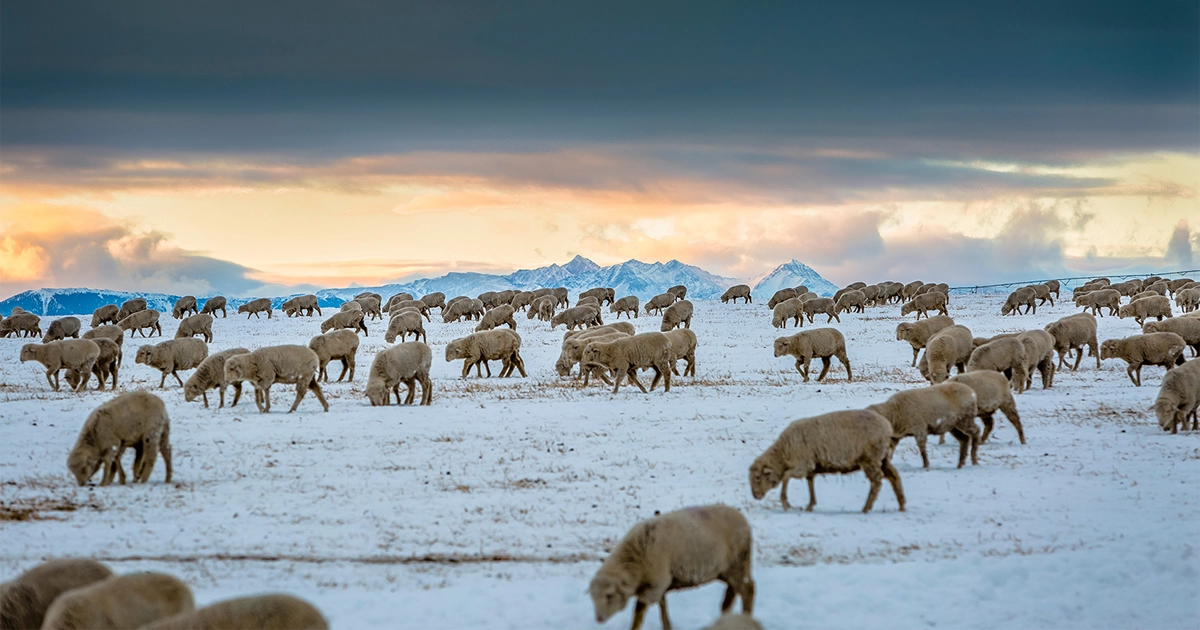
NBarHerd“The N Bar Ranch is a piece of Montana history complete with a profitable livestock operation and an outstanding wildlife component,” said Hall and Hall broker Joel Leadbetter. Ranging in elevation from 4,200 to 5,500 feet above sea level, the ranch is time-tested cattle country and is further blessed by abundant wildlife, including trophy elk, mule deer and whitetail, antelope, Hungarian pheasant, and sharptail and mountain grouse. Brown trout thrive in the 60 miles of Flatwillow Creek that wind through the property down from the Snow Mountains. ”We are thrilled to be representing such a phenomenal land holding,” Leadbetter adds.

Located approximately 90 miles north of Billings and 35 miles southeast of Lewiston, the N Bar is 62,091 total acres, including 51,409 deeded, 4,875 BLM leased, 1,920 Montana leased, and 3,887 privately leased.

Read more about the listing in Friday’s Wall Street Journal or visit the ranch’s website.

NBarCattle

Tour the Flying D With Ted Turner

bison588

Want an opportunity to meet the top gun on The Land Report 100 on one of his many ranches? Now you can, thanks to a Montana fundraiser. Tickets to tour Ted Turner’s 119,000-acre Flying D Ranch are still available, and they’re going for $1,500. Proceeds go to the Greater Yellowstone Coalition; Turner is a board member.

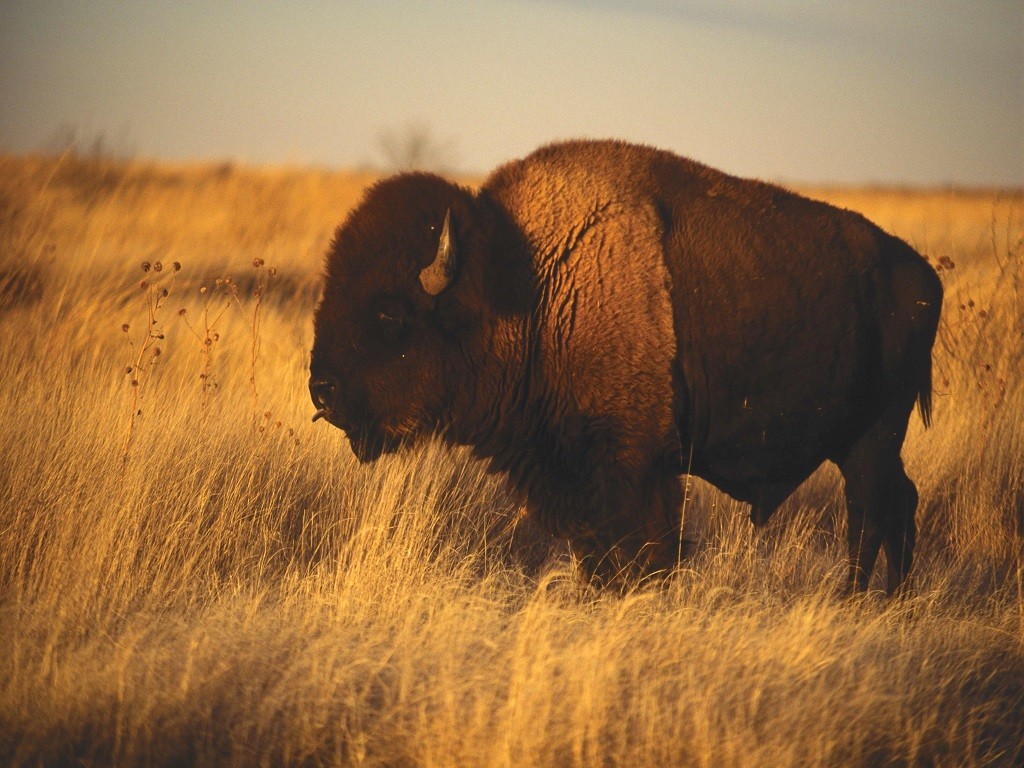
Your $1,500 fee gets you a driving tour of the ranch from the nation’s largest landowner, cocktails on his back porch, and a dinner featuring ranch-raised bison. Turner has the world’s largest private herd of bison, which he raises on the Flying D and markets through his restaurant concept, Ted’s Montana Grill, with over 50 locations in 18 states.

At last report 10 of the 60 tickets remained.

Read more at:
Enviro Group Plans Fundraiser at Turner Ranch,” Billings Gazette, June 5, 2009.

For Sale: Montana’s Sun Ranch

sun-ranch

The jury is still out on my definition of dream property, but I’ll tell you this: Montana’s Sun Ranch is definitely in the running.

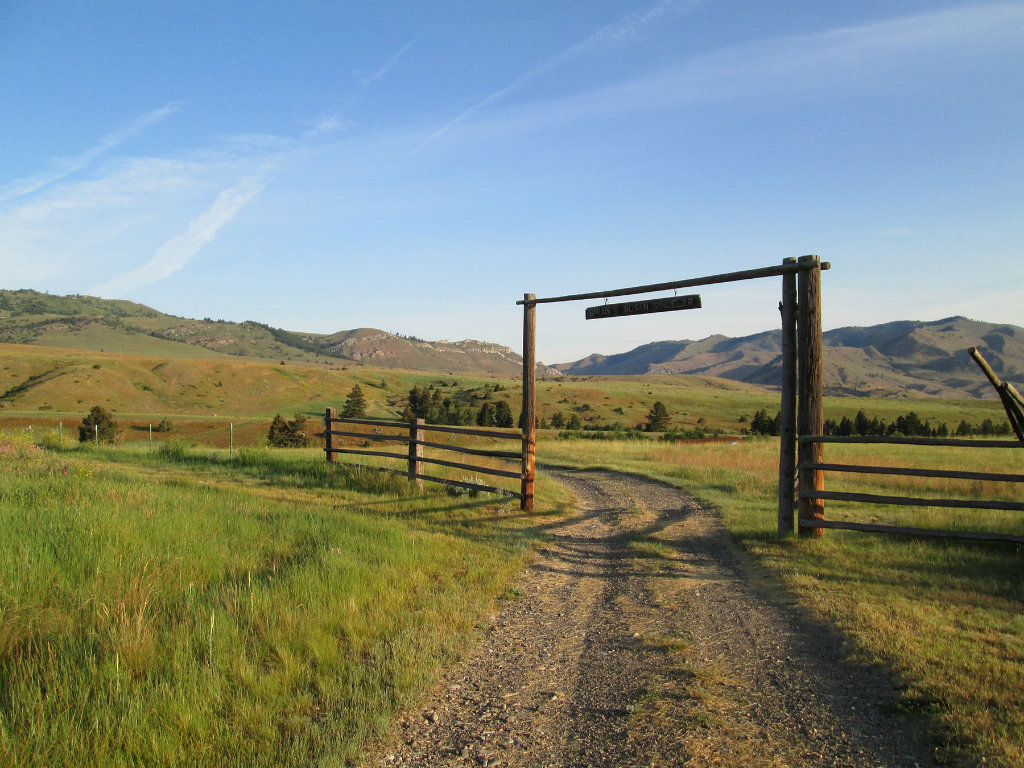
Nestled on 18,000 acres just outside of Yellowstone National Park in the Madison Valley, the Sun Ranch ranges from 5,700 feet to over 10,000 and is a sterling example of what a true steward of the land can do with a spectacular piece of property. Almost 100 percent of the ranch is protected by conservation easements.

Three creeks – Sun, Moose, and Wolf – nurture more than a mile of the Madison River, which weaves its way through the property. Needless to say the fishing is out of this world. Elk, deer, bear, antelope, and sheep cross this country going to and from Yellowstone. Throw in a beautiful main residence, and this prime parcel is for sale at $55 million. Fay Ranches has the listing.

According to New West,the owner, Roger Lang, is looking to unload the ranch and free up capital for other conservation projects. According to the article, it looks like he has in mind a development similar to what Russ Maytag has done in Colorado at Maytag Mountain Ranch.

More Coverage on the Yellowstone Club Bankruptcy Case

It wasn’t two years ago that every media outlet known to man was clamoring over one another to give more column inches to the biggest, gawdiest monstrosity in the West: the Yellowstone Club’s record-breaking $155-million home. Though we’ve banged the drum on many an occasion, I’m pleased to say The Land Report did not jump on that bandwagon. But we readily admit to watching the feeding frenzy as those same news channels cover the demise of the elite enclave, including these two incisive reports. Read more

Sold! Montana’s 6,462-acre Scott Ranch

November 25, 2008 by Grant Gannon  
Filed under Cattle, Conservation, Farming, Feature, Grant Gannon, West

A lot of noteworthy closings taking place in and around Yellowstone County, Montana. Last week we reported on the sale of the 15,800-acre Bar Diamond Ranch. This time around it’s the 6,462-acre Scott Ranch on the Crow Reservation southeast of Billings, which James Stinehagen of the Flying S Cattle Co. purchased for $387 per acre, according to the Billings Gazette. Read more

Sold! Montana’s 15,800-acre Bar Diamond Ranch

There seems to be no sign of an economic fallout in Montana’s still strong recreational land market. That’s the takeaway from the Billings Gazette, which reports that the 15,800-acre Bar Diamond Ranch has closed. Read more

Yellowstone Club Files for Bankruptcy

The world’s only private ski and golf community has sought bankruptcy protection. The Yellowstone Club, an exclusive 13,400-acre retreat in Montana’s Gallatin Mountains whose members include Microsoft cofounder Bill Gates and former vice president Dan Quayle, filed for Chapter 11 bankruptcy protection in federal bankruptcy court yesterday. Read more

Tom Brokaw

February 15, 2008 by Grant Gannon  
Filed under Video, West

NBC’s Tom Brokaw shared the evening news with millions of Americans each and every night for decades as anchor and managing editor of NBC Nightly News. Since stepping down in 2004, he has kept a busy scheduling, writing books, pitching in on busy news nights, and producing documentaries for NBC. He’s also had ample opportunity to spend a lot more time on a beautiful piece of ranchland he owns in Montana. Click inside to listen in as Land Report Editor Eric O’Keefe interviews Tom Brokaw about life along the Madison River. Read more

The Tom Brokaw Interview


BY ERIC O’KEEFE
PUBLISHED MAY 2007

Tom Brokaw has had a front-row seat at some of the most momentous events in recent history, yet to hear him tell it, what happened on an isolated river bank on his Montana ranch a couple of years ago could well be just as unforgettable.

For decades, millions of Americans tuned in to Tom Brokaw when they wanted answers. So much so that when the NBC anchorman stepped down in 2004, the Peacock Network wisely offered him a 10-year contract extension to produce documentaries and sit in on major events. In an age of media midgets, this is one guy who didn’t need to be on the market.

But Brokaw is also a gifted storyteller, a fact well known to anyone who has read The Greatest Generation or his autobiography, A Long Way From Home. This facility quickly becomes evident one afternoon at his NBC office overlooking Rockefeller Center. The conversation had shifted from dates and places to the Tom Brokaw America doesn’t see on TV, the man who emerges when he arrives in Montana and sets foot on his ranch. Brokaw starts off by describing how much he loves to go out by himself. “I think the wilderness is at best a solitary experience,” he says, then quickly cuts to the chase: “I’ll tell you one quick story. This is, for me, the apotheosis of the Montana experience.

“Two years ago in the early spring, I was out by myself on our property. And I was on a ridge overlooking a bend in the river, and a herd of mother elk came out with their newborn calves. The calves couldn’t have been more than three weeks old. River’s running very high. They took a long look at me. I’m 150 yards away. I stood stock still. The mothers led the calves into the high river. Most of them made it. They had to kind of crash their way through the hawthorn bushes on the other side. One did not. It got swept downstream. Made its way onto an eddy, got back on the sandbar, tried a second time, missed a second time, missed a third time. Now it’s pretty tired. Goes up and stands on the sandbar, and it just looks painfully at its mother across the way. Honest to God, this cow elk looked at that calf and nodded, waded back into the river, nuzzled the calf, led it upstream to a safer part of the river and across the river where the rest of the herd of mothers and their offspring were waiting, and then they disappeared over the hill.

“I challenge you to duplicate that anywhere else in American life. It was just the most rewarding kind of experience. It’s truly spiritual in its own way, and I keep that memory with me with a lot of others,” he says.

Brokaw’s enthusiasm for this other life of his masks a key fact: Montana wasn’t even on his radar screen until he was almost 50. Although he grew up next door in South Dakota—his family had homesteaded in the Dakota Territory in the late 1800s—his career as a journalist took him every place but the American West. He started at KMTV in Omaha, anchored the late evening news on WSB-TV in Atlanta, and then joined KNBC-TV in Los Angeles. He got tapped for the big leagues in 1966 when NBC News hired him, and with the exception of a stint as the network’s White House correspondent in the 1970s he’s been working in New York City, anchoring the Today show from 1976 to 1981 and the Nightly News from 1982 to 2004.

So how did he first make his way to Montana? On assignment of course. “I was drawn to Montana originally because I went out there to shoot a documentary, and also I was invited to the Montana Bar Association to give a speech,” he says. “The fee that I came up with was they had to drop me at a trail head and pick me up five days later. My wife and I were pretty avid backpackers at the time. And we’d not been in Montana before that. We were thunderstruck frankly by the amount of space that was there—not just the national parks, which we were familiar with, but the wilderness areas and other places.”

Tom BrokawWhat got him back a second time? Another assignment.

“I shot a documentary in a small town called Absarokee down in Stillwater County about the disappearing family ranch … and it became more of an organic relationship at that point,” he says.

Point of fact: When anyone with substantial media experience describes a relationship as “organic,” a major acquisition is imminent. In Tom and Meredith Brokaw’s case, it was time to buy a ranch.

“I didn’t know what that meant frankly. It was kind of a romantic idea that I had of buying a piece of ground. I was really looking for 100 acres and a river, and that’s the hardest single thing to find. And I kept at it, kept at it, kept at it. My wife never believed it would come to fruition. And it did. And it was a life-changing experience or the whole family,” he says.

Oddly enough, the property they now own didn’t fare that well in the initial judging. “The first time I looked at the ranch that we now own, it didn’t take. And I’ve often wondered why. I was at the end of a long day. I was tired. We’d been fishing, pretty hot,” he says.

The second go, however, was a charm. “I went back and rode the property with the then owner and saw all the dimensions of it and fell in love with it,” he says. The next step was to convince his wife.

“I got two partners because my wife was so resistant to the idea,” Brokaw admits. “I didn’t want to step off the cliff on my own and paralyze me. So I had two partners at the time, and we bought it. And it took my wife six months to come out, and then she fell in love with it. And now we own it entirely.”

THE LAND ITSELF IS JUST OVER a mile high. Crow Indians once used it as a summer hunting ground. A Norwegian immigrant homesteaded the property in the early 1900s. In 1989, the New York broadcaster began journeying west with his family. At first it was for a week at a time. Then two. Last summer the Brokaws spent four months on their West Boulder Ranch.

Brokaw describes his experience as a landowner as an evolution. “We tried everything,” he says. “We took the fences down where we didn’t like them. We fenced off the riparian zone because we wanted to bring that back. The cattle were allowed to graze right down to the river. We had a leafy spurge problem that we didn’t know what that meant. Then we found ways of trying to deal with that. Putting sheep on and getting biologicals, and it got to be interesting. With every passing year we came to know more about what we were involved in and what was required. I’m to the point now where I think that we’ve been good stewards of the land. We’ve worked hard at it. Getting the leafy spurge down. Keeping the grasses down.

“We run bison on about half the ranch. On the other half, we lease to a local cowboy who … has a mother-calf operation. It’s good for that part of the land where he grazes his cows because it keeps the grass down. We had fires last year that, I think to a lot of outsiders, were pretty destructive. To us they were renewing. They burnt primarily our grassland, although some timber as well. But I’m relieved. Nobody got hurt. No structures were burned, and it’s going to be good for the ground.”

After almost two decades on his property, Brokaw is anything but a passive landowner. The pace of his voice quickens as he describes the challenges the land affords, the biological puzzles, and the sort of problem solving that has stimulated as well as preoccupied Montana landowners for generations.

At times there was a bit of a learning curve. “One of the big mistakes is that we tried to run cows for a while on our own and have a cow-calf operation. It was too high, too wet, too cold to calf. We were doing it, in part, for the managers that we had at the time—a couple that wanted to make some extra money and loved doing it. And it just wore them down and wore us out as well. So that was a mistake,” he says.

One of his prouder accomplishments is a project that was undertaken in conjunction with a neighbor to increase the upland bird population. “We put in two acres of milo down along the wetlands just so that they would have some feed. And we’ve allowed the grasses to grow higher in some of the ravines,” he says.

Such stewardship has paid big dividends. “We’re going to work harder at it now because we’ve learned that if you do just a few things the right way, the bird population goes way up. It’s Hungarian partridge and sharp-tailed grouse but also rough grouse and other things.”

“Tom is a student, an inquisitive fellow,” says renowned horseman Buck Brannaman, who takes my call at his Wyoming home. Brannaman knows the country in and around the West Boulder Ranch. He served as a technical adviser on the set of The Horse Whisperer, which was filmed not far from the property. Brannaman met Meredith Brokaw not long after the couple closed on the ranch in 1989. He was giving one of his many annual clinics, and she attended. She so enjoyed his approach to horsemanship that she invited him to conduct a private clinic at the family’s ranch. Brannaman has been a regular every summer since.

“It’s kind of a tradition,” Brannaman says. “The clinic is usually four days. Tom and Meredith keep it small. They always invite about 10 of their family and friends. It’s a family get-together for them—they’ve got a great family—and it’s become a real social thing for us. We do a little fly-fishing. We always have dinner on the Fourth of July at Mike Keaton’s place [the actor owns property nearby]. And then we go back to the Brokaws’. Every year Tom sets off fireworks on the bridge. I think he’s a pyromaniac at heart.”

Newcomers are always subject to scrutiny, especially in Montana, a state whose incomparable beauty has been attracting well-heeled buyers from both coasts for decades.

“Frankly, there is always going to be a certain element among the locals that are not going to understand Tom,” Brannaman says. “He’s too famous. He couldn’t possibly be like-minded. But I couldn’t disagree more. Tom is very astute. Very open-minded. Ask him about his ranch 10 years from now, and I promise you what he’ll tell you will be different then from what he’ll tell you today. Each piece of property is different. Tom knows that. He knows that you have to learn your ranch. That’s kind of the fun stuff.”

WHEN IT COMES TO FITTING IN, BROKAW knows his place, and he knows it for the right reasons. Despite his high-profile status and worldly mien, he’s small-town born and bred. He knows better than to put on airs. Red Brokaw saw to that. In A Long Way From Home, Brokaw shows no shame in listing the lessons he learned from his hardworking father and the bruising his ego took when he needed to be put in his place. It’s given him an equanimity that serves him well as a newcomer.

“When I first moved there, I was stopped on the streets of Livingston and Big Timber by every other cowboy saying, ‘I used to hunt on your property. Can I do it again?’ And I said, ‘You know, I’m just going to have to say no to everyone until we sort this out.’ And then we hired an outfitter who had rights on there. And he came and said, ‘I’d like to put some hunters in.’ So we did a trade with him. I don’t think we ever got our end of the trade. That’s fine. And I said, ‘Sure, come on with your hunters.’ And then our manager hunts. And then we generally allow the guy who does our waste management stuff. He comes and picks up the trash once a week. And I think the UPS driver this year got to shoot a cow.

“As I often say to my friends, and I’ve got a lot of friends who lived in Montana all their lives, I say, ‘You know, when I first started coming to this area, I don’t remember the local ranchers standing out in the highway saying, ‘Come hunt on my land,’ or ‘Please come fish in my section of the stream. I’d love to have you over here.’ It didn’t happen that way” he says.

Brokaw recognizes the responsibilities that come with owning land. “For the most part, most people are buying that land because of its beauty, and it speaks to them in a way. And they want to preserve those great natural qualities. And certainly that’s our intention.”

Phrases like “getting biologicals” and “good for the ground” are the type of talk one typically doesn’t hear emanating from a corner office at Rockefeller Center. Maybe at Val’s Deli in Wilsall, Montana. Then again, this is Tom Brokaw speaking. Not the Tom Brokaw with 10 Emmys lining his office walls, but the one whose bison herd will put on more pounds because of the richer soil. The man has found a way to balance two wildly divergent lifestyles, and he’s done so in a manner that not only is rewarding for him and his family but also is a challenge.

“It’s a constant state of discovery I’d say about my two lives,” he says. “This is part of my life, and that’s part of my life. I get up every morning in New York City thinking something exciting is going to happen in this city today. This is just the nature of the city. I get up every morning in Montana saying, ‘I’m going to see something today I haven’t seen before.’”