Vistas: Maine’s Chadbourne Tree Farms
September 19, 2011 by Land Report Editors
Filed under 2011 Summer, Conservation, Feature, Field Reporters, Magazine, Maine, Northeast, Recreation, Regional News, States, Timber
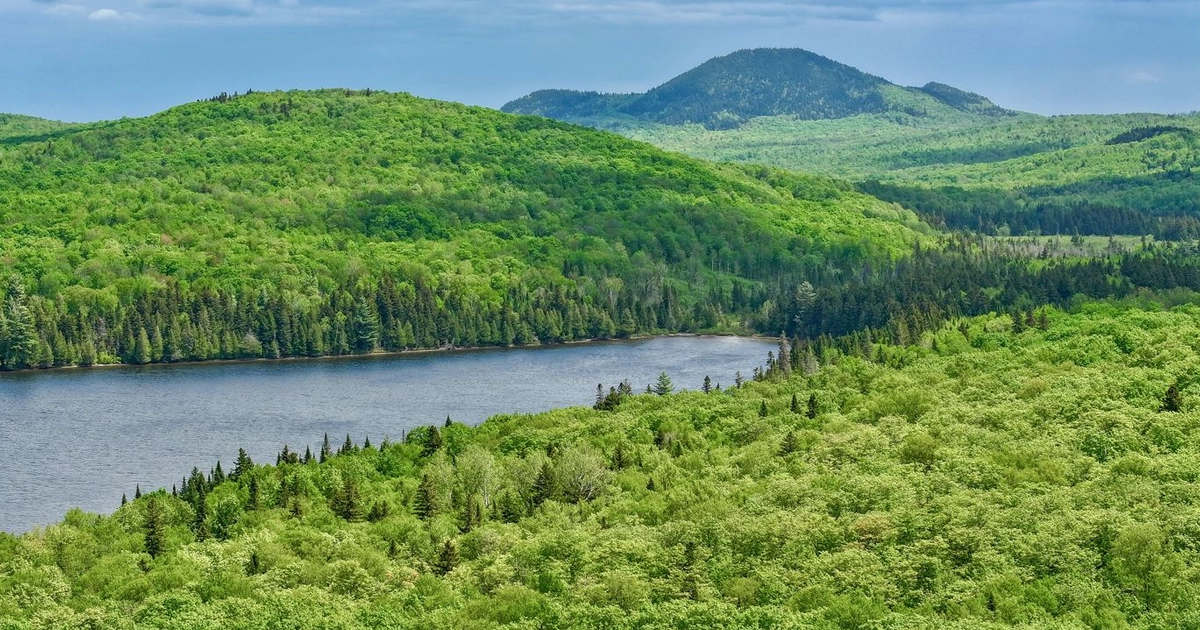
Selected from what is undeniably one the finest White pine ownerships in the Northeast, Chadbourne Tree Farms is a 2,470-acre portfolio located in Western Maine near Bethel. The property consists of six tracts ranging in size from 111 to 687 acres, all well-stocked with timber. Collectively, it boasts an impressive 17,407 MBF of saw timber, more than half of which is white pine.
Total stocking averages 29 cords per forested acre, with over 40% of the sawtimber volume in trees 18” DBH and larger. In addition to its superb timber resource, the portfolio includes nearly three and a half miles of water frontage, most notably a mile and a half stretch along a pristine 155-acre cold water trout pond. This superior timberland investment opportunity is poised for strong performance well into the future.
$5.9 million
www.landvest.com
Land Report 100: A New No. 1?
February 1, 2011 by Land Report Editors
Filed under Feature, Field Reporters
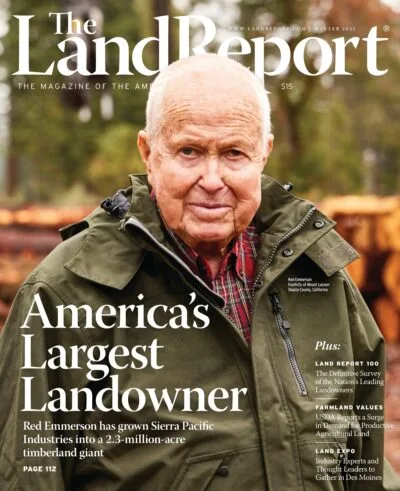
Published reports point to a potential new leader atop The Land Report 100. Colorado’s John Malone, who closed on the 290,100-acre Bell Ranch in August 2010, is scheduled to add an additional 1+ million acres in Maine and New Hampshire to his holdings this week. When added to his existing portfolio of 1.2 million acres, it would be enough acreage to vault him from No. 5 on The Land Report 100 to No. 1, ahead of the Irving Family, Brad Kelley, Red Emmerson, and the current No. 1, Ted Turner.
The story is making national news, including an article by Katherine Seelye in The New York Times titled “For Land Barons, Acres By the Millions.” Wrote Seelye,
John C. Malone, a media mogul who is on the verge of buying nearly one million acres of timberland in Maine, could soon become the largest private landowner in the United States, catapulting him ahead of Ted Turner on the list of those who accumulate earth the way others accumulate, say, bison.
The Times quoted Land Report Editor Eric O’Keefe, who noted that “… when the tabulations are done and this transaction closes, Mr. Malone definitely will be America’s largest landowner.”
According to the Portland Press Herald, Malone’s BBC LLC will acquire 1,004,346 acres belonging to GMO Renewable Resources, a forest investment management company:
“The acquisition will give Malone ownership of more than 5 percent of Maine’s total land mass of 22 million acres. All but about 30,000 acres of his purchase is in Maine with the remainder in New Hampshire.“
Field Report: Timberland
October 14, 2008 by Trey Garrison
Filed under Feature, Field Reporters, Trey Garrison
The following is excerpted from “Market Notes,” a series of interviews in the Fall 2008 issue of The Land Report by Trey Garrison featuring some of the top brokers nationwide. The complete version is available to subscribers.
“Good quality timberland is selling all day long,” says Mike Patten of National Farm & Forestry. Patten has been buying and selling land and timber since the 1970s and knows the territory. According to him, individual buyers ebb and flow according to market conditions, but investors of all stripes—institutional, public, and private—continue to look for deals on timberland.
“There’s strong competition for the tracts ranging from 10,000 to 50,000 acres among the TIMOs (timber investment management organizations), REITs (real estate investment trusts), investors—everyone is all over it. Any large tract gets snapped up real quickly if it’s not cut over. But it has to be realistically priced. There’s going to be some distressed properties or bargains. There are some super buys out there from time to time. But timberland hasn’t been affected by falling prices in other sectors. It’s a great long-term investment no matter what’s happening,” Patten says.
Eroding confidence in other types of real estate is another factor driving the increased wave of investment in timberland. So says Jonathan Burt at LandVest. “There’s an awful lot of money chasing more traditional timberland deals,” Burt says. “They’re shying away from retail and strategies where they sell to Baby Boomers. With all of the perceived risks in real estate, there are still a number of bright spots for land investors to pursue.”
According to Burt, these places include undiscovered and/or emerging markets, places like northern Alabama and eastern Oklahoma. “Right now the real play is timberland. Things that are attractive now are things that can generate cash. Buyers realize that liquidity is something that can come and go. Two years ago they could buy property with the expectation there would be a motivated buyer not too far down the road. Now you have to look at holding things longer, so they want the income opportunity. That’s why timberland is getting sexy again,” Burt says.
Corrections & Amplifications
An earlier version of this article incorrectly stated that Jonathan Burt was a forester and project manager for the Institutional Timberland Group. Mr. Burt is a forester and project manager for LandVest. The Institutional Timberland Group is a division of LandVest. The above article has been corrected.