For Sale: Arkansas’s Prairie Wings Duck Club
October 3, 2012 by Land Report Editors
Filed under Arkansas, Feature, Field Reporters, Hunting, Recreation, Timber, Water
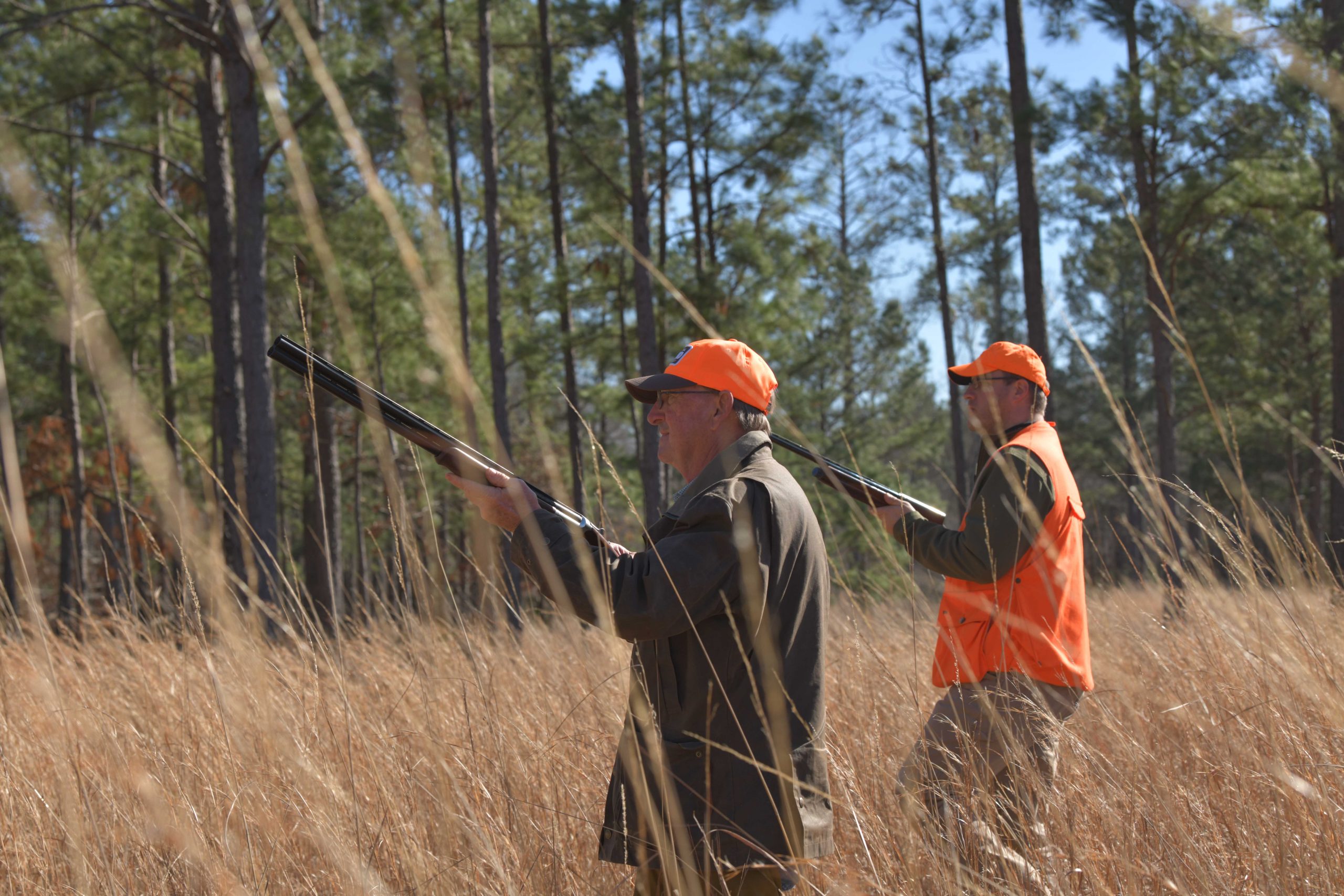
Dating back to 1948, Prairie Wings Duck Club in Jefferson County, Arkansas is one of America’s best, private hunting clubs, offering, green-timber mallard duck hunting, along with impressive whitetail deer hunting.
Adjoining the Bayou Meto Wildlife Management Area and other properties intensively managed for waterfowl and whitetail deer, Prairie Wings Duck Club consists of 1,650± total acres, including 1,130± acres of impounded, mature hardwood timber; 464± acres that are cultivated for rice and soybeans; and 56± acres including the lodge and equipment storage sites, levees, bayous, and roads.
The flooded timber offers six (6) beautiful shooting holes, which some of them have been the inspiration for a few paintings by nationally acclaimed wildlife artists. The timber is a mixed species oaks, which has been well managed over the previous century. There are five (5) wells and five (5) relifts for watering and dewatering the two large green-timber impoundments.
The cultivated acreage strategically rests around the perimeter of the impounded timber and offers sanctuary and feed for the wintering waterfowl. All of the cultivated acreage is managed in a rotation of rice and soybeans providing excellent habitat for resting and wintering waterfowl. The farmland acreage is 100% irrigated and all precision leveled for efficient water management. A professional farmer is in place and the property is farmed on a crop-share basis.
The charming Prairie Wings lodge rests on the banks of Fish Lake Ditch and is abundant and widespread over a single level intertwining structure that is as dated as its prominent history. The lodge is designed to accommodate large groups of shooting sportsmen in warm comfort and includes six (6) master suites, nine (9) guest bedrooms, a guide’s quarters, and abundant bathrooms. The kitchen and dining room are fully equipped to service all the culinary needs of the lodge. A huge deck with fire pit is adjacent to the lodge positioned on Fish Lake Ditch. The exterior features cypress of the local bottomlands. Equipment storage and dog kennels is located just away from the lodge.
This property has been commercially hunted for ducks since the mid-1990s. Records show an average success of over 2,500 harvested ducks per year.
Listed with Lile Real Estate, Inc., Prairie Wings Duck Club is available for $15 million. For more information, contact Gar Lile at (501) 374-3411 (office) or (501) 920-7015 (mobile).
Land’s Best Friend: Little Big Hound
February 9, 2012 by Land Report Editors
Filed under 2011 Winter, Feature, Field Reporters
Throughout the rural South, hunters rarely use the word “beagles.” Rather, they speak of their “rabbit dogs.” Beagles trail rabbits and hares with more enthusiasm and efficiency than any other canine.
But as any versatile hunter knows, a good beagle will also trail and flush upland game birds within shotgun range, and most can be taught to retrieve. If I were choosing a first hunting dog for a youngster, I’d pick a beagle from an established working bloodline. That’s what my father did when he presented me with a beagle pup for my tenth birthday. His training advice? Make friends with my new pup. Teach him his name and to come when I call him. Then take him hunting. He’ll figure out the rest. Good advice.
Yes, beagles are as independent as they are affectionate. They must range widely to locate game, and then trail with no help from a handler.
But independent doesn’t mean stubborn or untrainable. If you’re flying into the U.S. from another country, you’re likely to be greeted at the luggage carousel by a member of the Department of Agriculture’s Beagle Brigade. Just try to slip a single slice of a prohibited fruit or meat product past one. She’ll bust you and look so cute doing it, you’ll want to scratch her ears while you’re being written up.
Do:
• Watch your beagle’s weight. Hounds love to eat.
• Take your pup afield regularly.
Don’t:
• Tolerate disobedience. Beagles will try you.
• Shoot over your pup before she’s become a maniacal rabbit hunter.
Land Report Top Ten: November 2011
November 4, 2011 by Land Report Editors
Filed under California, Cattle, Colorado, Conservation, Equestrian, Farming, Feature, Field Reporters, Golf, Hawaii, Hunting, Land Report Top 10, Midwest, Minerals, Montana, Nevada, Pacific, Recreation, Residential Property, Southwest, Texas, West, Wyoming

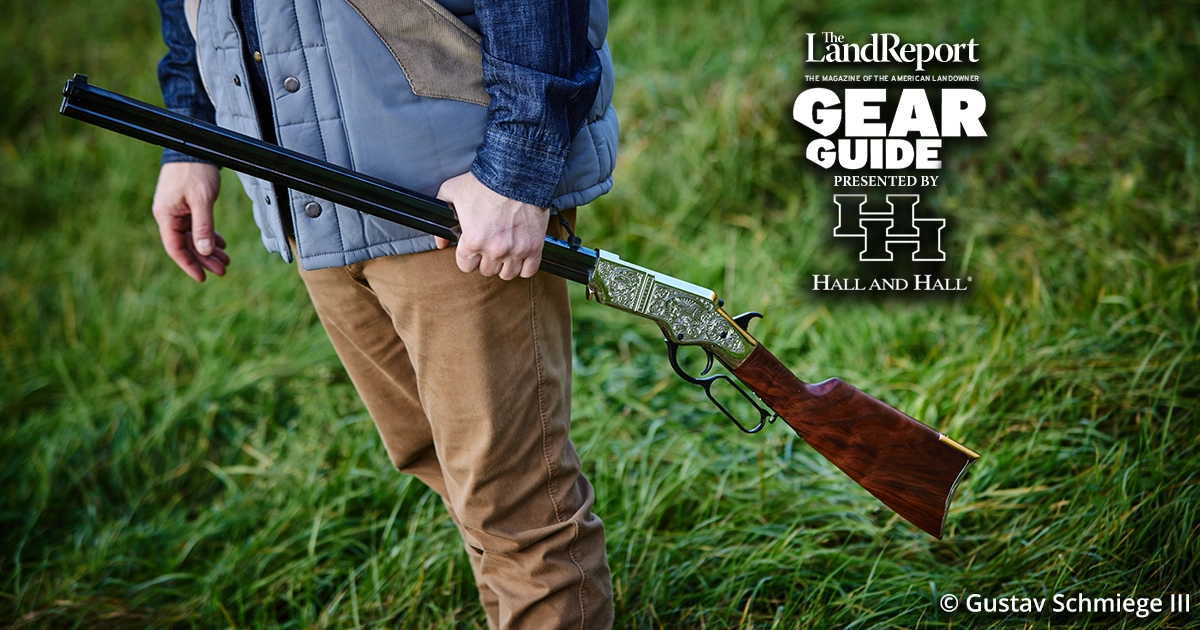
From Hawaii to the Lone Star State, here are America’s priciest properties, led by $175 million Jackson Land and Cattle Ranch, pictured here, which is listed by Hall and Hall.
1. Jackson Land and Cattle: $175 million
These 1,750 acres are simply the most phenomenal property to come to the market in the Teton Valley in decades. Jackson Land and Cattle is one-of-a-kind in every respect: world-class improvements, including an equestrian center designed by Jonathan Foote, AIA; lack of any development restrictions; and don’t forget the stunning Teton views. Hall and Hall’s John Pierce has the listing.
2. Walton Ranch: $100 million
This 1,848-acre working cattle ranch was pieced together by the Walton family beginning in 1958. The family placed the ranch under conservation easement in 1983. Billy Long and Ron Morris of Ranch Marketing Associates have the listing.
3. Ranch Dos Pueblos: $84 million
This oceanfront parcel is on the market for the first time in three decades. Spanning 2,175 acres just west of Santa Barbara, it’s one of the largest remaining ranches along the breathtaking Gaviota Coast. Kerry Mormann & Associates has the listing.
4. Tranquility Estate: $75 million
These 210 acres on Lake Tahoe are crowned by a 20,000 square-foot mansion. Owned by Tommy Hilfiger co-founder Joel Horowitz, it was originally priced at $100 million in 2006. Listed by Shari Chase and Sue Lowe of Chase International.
5. Aspen Valley Ranch: $59 million
Billed as the largest ranch near Aspen in the Roaring Fork Valley, this ranch boasts senior water rights as well as over 800 acres and is located just 10 minutes from the Aspen airport. Joshua Saslove of Joshua & Co. has the listing.
6. Robert Taylor Ranch: $56 million
112 acres in Los Angeles’s tony Brentwood enclave. The roomy ranch house, which was designed by Robert Byrd, features 17 bedrooms and 17 bathrooms. Joyce Rey of Coldwell Banker Previews International has the listing.
7. Hana Ranch: $55 million
This 4,500-acre working ranch on eastern Maui surrounds the town of Hana. The property boasts two miles of Pacific oceanfront and rises over 2,200 feet up the slopes of Haleakala. Dan Omer of Island Sotheby’s International Realty has the listing.
8. Rockpile Ranch: $54 million
For only the third time in over a century, this 55,374-acre cattle ranch in the Davis Mountains of Far West Texas is on the market. Since 1992, the Rockpile has been owned by McCoy Remme Ranches (No. 41 on the 2011 Land Report 100). James King of King Land and Water is the listing agent.
9. Dana Ranch: $45 million
With only two distinguished owners in nearly 100 years and an unmatched record of profitability, the Dana is considered by many to be the finest operating and recreational ranch in the Rocky Mountain West. Supporting 3,000 animal units on 59,000± acres, it boasts over 13 miles of superb fisheries and an incredible diversity of wildlife resources from elk to waterfowl to upland birds. Listed by Dave Johnson with Hall and Hall.
10. Flying Dog Ranch: $40 million
This 245-acre Aspen landmark features nearly a mile of Collins Creek and Woody Creek and borders the White River National Forest. Morris & Fyrwald Sotheby’s International Realty has the listing.
Click here to download a copy of the November 2011 newsletter.
On the Block: 600+ Acres in Kentucky and Tennessee
October 17, 2011 by Land Report Editors
Filed under Auctions, Feature, Hunting, Kentucky, Minerals, Regional News, South, Tennessee, Timber
Five tracts in Western Tennessee and Kentucky totaling more than 600 acres will be auctioned on October 27. In addition to a considerable recreational component, the tracts are heavily timbered. According to Roebuck Auctions founder John Roebuck, these tracts are ideal investment opportunities that feature great hunting. A past president of the National Auctioneers Association, Roebuck has spent more than three decades in the auctioneering profession.
The breakdown on the tracts by location is as follows:
- 243± acres in McNairy County, Tennessee
- 195± acres in Hardeman County, Tennessee
- 9± acres in Hardeman County, Tennessee
- 58± acres in Hardin County, Tennessee
- 103± Acres in Calloway County, Kentucky
More details on the tracts, which will be auctioned by Roebuck Auctions on Thursday, October 27, is available HERE.
Date: Thursday, October 27, 2011 at 6:07 p.m. CDT
Location:
Selmer Airport Hanger (SZY)
2282 Airport Rd
Selmer, TN 38375
Roebuck Auctions
(901) 763-2825
Sold! Texas’s Camp Cooley Ranch
September 6, 2011 by Land Report Editors
Filed under Auctions, Bankruptcy, Cattle, Conservation, Energy, Farming, Feature, Hunting, Minerals, Recreation, Southwest, Water
SEPTEMBER 6 UPDATE:
Camp Cooley Ranch sold at auction for $28.5 million to Circle X Land and Cattle Company August 4. Twenty-two qualified bidders, along with their families, attorneys, lenders, and consultants, attended the auction, which was held at the Robertson County ranch. The $28.5 million sale price included surface and mineral/royalty interests. All equipment and personal property was offered through a separate transaction.
According to Bernard Uechtritz of Great Estates Ranches, Camp Cooley ranks as one of the most beautiful ranches in the nation, thanks to its topography, abundant waters, and multi-million-dollars of improvements. “In the cattle industry, Camp Cooley is a major brand name,” he said. Uechtritz coordinated the extensive marketing campaign leading up to the auction; the auction itself was overseen by Hall and Hall Auctions.
Read more details HERE.
JULY 25 UPDATE:
In the midst of a statewide drought that is crippling Texas farms and ranches, Camp Cooley Ranch continues to thrive.
“Camp Cooley is an oasis,” says Bernard Uechtritz during a telephone conversation from the headquarters of the Central Texas ranch. “Every other ranch I’ve seen over the last few weeks has browned up, but not Camp Cooley. It continues to irrigate, to fertilize, and to bale hay. Take a look at that aerial video at Camp Cooley.com. We shot that two weeks ago, and everything was still green. Still is. Name another ranch in Texas that is baling hay in late July.” According to Uechtritz, Camp Cooley Ranch has a year round carrying capacity of 4,000 head, and as recently as two weeks ago was running 4,700 head.
As the August 4 auction deadline approaches, Uechtritz reports that multiple stalking horse bids have been received for specific assets as well as for the entire ranch. “The action has been terrific. We’ve easily had 20-plus parties tour the ranch and given it a serious look,” Uechtritz says.
Leading the list has been a large number of cattle companies that recognize Camp Cooley’s turnkey potential. “Readers of The Land Report would immediately recognize the names of many of these famous ranch operators. These guys know what a once-in-a-lifetime opportunity Camp Cooley presents,” Uechtritz says. Other parties who have toured the ranch have eyed the mineral rights, the water rights, royalty revenues, the hunting preserve, and the possibility of developing a wetlands mitigation bank.
“Watching the interest build around Camp Cooley has been extremely exciting for Hall and Hall,” Scott Shuman says, head of Hall and Hall’s Auction Division. “When you get a property with the history and the potential of Camp Cooley and combine it with such close proximity to major metropolitan areas such as Houston, Dallas, Austin, and San Antonio, it’s bound to generate a ton of interest. And we’re definitely seeing that. I expect the pace to pick up even more as the auction date approaches.”
Buyer’s registration forms and bidder’s packets for the invitational auction are being released on Friday, July 22. Bidders must pre-qualify and be invited to attend the August 4th auction, which is presently scheduled to take place at Camp Cooley Ranch. Through the protected buyer process that was approved by the court, there is also the possibility of a private treaty sale prior to the August 4 auction.
Learn more HERE.
JULY 15 POST:
A Texas icon goes on the block this August as Camp Cooley Ranch is to be auctioned off by Hall and Hall Auctions. At 10,600± acres, Camp Cooley is one of the largest properties in close proximity to Houston, Dallas, Austin, and San Antonio. A sophisticated multi‐level turnkey cattle and commercial hay operation, Camp Cooley generated more than $700,000 in grazing revenues, more than $1.5 million from commercial hay operations, and more than $1.4 million in gas royalties in 2010. In addition, there are considerable untapped revenue streams associated with existing gas and water rights. Located in the heart of the Lone Star State near Franklin, Camp Cooley will be auctioned by Hall and Hall as a single tract on August 4, 2011.
Download a comprehensive presentation with complete details via PDF HERE, or take a tour online at Camp Cooley.com.
Camp Cooley Ranch is located in Robertson County in the heart of Central Texas and is bounded by the Navasota River to the east. Approximate drive times are as follows: Bryan-College Station, 30 minutes; Austin, 90 minutes; Houston, two+ hours; Dallas, two+ hours; San Antonio, three hours.
HISTORY
The ranch takes its name from the Civil War
Houston entrepreneur Bert Wheeler assembled Camp Cooley from dozens of neighboring tracts. As Camp Cooley’s renown grew, Wheeler hosted such Texas luminaries as John Connally and Lyndon Johnson.
Under current owner Klaus Birkel, Camp Cooley Genetics has become one of the country’s best known seedstock cattle operation, running up to 4,500 cow/calf pairs and as many as 2,000 bulls.
ASSETS
Ranch headquarters is a 8,590-square-foot lakeside main residence. Improvements include a 15-suite executive office complex, meeting rooms, and security and communication systems to monitor the ranch.
The entire ranch is served by a computer-monitored water well system, including all residences, barns, workshops, a multi‐use sale pavilion, and the breeding and cattle workstations. There are approximately 84 miles of roads in place on Camp Cooley.
Camp Cooley boasts rolling terrain that boasts numerous lakes, abundant woodlands, as well as wetlands that are ideal for development as a mitigation bank. The ranch’s 1,000‐acre exotic game preserve is among the oldest in the state and could be increased in size.
OPPORTUNITY
Qualified bids need to be submitted by Wednesday, July 27 at 5 p.m. (CST). For more information on this auction, contact Bernard Uechtritz at (214) 608-8567 or Scott Shuman at (800) 829-8747.
For Sale: Canadian River Ranch
July 11, 2011 by Land Report Editors
Filed under 2011 Summer, Cattle, Energy, Feature, Field Reporters, Hunting, Magazine, Minerals, Recreation, Southwest
Anyone familiar with the history of the American West knows the legend and lore that surrounds the historic XIT Ranch, whose 3 million acres encompassed the bulk of the western edge of the Texas Panhandle. The Canadian River Ranch covers some 111 square miles of the old XIT, including substantial frontage on both sides of its namesake, the Canadian River. The ranch’s varied topography rises from wide river bottoms to iconic mesas, but throughout its history it has been operated as a commercial cattle outfit.
Located 65 miles northwest of Amarillo, the ranch can also be accessed via a paved 4,500-foot land strip situated close to the headquarters. The ranch’s 7,000-square-foot, 6-bedroom, 6½-bathroom lodge is just one of many well maintained improvements, which include a ranch manager’s house, pilot’s quarters, barns, pens, and housing for the hands.
These 71,059 acres combine to form one of the largest contiguous land holdings inthe Texas Panhandle. The ranch is watered by 26 miles of the Canadian River. Not surprisingly, the Canadian River Ranch boasts exceptional hunting. Two state record mule deer have been recently harvested, and elk, bear, and mountain lion have also been sighted.
$33.753 million ($475 per acre)
(806) 763-5331
www.chassmiddleton.com
Land’s Best Friend: Chesapeake Bay Retriever
June 30, 2011 by Land Report Editors
Filed under 2011 Summer, Dogs, Feature, Field Reporters, Henry Chappell
If you’re a field trialer and perfectionist who expects a highly tractable retriever that always handles precisely, get a Lab. But if you’re a hardcore waterfowler and a bit of a maverick who admires resourcefulness and pure, cussed determination more than absolute obedience, consider a Chessie.
During the 1800s, the Chesapeake Bay retriever earned his keep in rough, cold water, fetching as many as 200 ducks per day for market hunters. At night, he’d guard his boss’s boat and equipment shed. The rough baymen had little time for formal training. Dogs that learned quickly, on the job, got fed. The rest didn’t live to pass on their deficiencies. Those old killers are long gone, but they left behind something of themselves in these big, tough, workaday dogs. Any wonder that in addition to being the toughest retriever in the world, the Chessie is a little independent and protective?
If the Labrador is the sports car of the retriever world, the Chessie is the heavy-duty pickup. Males measure 23-26 inches at the shoulder and run 65-80 pounds; females weigh 55-70 pounds. The coat is short, dense, and oily, with a thick woolly undercoat. The Chessie has no peer when it comes to breaking ice or working for hours in the coldest water.
DO
Consider only working bloodlines.
Seek advice from experienced Chessie owners.
Watch a trained Chessie work before buying a pup.
Make your pup a member of the family.
DON’T
Resort to harsh discipline. Chessies can be temperamental.
For Sale: Colorado’s Dallenbach Ranch
March 8, 2011 by Eric OKeefe
Filed under Conservation, Eric OKeefe, Feature, Field Reporters, Hunting, Public Land, Regional News, Topics, West
Spring 2011 Pricing Update: Colorado’s 130-acre Dallenbach Ranch now offered for $21 million.
The year was 1973, and Wally Dallenbach’s racing career had shifted into high gear. Thanks to back-to-back-to-back wins for Patrick Racing on the Indy car circuit, he had the opportunity to fulfill his dream of buying a piece of property in Colorado. And as Peppy Dallenbach points out, it was definitely her husband’s dream, not hers. “I was perfectly happy back home in New Brunswick where our families lived,” she says.
Years before, however, Wally had promised himself that he and Peppy would make the Rocky Mountains their home. The seed had been planted in 1960 on their honeymoon when the couple made a stop in Aspen. “It was all hippies and dogs back then,” Wally says. The New Jersey native was already making a name for himself as a drag racer and a stock car racer; his open cockpit racing days were still to come. But already he knew that he had fallen for the small-town charm and scenic beauty that can be found a short drive down just about every road that crisscrosses the Colorado Rockies.
It would take more than a decade to fulfill that promise, but he finally closed on a beautiful old homestead just outside of Basalt in 1974. Thanks to more than half a mile of frontage on both sides of the Frying Pan River, a dozen cabins dotted its 100-plus acres. Known to anglers as the Wooden Handle, the breathtaking encampment had also served as base camp for hikers and hunters who roamed the millions of acres of the White River National Forest bordering the property.
“Growing up on the ranch was like growing up in Disney World,” says Wally Dallenbach Jr. Like his father and his brother, he pursued a career in racing, and his training ground was the mountains and valleys surround his family’s ranch.
“We rode dirt bikes in the summertime. We rode snowmobiles in the winter time. There was everything a kid could want to do. It was a great place for my sister and brother and I to grow up,” he says.
In the 1970s, Basalt was nowhere near the cosmopolitan getaway is has since become. Paul Dallenbach recalls “a whopping 400 people” living there when the family first arrived, and going to Basalt High School had nowhere near the cachet of archrival Aspen High School. “That’s all right,” he says. “We beat them in every sport they played.”
Like many overachievers, Wally brought his work home. In his case, it took the form of a Honda 350. One summer day, he loaded Wally Jr. on the back of that dirt bike, and the two took off for a great old mining town called Ouray. The next day father and son went over Engineer Pass to Lake City. If this sounds like too much fun, now you know where the Colorado 500 got its start. Since 1976, the charity ride has raised more than $1 million for the Red Cross, area schools, churches, and hospitals, and countless other beneficiaries. A Who’s Who in racing has showed up to ride, including Parnelli Jones, Rick Mears, Roger Mears, Roger Penske, a whole host of Unsers, and of course all the Dallenbachs.
A disappointing number of sports stars plow their money into poor investments. Not Wally Dallenbach. In the early 1970s, the legendary Indy car racer took his winnings from the California 500 and bought an absolutely stunning piece of property along the banks of Colorado’s Frying Pan River just outside Basalt. In the 35 years since then, Wally and his wife, Peppy, not only raised a family but they also bettered the lives of thousands of Coloradoans through their own amazing race, the Colorado 500.
After 180 Indy car races, Wally’s career behind the wheel took a sharp turn; for the next 23 years he would serve as CART’s chief steward. Since his retirement in 2003, he and Peppy spend as much time as possible following the fortunes of their grandchildren. Although Paul and his wife, Dana, are right next door in Basalt, Wally Jr.’s family is in Texas and Colleen’s is in Indianapolis. Convenient airport connections have become a top priority.
With that in mind, the Dallenbachs decided to sell the ranch. Mark Weida, a suspension specialist who has worked on racing cars for 30 years, introduced the couple to Chip Lenihan, a great wit who proudly describes himself as “the last Republican mayor of Telluride.” In addition to being a longtime ranch broker, Lenihan had another equally important qualification. He is an avid fly-fisherman.
The Fay Ranches broker sees enormous upside. “The right investor can acquire this incredible piece of property and then recoup a substantial percentage of the purchase price with a conservation easement,” he says.
Another big plus is the ranch’s Eagle County setting. “You’re right next door to Pitkin County, which is probably the most restrictive county in the Colorado. Everything from subdivision to structure size is strictly controlled through the county planning process. Eagle County also has a comprehensive planning department, but it is much more private property rights-oriented and much more smart growth-oriented,” he says.
One final attribute stands out. Says Lenihan, “It’s the lower part of the Frying Pan, so you’ve actually got a mix of trout that migrate up from the Roaring Fork. There are all sorts of little shallows and ripples, and there’s one deep pool that’s always good for a 20-incher.”
Try putting a price on that.
Take a tour of this one-of-a-kind property HERE.
On the Block: 170 Acres in Marion County, Illinois
June 19, 2009 by Grant Gannon
Filed under Auctions, Conservation, Farming, Feature, Grant Gannon, Hunting, Midwest, Recreation
Update: The complete tract of land went unsold during the brief auction. The first tract at 50 acres was passed on at $120,000, the second tract at 40 acres was unsold at $96,000, and the third tract at 80 acres was unsold at $192,000. A combination of all three tracts was passed on as well.
170 acres, broken up into three tracts of 50, 40 and 80 acres, goes on the block Saturday in Marion County, IL. The land can be used both for hunting and CRP income. Buy A Farm Land and Auction Co. will host the bidding.
The minimum opening bids on the property start at $2,400 an acre.
Located on Blackburn Road, 15 minutes from I-57 in Centralia, the property could be a solid buy if you happened to scoop up all three parcels. Each has a decent CRP income; they total about $6,500 per year. According to the listing, deer abound on the property.
This would make a nice long weekend retreat for hunters in St. Louis or Chicago.
Bids will be taken at the Iuka Grade School or online. 10% down is required at the end of the auction with the balance at closing.
For Sale: Montana’s Sun Ranch
April 28, 2009 by Grant Gannon
Filed under Conservation, Developers, Equestrian, Feature, Grant Gannon, Hunting, Montana, Public Land, Recreation, Residential Property, Timber, Water
The jury is still out on my definition of dream property, but I’ll tell you this: Montana’s Sun Ranch is definitely in the running.
Nestled on 18,000 acres just outside of Yellowstone National Park in the Madison Valley, the Sun Ranch ranges from 5,700 feet to over 10,000 and is a sterling example of what a true steward of the land can do with a spectacular piece of property. Almost 100 percent of the ranch is protected by conservation easements.
Three creeks – Sun, Moose, and Wolf – nurture more than a mile of the Madison River, which weaves its way through the property. Needless to say the fishing is out of this world. Elk, deer, bear, antelope, and sheep cross this country going to and from Yellowstone. Throw in a beautiful main residence, and this prime parcel is for sale at $55 million. Fay Ranches has the listing.
According to New West,the owner, Roger Lang, is looking to unload the ranch and free up capital for other conservation projects. According to the article, it looks like he has in mind a development similar to what Russ Maytag has done in Colorado at Maytag Mountain Ranch.