Land’s Best Friend: Chesapeake Bay Retriever

Chesapeake Bay Retriever

If you’re a field trialer and perfectionist who expects a highly tractable retriever that always handles precisely, get a Lab. But if you’re a hardcore waterfowler and a bit of a maverick who admires resourcefulness and pure, cussed determination more than absolute obedience, consider a Chessie.

During the 1800s, the Chesapeake Bay retriever earned his keep in rough, cold water, fetching as many as 200 ducks per day for market hunters. At night, he’d guard his boss’s boat and equipment shed. The rough baymen had little time for formal training. Dogs that learned quickly, on the job, got fed. The rest didn’t live to pass on their deficiencies. Those old killers are long gone, but they left behind something of themselves in these big, tough, workaday dogs. Any wonder that in addition to being the toughest retriever in the world, the Chessie is a little independent and protective?

If the Labrador is the sports car of the retriever world, the Chessie is the heavy-duty pickup. Males measure 23-26 inches at the shoulder and run 65-80 pounds; females weigh 55-70 pounds. The coat is short, dense, and oily, with a thick woolly undercoat. The Chessie has no peer when it comes to breaking ice or working for hours in the coldest water.

DO
Consider only working bloodlines.
Seek advice from experienced Chessie owners.
Watch a trained Chessie work before buying a pup.
Make your pup a member of the family.

DON’T
Resort to harsh discipline. Chessies can be temperamental.

Land’s Best Friend: Labrador Retriever

Labrador Retriever

Don’t be fooled by this breed’s easy-going nature – Labs can hunt, and fetch, and countless other tasks. Read more

Land’s Best Friend: Catahoulas

Catahoulas

The world’s grittiest dog? The Catahoula.

The boar weighed at least 300 pounds. Guthrie, a two year-old Catahoula, weighed about 60 pounds. The two collided with predictable results. Guthrie, flattened and addled but far from finished, righted himself and pursued. A few minutes later, he and his three pack-mates brought the boar to bay.

I witnessed the collision from 15 yards away. As I huffed toward the squealing and baying, I declared the Catahoula the world’s grittiest dog. Generations of “cracker” cowboys who counted on their Catahoulas to roust wild cattle from palmetto flats would not argue with that appraisal.

Don’t turn a Catahoula loose on your flock of sheep; he’ll eat them up getting them into the pen. Save him for the mad mama Hereford that just ran through your three border collies. Or the boar that cuts up Plott hounds for sport.

Early settlers found versatile hunting and herding dogs among Indians in Louisiana’s Catahoula Lake area. They may have been pure native stock, but they probably shared blood with hunting, herding, and war dogs brought by European explorers. Catahoulas are fierce toward game and rough with livestock but friendly toward humans. Most run about 55 to 80 pounds. Dog lovers are drawn to the Catahoula’s striking coat, athleticism, and ghostly blue or “glass” eyes.

Do:
• Select only from working stock.
• Seek training tips from experienced hunters and herdsmen.

Don’t:
• Worry about eye color. A good dog looks good.
• Get too much white in your dog’s coat.

Land’s Best Friend: The Feist

Feist

Don’t be fooled by the small packaging. Feists are equal parts cast iron and nitroglycerin. Ounce for ounce, they may be the toughest dogs in the world. They certainly have my vote as the most versatile.

Feists are working-class in origin and terrier-like in appearance and temperament. Their lineage goes back to terrier breeds developed in Merry Old England to hunt small vermin. Like countless other country traditions, English immigrants brought their terriers to the American colonies. During the late eighteenth century and the first half of the nineteenth century, they bred the little dogs for increased hunting and scenting ability by crossing them with curs, beagles, and other scenthounds.

Today, common types of feist include the DenMark feist, the Mullins feist, the Thornberg feist, and the catchall treeing feist. Consistent with their terrier background, feists are fearless and alert, but also companionable and easy to train.

Feists run 20 to 35 pounds and sport a short, low-maintenance coat. Ears may be erect or floppy; bobtails are traditional but not required.

Most feists are silent trailers. Once treed, they alert the hunter with a clear, chopping bark. Although their treeing instinct and natural prey drive make them popular with squirrel and ‘coon hunters, feists also do well with light stock-herding work. Needless to say, they’re deadly on small vermin.

Do:

• Take your feist puppy for frequent walks in the woods as soon as it has completed a course of inoculations.

• Join the National Cur and Feist Breeders Association: 713 E. Sycamore St, Jasonville, IN 47438, (812) 665-3263.

Don’t:

• Introduce a pup to gunfire until it is hunting boldly and shows a strong interest in game.

Henry Chappell’s field reports have been a mainstay of The Land Report since its founding in 2007. In addition to penning Working Dogs of Texas, he recently wrote Under One Fence: The Waggoner Ranch Legacy.

Library: Working Dogs of Texas

Working Dogs of Texas

Both the author and the photographer are valued contributors to The Land Report, and there’s no doubt in my mind that landowners from coast to coast will be able to identify with this book. So let’s begin by getting two misconceptions about this book off the table.

First off, Working Dogs is not a tribute to hunting dogs. Yes, there are great chapters on curs and feists, pointers, retrievers, and the fearless breeds that track wild hogs. The authors even tail a pack of hounds that are bona fide man-hunters à la Paul Newman in Cool Hand Luke. But at its core, Working Dogs is about the countless ways man’s best friend has been bred and trained to serve different masters, which is why this book is such a compelling volume.

Working Dogs of Texas

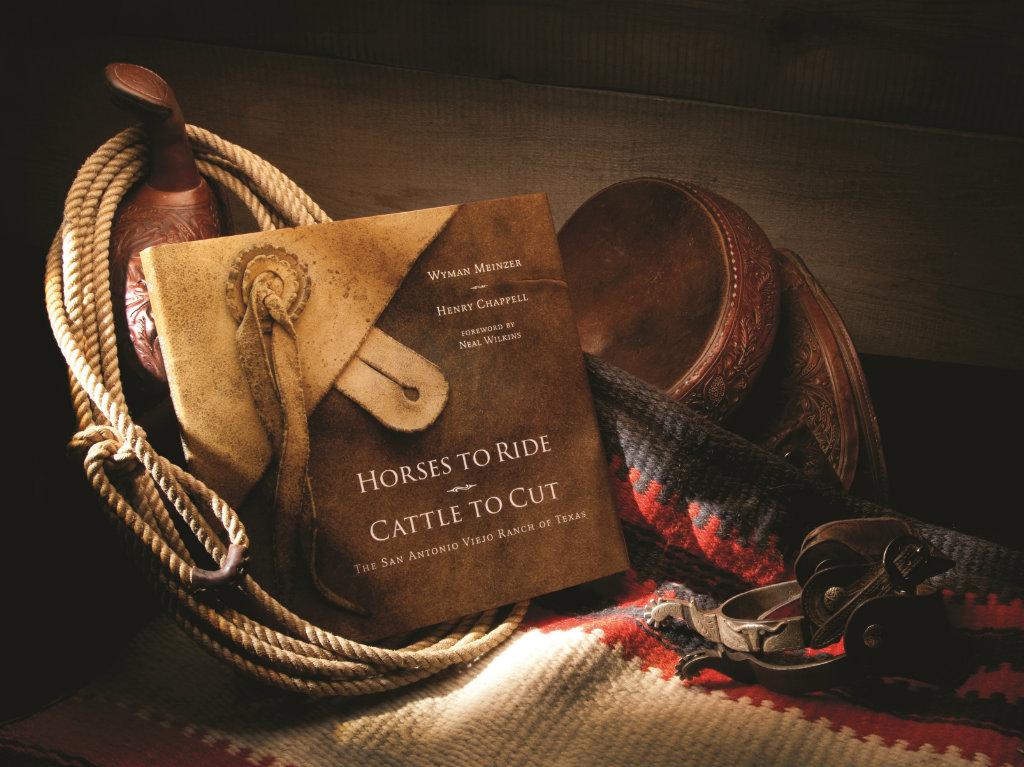
Working Dogs of Texas by Henry Chappell and Wyman Meinzer

“The one thing these dogs all have in common is that each has a job to perform,” Wyman Meinzer says. “It might be highly specialized task that requires enormous amounts of training like search and rescue or detector dogs. It could be a more traditional one such as herding cattle or guarding against predators. It could even be as important as providing friendship to an elderly person.” To that end the final chapter is titled “The Caretakers.”

The second element that needs to be dismissed is that Working Dogs of Texas suffers from geographic limitations because of its focus on the Lone Star State. On the water, in the woods, on ranches and farms, and at border checkpoint and international airports – Chappell and Meinzer covered an enormous amount of terrain researching this compelling project.

Available online at Amazon.com

Man’s Best Friend, Land’s Best Friend

July 1, 2008 by  
Filed under Feature, Field Reporters, Magazine

So you need a real dog. Maybe the raccoons and squirrels are fattening up on your sweet corn and tomatoes or the coyotes are dining al fresco on your lambs. Could be that after an appetizer of the latest surefire rodent killer you bought, those barn rats have cleaned out your corn crib and started to scare your cats. You need a working dog. Read more