Sold! The Bell Ranch

October 4, 2010 by  
Filed under Feature, Field Reporters

The Land Report 100

On August 17, Liberty Media CEO John Malone bought the 290,100-acre Bell Ranch, an event that qualifies as the largest single ranch sale since Ted Turner bought Vermejo Park from Pennzoil in 1996.  Price and terms on the $83-million listing were not disclosed.

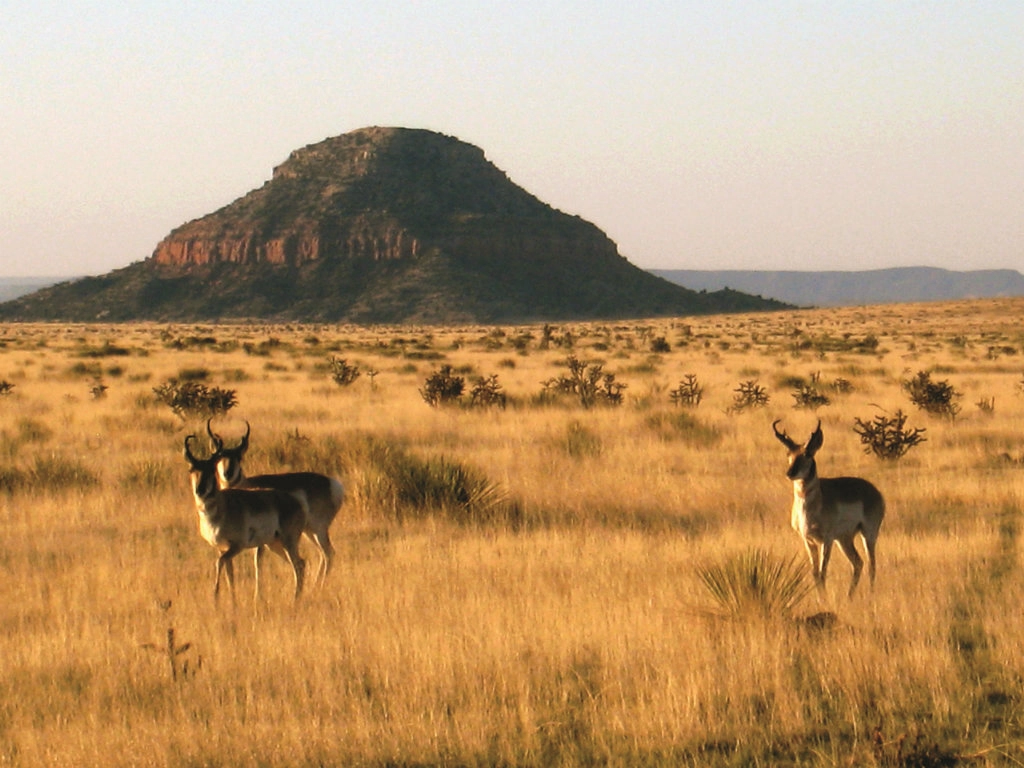
Odds are you already know New Mexico’s Bell Ranch. At 453 square miles, it’s kind of hard to overlook. But to focus on size alone is to overlook a much richer story. The Bell has been featured in countless Westerns and dramatically depicted on millions of Stetson hatboxes. If you’re old enough to remember when tobacco companies could advertise, the ranch’s mesas and pastures were the timeless backdrop in many a Marlboro print campaign. Few venues epitomize the American West like the gorgeous grasslands, stunning mesas, and rugged rimrock canyons surrounding the distinctive bell-shaped mountain a short ride north of the Canadian River.

The Bell Ranch is a place of lore and legend whose contemporary history dates back to an impossibly large land grant of some 656,000 acres by the Mexican government to Pablo Montoya in 1824. Only the hills know how long the Comanche, the Kiowa, and the Apache made camp along the banks of La Cinta Creek before the Spanish army officer petitioned Mexico City for his lands.

Almost two centuries have passed since Don Pablo took title to more than 1,000 square miles of what eventually became the New Mexico Territory. Its ideal setting—the ranch ranges in elevation from 4,200 to 5,600 feet above sea level—is more reminiscent of the African Serengeti than the Great Plains or the Llano Estacado. Top-notch cowmen such as the pioneering trailblazer Charlie Goodnight have long marveled at the ranch’s plentiful waters, its protein-rich grasses, and the temperate climate. The lure of this remote cattle kingdom is so strong that the Bell has enticed five formidable men to commit themselves to shepherding the ranch since 1933: Albert Mitchell, George Ellis, Don Hofman, Rusty Tinnin, and Bert Ancell, the general manager, who had 41 years of experience on the Bell. Half a dozen hands with an average of 15 years service on the Bell worked with Ancell.

This peerless legacy is one of the many priceless assets that make the Bell more than simply another big spread. Take, for instance, the ranch’s horse breeding program, which can be traced back to a remount herd used by the U.S. cavalry almost a century ago. The ranch has also developed a closed composite breed of cattle. Known as RedBell, the breed consists of carefully selected Red Angus and Hereford bloodlines, plus smaller percentages of Brahma and Gelbvieh. And of course there is also the ranch’s iconic one-iron brand. First registered in San Miguel County in 1875, it has been in continuous use ever since.

After more than a century in operation, the Bell was carved into six tracts and parceled off after the end of the Second World War. But for William Lane II, its legacy would have ended with this dissolution. In 1970, the chairman and chief executive of General Binding Corporation purchased the 130,000-acre headquarters tract near the center of the Montoya Grant, and over the next six years he dedicated himself to rebuilding the great ranch. Ultimately, he acquired a total of 290,100 acres, an astounding 44 percent of the original grant.

Lane and his family also put in place improvements that dramatically enhanced beef production. Seven large operating units are cordoned off by 342 miles of fence and connected by 530 miles of interior roads. Ninety miles of pipeline water 206 stock tanks and 117 wells and windmills. The end result is a world-class working cattle ranch that can support 5,000 animal units.

In 2006, the Lane family began its quest to find another steward for the Bell. Several leading brokerages marketed the property, including Mason and Morse Ranch Company and Orvis Cushman & Wakefield. But the Great Recession took its toll. The original asking price of $110 million was lowered to $99 million and then to $83 million in 2010 (not including livestock).

The one constant throughout this process was Patrick Bates of Bates Sanders Swan Land Company, who was brought on to consult for the Lane family in 2006; by 2010 he was the broker of record. In March, Ron Morris of Ranch Marketing Associates contacted him. Like Bates, Morris is a veteran ranch broker with an impressive C.V. His client was none other than John Malone, Liberty Media’s CEO and one of the most respected stewards of the land in Rockies. A new chapter in the history of the Bell was about to begin.

Download the 2010 Land Report 100 HERE.

The Land Report Fall 2010

October 1, 2010 by  
Filed under Back Issues

Fall-2010-Cover-webEnjoy the digital edition of the Fall issue of the Magazine of the American Landowner!

Table of Contents

Editor’s Note

MarketWatch

FrontGate

Vistas

Feature – 2010 Land Report 100

Land Buyer’s Guide

MarketPlace

Classifieds

Land Report 100 – Dolph Briscoe Jr. (1923-2010)

Adults Only – The New Interior Department Reality Show

Adults Only - The New Interior Department Reality Show

Update: In a report to Congress on September 24, the Department of the Interior confirmed that the controversial Royalty in Kind Program will be phased out this Thursday, September 30. The Bureau of Ocean Energy Management, Regulation, and Enforcement (BOEM) announced that the agency is successfully completing the orderly close-out of the Royalty in Kind Program, which accepted oil and gas in lieu of cash as royalty payments on federal energy resources. Interior Secretary Ken Salazar (shown here with BOEM Director Michael Bromwich) stated that all existing contracts would be allowed to expire and no further Royalty in Kind sales would take place.

Download the complete report to Congress HERE.

Originally posted September 12, 2008: The fine folks who gave America the Teapot Dome Scandal are pleased to bring their fellow citizens a sizzling new take on government outreach, including sex, drugs, and lucrative consulting contracts. The lurid scandal, which centers on Interior’s Royalty in Kind program, was co-produced by Chevron, Shell, Gary Williams Energy, and Hess Corporation. Hundreds of articles covering this topic are available via Google News, but consider this post at SLATE, which has hyperlinks to the internal investigations by Interior’s Office of Inspector General.

On the Block: Aubrey McClendon’s 271 Ranch

271ranch-lg

Aubrey McClendon’s 271 Ranch goes on the block Thursday, August 5. The National Auction Group is handling the sale, which is scheduled for 11 a.m. (CST) at the ranch headquarters. Bidders can register beginning at nine o’clock. The 4,391-acre cattle ranch will be offered in five tracts and as a whole. Approximately 1,100 acres will be sold with no reserve.

271ranch-mapThe CEO of Chesapeake Energy, McClendon ranked No. 96 on the 2009 Land Report 100 with 98,106 acres. Of his Oklahoma properties, the 271 Ranch is farthest from his Oklahoma City base of operations. As the property he visits least frequently, he decided to liquidate the holding.

Located just two hours north of Dallas in prime whitetail country, the 271 Ranch includes the following:

  • Pastures with Wells and Ponds
  • Center Pivot Irrigation System with Well Powered by 3 Phase Electric
  • Ground Water Rights
  • 8 Cattle Working Locations with Catch Pens & Working Alleys
  • 3 Locations with Loading Chutes for Semi Trucks & Trailers
  • Stocker Receiving Facility with Capacity of 400 Head
  • 6 Guest Homes
  • Office/Shop Building Constructed in 2007
  • 9-Stall Horse Barn
  • 9 Additional Barns for Equipment or Hay Storage
  • Pastures of Bermuda, Fescue, & Some Native Grasses
  • 3± Miles of Frontage on U.S. Hwy. 271
  • 7± Miles of County Road Frontage
  • 15± Miles of New Fence Constructed in Last 3 Years
  • Cattle Guard Access to Most Pastures

In addition to world-class whitetail hunting, the 271 Ranch is minutes from lakes of Sardis, McGee Creek, Pine Creek, Clayton, and Hugo. Stretching three miles along U.S. Highway 271, the property has seven miles of county road frontage with 15± miles of fencing.

The property will be open for inspection through Wednesday from 10 a.m. to 6 p.m. Call (800) 579-1174 or (256) 547-3434 to schedule an appointment.

Read more HERE.

Forbes Profiles Land Report 100

June 15, 2010 by  
Filed under Feature

Forbes Profiles Land Report 100

Forbes.com bills itself as the “Home Page for the World’s Business Leaders,” and on Monday the website lived up to its moniker by profiling the top ten U.S. landowners as featured in The Land Report 100. Among the many names familiar to Forbes readers were CNN founder Ted Turner at No. 1 and Liberty Media head honcho John Malone at No. 7.

The website also made a point of singling out several notable news items that have recently run at LandReport.com, including Hall and Hall’s recent listing of the 62,000-acre N Bar Ranch in Montana for $45 million and the sale of Colorado’s Boot Jack Ranch by Telluride broker Bill Fandel for $47 million.

Land Report Editor Eric O’Keefe was quoted as describing current market conditions as follows:

“Investors are no longer sitting on the sidelines, and sellers want liquidity.”

Read the entire article HERE.

The Land Report Summer 2010

June 15, 2010 by  
Filed under Back Issues

2010.2-Cover-webEnjoy the digital edition of the Summer issue of the Magazine of the American Landowner!

Table of Contents

Editor’s Note

MarketWatch

FrontGate

Vistas

Feature – FedEx Properties

Feature – Dallenbach Ranch

Feature – Escape Ranch

Land Buyer’s Guide

MarketPlace

Classifieds

Land Report 100 – William Noble Lane II (1917-1978)

Ask the Expert: Scott Jones

Ask the Expert: Scott Jones

The second session of the 111th Congress is already under way, and landowners have a lot at stake. With that in mind, The Land Report turns to Scott Jones to get the inside scoop on Washington’s next steps. Since 2003, Jones has been the CEO of the Forest Landowners Association (FLA), whose members own and operate some 40 million acres of forestland in 48 states. Founded in 1941, FLA offers education, information, and national grassroots advocacy with the goal of sustaining forestlands from one generation to the next.

With so many bold initiatives taken on by the Obama administration, what are the chances of a climate bill passing this year? Would it benefit forest landowners?

American voters believe that a climate/cap-and-trade bill may cost jobs; as a result, I would not be surprised to see the climate portion of the energy bill removed. If crafted properly, an energy bill could benefit private forest landowners by creating new markets for wood. However, the definition of “woody biomass” still needs to be fixed for landowners to truly benefit from the stripped down version of the bill.

The federal estate tax dropped to zero this year. Do you expect it to return to 55 percent with a $1 million exemption as scheduled in 2011?

There do not appear to be enough votes to bring the death tax back to life in 2010. Sen. Scott Brown’s (R-MA) recent election created a political barrier to retroactive death tax reinstatement. Unless legislative action is taken, the tax is scheduled to permanently return at a rate as high as 55 percent in 2011. But this is an election year, so anything is possible. Polls indicate 65 to 70 percent of Americans want the tax repealed.

Name one other issue landowners should follow closely.

The Clean Water Restoration Act is definitely legislation every landowner should keep an eye on. It seeks to expand the jurisdiction of the Clean Water Act by redefining “navigable waters” as “waters of the United States.” The consequences of this bill are enormous, and it has already created a firestorm in the Senate. Strong opposition convinced Rep. James Oberstar (D-MN) to delay introducing the bill on the House side. Oberstar now intends to move the bill through the House by the end of 2010.

Library: Working Dogs of Texas

Working Dogs of Texas

Both the author and the photographer are valued contributors to The Land Report, and there’s no doubt in my mind that landowners from coast to coast will be able to identify with this book. So let’s begin by getting two misconceptions about this book off the table.

First off, Working Dogs is not a tribute to hunting dogs. Yes, there are great chapters on curs and feists, pointers, retrievers, and the fearless breeds that track wild hogs. The authors even tail a pack of hounds that are bona fide man-hunters à la Paul Newman in Cool Hand Luke. But at its core, Working Dogs is about the countless ways man’s best friend has been bred and trained to serve different masters, which is why this book is such a compelling volume.

Working Dogs of Texas

Working Dogs of Texas by Henry Chappell and Wyman Meinzer

“The one thing these dogs all have in common is that each has a job to perform,” Wyman Meinzer says. “It might be highly specialized task that requires enormous amounts of training like search and rescue or detector dogs. It could be a more traditional one such as herding cattle or guarding against predators. It could even be as important as providing friendship to an elderly person.” To that end the final chapter is titled “The Caretakers.”

The second element that needs to be dismissed is that Working Dogs of Texas suffers from geographic limitations because of its focus on the Lone Star State. On the water, in the woods, on ranches and farms, and at border checkpoint and international airports – Chappell and Meinzer covered an enormous amount of terrain researching this compelling project.

Available online at Amazon.com

Northeastern Landowners Get $165M For Natural Gas Rights

Natural Gas

A coalition of landowners in one of the country’s emerging natural gas hot spots has reached an agreement to lease 30,000 acres to Fortuna Energy for natural gas drilling rights. The $165-million, five-year deal for Marcellus Shale drilling rights comes out to $5,500 per acre, plus royalties.

The Friendsville Group is made up of 600 property owners in Susquehanna and Bradford counties in Pennsylvania, and in Broome County, New York. Individual owners will have the option to extend the lease for another three years, making it a “one-size-fits-all” deal, according to Pat Flaherty, who helped negotiate the deal.

Other perks to landowners were included in the deal, including approval of developmental plans and retaining rights to other minerals on the property.

“It’s by far the best offer we’ve seen,” said Larry Barrack, a Pennsylvania property owner who spoke with Gannett reporter George Basler.

Fortuna , a subsidiary of Calgary-based Talisman Energy, is one of North America’s largest independent producers with more than 22,000 oil and gas leases.

Landowners in Pennsylvania can expect payment within 90 days of signing the agreement, Fortuna officials said. Given the current moratorium on oil-and-gas drilling in New York, the Broome County leases – primarily in Binghamton and Vestal – will be structured differently, giving landowners $500 per acre when the lease is signed and the remaining $5,000 per acre once the moratorium is lifted. The New York Department of Environmental Conservation (DEC) plans to release results from an environmental impact report this fall.

Sold! Steamboat’s Perry Ranch

Sold! Perry Ranch

A well-known Rocky Mountain landmark, Colorado’s 470-acre Perry Ranch, sold for $11 million ($23,000+ per acre). The sellers paid $13 million for the Routt County ranch in 2007 intending to improve it and then market it as a conservation development property, but last year’s recession squelched those plans. Hall & Hall’s Brian Smith in Steamboat Springs represented the seller. Tim Casey of Mountain Marketing Associates in Breckenridge represented the buyer. The transaction closed on June 30.

The original asking price of $25 million dropped to $19.5 million and then to $16 million last year when the economy tanked. “This sale is very indicative of what we’re now seeing: 15 to 25 percent off market highs,” says Smith, referring to the spread between the sellers’ purchase price in 2007 and the 2009 sale.

“Buyers who are not trying to pinpoint the bottom of the market can find all sorts of opportunities. A lot of sellers, particularly those with a higher basis in a property, are recognizing current market conditions and adjusting their asking price,” says Smith. “What made this property such an outstanding opportunity was the size of the parcel and its proximity to downtown Steamboat Springs. The south fence line is literally one mile to the city limits. One minute you’re tucked away by yourself in a lush little valley with aspen groves and Soda Creek. Hop in your truck and five minutes later you’re on Main Street. Best of both worlds. It’s extremely difficult to find that combination near a resort town, whether it’s Steamboat, Vail, Aspen, Telluride, Jackson, or Sun Valley.”

« Previous PageNext Page »