For Sale: Colorado’s Dallenbach Ranch
March 8, 2011 by Eric OKeefe
Filed under Conservation, Eric OKeefe, Feature, Field Reporters, Hunting, Public Land, Regional News, Topics, West
Spring 2011 Pricing Update: Colorado’s 130-acre Dallenbach Ranch now offered for $21 million.
The year was 1973, and Wally Dallenbach’s racing career had shifted into high gear. Thanks to back-to-back-to-back wins for Patrick Racing on the Indy car circuit, he had the opportunity to fulfill his dream of buying a piece of property in Colorado. And as Peppy Dallenbach points out, it was definitely her husband’s dream, not hers. “I was perfectly happy back home in New Brunswick where our families lived,” she says.
Years before, however, Wally had promised himself that he and Peppy would make the Rocky Mountains their home. The seed had been planted in 1960 on their honeymoon when the couple made a stop in Aspen. “It was all hippies and dogs back then,” Wally says. The New Jersey native was already making a name for himself as a drag racer and a stock car racer; his open cockpit racing days were still to come. But already he knew that he had fallen for the small-town charm and scenic beauty that can be found a short drive down just about every road that crisscrosses the Colorado Rockies.
It would take more than a decade to fulfill that promise, but he finally closed on a beautiful old homestead just outside of Basalt in 1974. Thanks to more than half a mile of frontage on both sides of the Frying Pan River, a dozen cabins dotted its 100-plus acres. Known to anglers as the Wooden Handle, the breathtaking encampment had also served as base camp for hikers and hunters who roamed the millions of acres of the White River National Forest bordering the property.
“Growing up on the ranch was like growing up in Disney World,” says Wally Dallenbach Jr. Like his father and his brother, he pursued a career in racing, and his training ground was the mountains and valleys surround his family’s ranch.
“We rode dirt bikes in the summertime. We rode snowmobiles in the winter time. There was everything a kid could want to do. It was a great place for my sister and brother and I to grow up,” he says.
In the 1970s, Basalt was nowhere near the cosmopolitan getaway is has since become. Paul Dallenbach recalls “a whopping 400 people” living there when the family first arrived, and going to Basalt High School had nowhere near the cachet of archrival Aspen High School. “That’s all right,” he says. “We beat them in every sport they played.”
Like many overachievers, Wally brought his work home. In his case, it took the form of a Honda 350. One summer day, he loaded Wally Jr. on the back of that dirt bike, and the two took off for a great old mining town called Ouray. The next day father and son went over Engineer Pass to Lake City. If this sounds like too much fun, now you know where the Colorado 500 got its start. Since 1976, the charity ride has raised more than $1 million for the Red Cross, area schools, churches, and hospitals, and countless other beneficiaries. A Who’s Who in racing has showed up to ride, including Parnelli Jones, Rick Mears, Roger Mears, Roger Penske, a whole host of Unsers, and of course all the Dallenbachs.
A disappointing number of sports stars plow their money into poor investments. Not Wally Dallenbach. In the early 1970s, the legendary Indy car racer took his winnings from the California 500 and bought an absolutely stunning piece of property along the banks of Colorado’s Frying Pan River just outside Basalt. In the 35 years since then, Wally and his wife, Peppy, not only raised a family but they also bettered the lives of thousands of Coloradoans through their own amazing race, the Colorado 500.
After 180 Indy car races, Wally’s career behind the wheel took a sharp turn; for the next 23 years he would serve as CART’s chief steward. Since his retirement in 2003, he and Peppy spend as much time as possible following the fortunes of their grandchildren. Although Paul and his wife, Dana, are right next door in Basalt, Wally Jr.’s family is in Texas and Colleen’s is in Indianapolis. Convenient airport connections have become a top priority.
With that in mind, the Dallenbachs decided to sell the ranch. Mark Weida, a suspension specialist who has worked on racing cars for 30 years, introduced the couple to Chip Lenihan, a great wit who proudly describes himself as “the last Republican mayor of Telluride.” In addition to being a longtime ranch broker, Lenihan had another equally important qualification. He is an avid fly-fisherman.
The Fay Ranches broker sees enormous upside. “The right investor can acquire this incredible piece of property and then recoup a substantial percentage of the purchase price with a conservation easement,” he says.
Another big plus is the ranch’s Eagle County setting. “You’re right next door to Pitkin County, which is probably the most restrictive county in the Colorado. Everything from subdivision to structure size is strictly controlled through the county planning process. Eagle County also has a comprehensive planning department, but it is much more private property rights-oriented and much more smart growth-oriented,” he says.
One final attribute stands out. Says Lenihan, “It’s the lower part of the Frying Pan, so you’ve actually got a mix of trout that migrate up from the Roaring Fork. There are all sorts of little shallows and ripples, and there’s one deep pool that’s always good for a 20-incher.”
Try putting a price on that.
Take a tour of this one-of-a-kind property HERE.
Market Watch: Tejon Ranch Sells Easements for $15.8M
February 7, 2011 by Stephen O'Keefe
Filed under Cattle, Conservation, Developers, Eric OKeefe, Feature, Field Reporters, Recreation, Regional News, Stephen OKeefe, West
Tejon Ranch (TRC) will sell five conservation easements covering some 62,000 acres of the 270,000-acre property to the California Wildlife Conservation Board for $15.8 million. The transaction is yet another step by California’s largest private landowner to monetize remote areas of the ranch with little near-term development potential.
The following, more complete account of the transaction was posted at Tejon Ranch’s website:
Tejon Ranch Co. (NYSE: TRC) announced today the California Wildlife Conservation Board (WCB), has approved the purchase, for $15.8 million, of five conservation easements covering approximately 62,000 acres of land located on various portions of the 270,000 acre Tejon Ranch. This furthers the implementation of the historic Tejon Ranch Conservation and Land Use Agreement signed in 2008. The 62,000 acres is a component of the 240,000 acres designated for protection under the 2008 agreement.
The $15.8 million purchase price represents the conservation easement value for the acreage as determined by an independent appraisal directed by the WCB. The WCB, at its November 18, 2010 Board Meeting, accepted the appraisal and authorized the use of existing bond funds approved by California voters in 2006 under Proposition 84 to acquire the conservation easements. Tejon Ranch Co. will retain fee ownership of the 62,000 acres and continue to operate current revenue generating activities including farming, cattle grazing, filming, oil and gas and other mineral exploration and production on portions of the acreage. The conservation easements will preclude the Company from pursuing any long term development on the 62,000 acres. This transaction allows the Company to realize an immediate value, as opposed to what possibly could have been realized through development of those areas sometime in the distant future.
“The Wildlife Conservation Board’s action gives the Company an opportunity to monetize, in the near term, potential long-term value associated with these remote areas of the Ranch that have little, if any, near-term development potential,” said Michael H. Winer, Portfolio Manager for Third Avenue Management LLC, the Company’s largest shareholder, and member of the Tejon Ranch Co. Board of Directors. “Further, it will preserve in perpetuity the environmentally important values of these lands through the imposition of conservation easements, administered by the independent Tejon Ranch Conservancy.”
The 62,000 acres represents the total acreage of five separate acquisition areas negotiated as part of the 2008 Conservation and Land Use Agreement. In that Agreement, the Resource Groups: Audubon California, Endangered Habitats League, Natural Resources Defense Council, Planning and Conservation League, and the Sierra Club, were given an option to acquire conservation easements over those areas. This action today by the WCB fulfills that option. The remaining balance of the property protected by conservation easements as defined within the landmark Agreement, approximately 178,000 acres, will be dedicated by Tejon Ranch Co. to the Conservancy over the next several decades as the Company achieves entitlement and ultimately develops the communities of Tejon Mountain Village, Centennial and the future 12,400 acre planning area at the base of the Grapevine.
Robert A. Stine, President and CEO of Tejon Ranch Company, stated, “today’s action by the WCB is the culmination of a long process involving many entities who came to the table with a vision and desire to create a new way to resolve the competing interests of land development and environmental preservation. In that regard, I am grateful for the role our partner in Tejon Mountain Village, DMB Associates, and its CEO, Eneas Kane, played in assisting Tejon Ranch in achieving the landmark agreement, which today’s action by the WCB fully embraces. This action is a major positive step forward for our company and its shareholders. It allows us to continue current revenue generating operations; to realize current revenue from the sale of easements on longer term potential land development opportunities; and proceed with Tejon Mountain Village, Centennial and the 12,400 acre development opportunities at the base of the Grapevine. All of these actions will result in greater shareholder value. Further, this is a major milestone in preserving in perpetuity environmentally important property for future generations of Californians to enjoy.” Additional steps are required before the sale of the easements will close, including the filing of various public notices, the completion of title review and the execution of the Grant Agreement between the WCB and the Tejon Ranch Conservancy.
Western Massachusetts to Become National Forest?
June 17, 2009 by Eric OKeefe
Filed under Conservation, Eric OKeefe, Feature, Federal Policy, Field Reporters, Hunting, Northeast, Public Land, Regional News, Topics
Former Governor Mitt Romney’s proposal to designate the Berkshires and all of Western Massachusetts as national forest is being considered once again. Massachusetts is one of just six states without national forest designation, a situation the Romney administration sought to counter in 2003.
A key aspect of the proposal being considered is that the federal government would not acquire any private land. Instead, it would seek easements from local property owners to restrict development and thus allow the land to remain on tax rolls.
The proposed Massachusetts model, which is being called a “family-forest based” designation, is being pitched as a partnership between private landowners, the state, and the federal government.
“”Landowners would retain the rights to own the lands, but sell their right to develop it,” said Lisa Capone of the state’s Executive Office of Energy and Environmental Affairs. “The land also remains a working forest, with some level of access to outdoor recreation and protection from commercial development. Massachusetts would be the first state to have the land-easement concept.”
For Sale: Montana’s Sun Ranch
April 28, 2009 by Grant Gannon
Filed under Conservation, Developers, Equestrian, Feature, Grant Gannon, Hunting, Montana, Public Land, Recreation, Residential Property, Timber, Water
The jury is still out on my definition of dream property, but I’ll tell you this: Montana’s Sun Ranch is definitely in the running.
Nestled on 18,000 acres just outside of Yellowstone National Park in the Madison Valley, the Sun Ranch ranges from 5,700 feet to over 10,000 and is a sterling example of what a true steward of the land can do with a spectacular piece of property. Almost 100 percent of the ranch is protected by conservation easements.
Three creeks – Sun, Moose, and Wolf – nurture more than a mile of the Madison River, which weaves its way through the property. Needless to say the fishing is out of this world. Elk, deer, bear, antelope, and sheep cross this country going to and from Yellowstone. Throw in a beautiful main residence, and this prime parcel is for sale at $55 million. Fay Ranches has the listing.
According to New West,the owner, Roger Lang, is looking to unload the ranch and free up capital for other conservation projects. According to the article, it looks like he has in mind a development similar to what Russ Maytag has done in Colorado at Maytag Mountain Ranch.
Obama to Nominate Salazar for Interior
December 16, 2008 by Grant Gannon
Filed under Conservation, Energy, Farming, Feature, Federal Policy, Grant Gannon, Minerals, Public Land, Timber, Water

Landowners in the West will have one of their own heading up the Interior Department in the new Obama Administration. According to published reports, Sen. Ken Salazar (D-CO) will be named the 50th Secretary of the U.S. Department of the Interior later this week by President-elect Barack Obama. Read more
Amendment 4 Approved by Floridians
November 10, 2008 by Grant Gannon
Filed under Conservation, Feature, Field Reporters, Grant Gannon, Regional News, South, Taxes
Voters in Florida overwhelmingly approved Amendment 4, The Florida Conservation Land Amendment, a measure that will lower property taxes on lands set aside for conservation. Amendment 4, which was supported by Florida Governor Charlie Crist, was approved by 68.4 percent of Florida voters. A 60 percent majority was required. Read more
Sold! Forbes Trinchera Ranch
November 15, 2007 by Eric OKeefe
Filed under 2008 Fall, Conservation, Eric OKeefe, Field Reporters, Regional News, West
The Forbes family has sold the ranch. In the largest transaction involving The Land Report 100 in 2007, the four sons and one daughter of Malcolm Forbes signed off on the sale of their 171,400-acre Trinchera Ranch in Southern Colorado to hedge fund manager Louis Bacon of Moore Capital for $175 million on November 15, 2007. Bacon, who runs Moore Capital Management and was estimated to be worth $1.8 billion by Forbes, ranked No. 262 on the magazine’s list of the wealthiest Americans this year.
Land Report Editor Eric O’Keefe discusses this sale HERE.
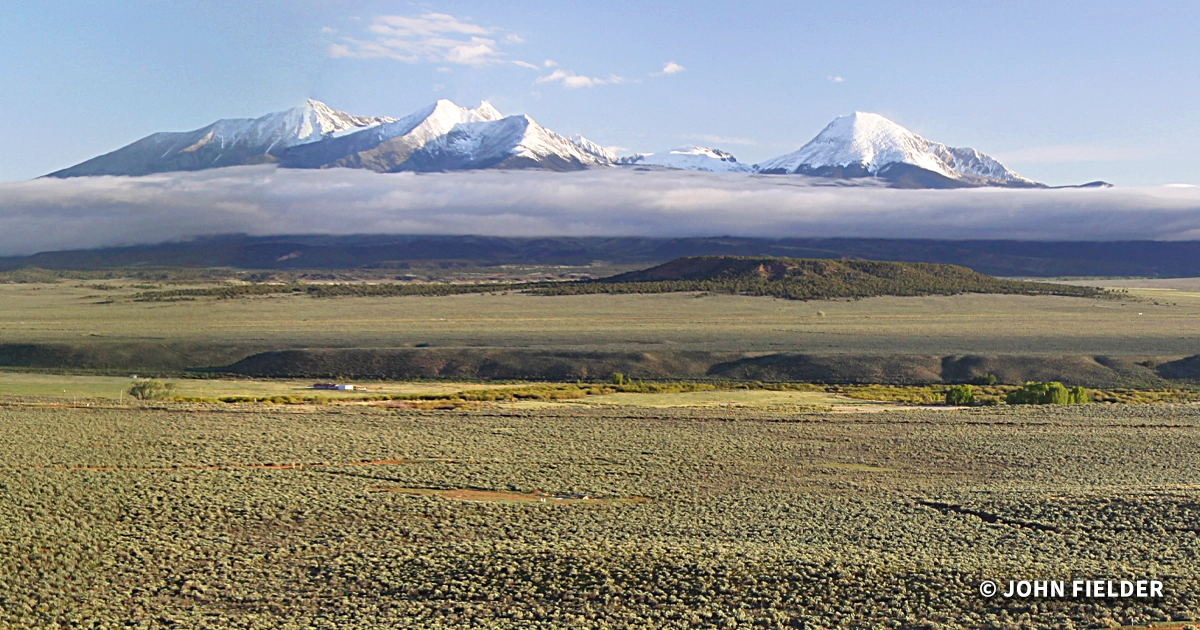
So what did Bacon get for $175 million? For starters, the largest remaining undeveloped tract within the historic Sangre de Cristo land grant, an enormous swath of snow-capped peaks, grassland valleys, and vast expanses of conifer forest. The original 1843 land grant encompassed more than 1 million acres and extended from Northern New Mexico above Taos into Colorado’s San Luis Valley. The Sangre de Cristo was subsequently carved up, parceled off, and the subject of countless legal shenanigans.

More than a century later, Malcolm Forbes bought the Trinchera Ranch, which is located in Costilla County 160 miles southwest of Denver near Fort Garland. Forbes later acquired an adjacent parcel called the Blanca Ranch to create the present property.
Land Report Editor Eric O’Keefe discusses this sale HERE.
What didn’t Bacon get for $175 million? For one thing, he doesn’t have the right to develop the 267-square-mile tract. Those rights were given away in 2004 when the Forbes family donated the largest conservation easement in the state’s history to Colorado Open Lands, a non-profit land trust. In return for this gift, the family received a substantial tax break.
According to The Pueblo Chieftain, Bacon has long been a proponent of groups that support conservation and set up the Moore Charitable Foundation in 1992 to aid their efforts. He himself has given conservation easements on two Long Island properties. I asked Dan Pike, the president of Colorado Open Lands, about Louis Bacon, and he said, “He’s probably as good a buyer as we could have hoped for.”
A closing note. Most published reports indicate that Malcolm Forbes paid $50 an acre to purchase the ranch in 1969. In 2007, his heirs sold it for more than $1,000 an acre. And that was after they had donated their record-setting conservation easement. As anyone familiar with easements knows, they limit land use and therefore lower land value. Yet the Forbes family was still able to sell the Trinchera Ranch for more than 20 times what Malcolm Forbes paid almost 40 years earlier.
Land Report Editor Eric O’Keefe discusses this sale HERE.
The Law of the Land
July 1, 2007 by Land Report Editors
Filed under July 2007, Magazine
BY TREY GARRISON
Stephen Small paces the stage of an auditorium at The American College in Bryn Mawr, Pennsylvania. Despite his low-key speaking style and his obtuse subject matter-federal tax code-the Boston attorney holds his audience’s attention like a prophet preaching salvation, which in effect he is. Small works the crowd, answering questions and drawing engrossing illustrations from his iconic legal career. His styled silver hair and trim physique, wrapped in a simple tailored black suit, belie his 61 years, just as his confident Midwestern accent runs counter to his Boston roots. Read more
Will Conservation Easement Tax Breaks Be Extended?
May 1, 2007 by Joseph Guinto
Filed under Conservation, Field Reporters, Joseph Guinto, Magazine, May 2007, Taxes
BY JOSEPH GUINTO
PUBLISHED MAY 2007
Act now or forever lose your easement. A tax break for conservation-related land donations-known as conservation easements-is about to expire. That is unless Congress does something about it.
The tax break, signed into law by President Bush in August 2006, vastly expanded the deductions landowners could get in exchange for donating their lands to trusts and surrendering the right to develop those lands. But unless the tax break is extended, it will only apply to lands donated in 2006 or 2007
Some landowner lobby groups are pushing hard for an extension, as are members of Congress, who note that the temporary tax deductions passed in 2006 added to the increasing popularity of conservation easements. The Land Trust Alliance, a Washington, D.C.-based interest group, reports that even before the new tax breaks went into effect, the total acreage of conservation easements under control of land trusts had skyrocketed. Acreage under easement increased 148 percent from 2000 to 2005, reaching 6.2 million acres at last count.
For landowners of moderate income, whom the 2006 bill was intended to help, a lot is at stake if the tax break is not extended. The government offers this example: Under the current law, if a rancher earning $50,000 a year on a ranch appraised at $2 million donated half his property to a conservation easement, he would be able to receive $800,000 in tax deductions over a maximum of 16 years. Once the law expires, the maximum tax break on the same donation would fall to $90,000 over a maximum of six years.
Numbers like that have inspired influential Democrats and Republicans in Congress to sponsor bills that would permanently extend the 2006 tax break.
Cut Your Taxes With An Agricultural Exemption
April 1, 2007 by Trey Garrison
Filed under April 2007, Cattle, Farming, Magazine, South, Taxes, Trey Garrison
BY TREY GARRISON
Anne Barnett has seen it all. The Florida real estate broker is also a licensed commercial appraiser and has developed and sold properties in Key West, Georgia, and throughout North and Central Florida, including Gainesville, where she bases her company, Southern Property Services. Her clients run the gamut from savvy investors to greenhorns like the South Florida attorney who hired her not long ago. The man and his partners had just bought 232 acres. “These weren’t land guys. They just about bought it sight unseen. This was an investment for them,” she says. Read more