<?xml version="1.0" encoding="UTF-8"?>
<rss version="2.0"
	xmlns:content="http://purl.org/rss/1.0/modules/content/"
	xmlns:wfw="http://wellformedweb.org/CommentAPI/"
	xmlns:dc="http://purl.org/dc/elements/1.1/"
	xmlns:atom="http://www.w3.org/2005/Atom"
	xmlns:sy="http://purl.org/rss/1.0/modules/syndication/"
	xmlns:slash="http://purl.org/rss/1.0/modules/slash/"
	>

<channel>
	<title>LandReport.com &#187; Bureau of Land Management</title>
	<atom:link href="http://www.landreport.com/tag/bureau-of-land-management/feed/" rel="self" type="application/rss+xml" />
	<link>http://www.landreport.com</link>
	<description>The Magazine of the American Landowner</description>
	<lastBuildDate>Tue, 07 Feb 2012 12:00:58 +0000</lastBuildDate>
	<language>en</language>
	<sy:updatePeriod>hourly</sy:updatePeriod>
	<sy:updateFrequency>1</sy:updateFrequency>
	<generator>http://wordpress.org/?v=3.3</generator>
		<item>
		<title>Madeleine Pickens Presents Eco-Sanctuary Plan to BLM</title>
		<link>http://www.landreport.com/2009/06/madeleine-pickens-presents-plan-to-blm/</link>
		<comments>http://www.landreport.com/2009/06/madeleine-pickens-presents-plan-to-blm/#comments</comments>
		<pubDate>Wed, 10 Jun 2009 07:00:29 +0000</pubDate>
		<dc:creator>Eric OKeefe</dc:creator>
				<category><![CDATA[Conservation]]></category>
		<category><![CDATA[Equestrian]]></category>
		<category><![CDATA[Feature]]></category>
		<category><![CDATA[Federal Policy]]></category>
		<category><![CDATA[Field Reporters]]></category>
		<category><![CDATA[Public Land]]></category>
		<category><![CDATA[Regional News]]></category>
		<category><![CDATA[West]]></category>
		<category><![CDATA[BLM]]></category>
		<category><![CDATA[Boone Pickens]]></category>
		<category><![CDATA[Bureau of Land Management]]></category>
		<category><![CDATA[Eric O'Keefe]]></category>
		<category><![CDATA[Ken Salazar]]></category>
		<category><![CDATA[Madeleine Pickens]]></category>
		<category><![CDATA[wild horses]]></category>

		<guid isPermaLink="false">http://www.landreport.com/?p=1831</guid>
		<description><![CDATA[Madeleine Pickens is no ordinary horsewoman. A lifelong equestrian, she has led numerous champions into the winner&#8217;s circle, including the Hall of Fame Thoroughbred Cigar, winner of 16 consecutive races. Now she is championing a new cause: America&#8217;s wild horses. &#8220;Wild horses are a living symbol of the pioneering spirit of Americans and the America West,&#8221; she [...]
No related posts.]]></description>
			<content:encoded><![CDATA[<p><a href="http://www.landreport.com/2009/06/madeleine-pickens-presents-plan-to-blm/"><img class="alignnone size-full wp-image-1838" title="madeleine-pickens-588" src="http://www.landreport.com/wp-content/uploads/2009/06/madeleine-pickens-588.jpg" alt="madeleine-pickens-588" width="588" height="325" /></a></p>
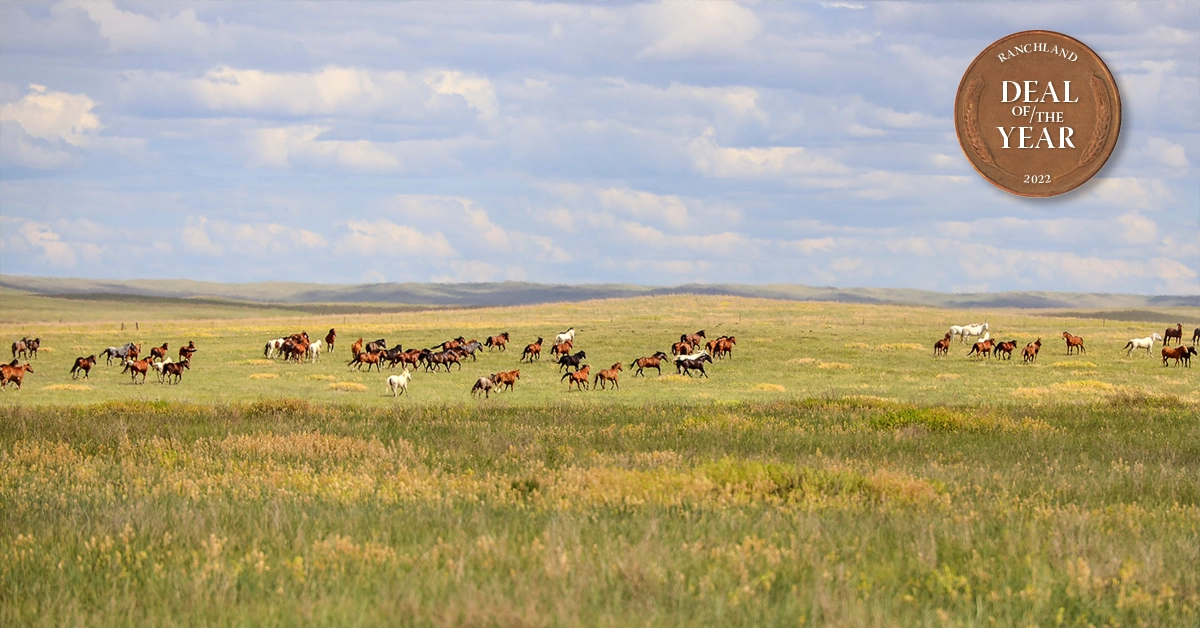
<p>Madeleine Pickens is no ordinary horsewoman. A lifelong equestrian, she has led numerous champions into the winner&#8217;s circle, including the Hall of Fame Thoroughbred Cigar, winner of 16 consecutive races. Now she is championing a new cause: America&#8217;s wild horses.</p>
<p>&#8220;Wild horses are a living symbol of the pioneering spirit of Americans and the America West,&#8221; she says. Her goal is to establish a 501(c)(3) eco-sanctuary for all horses currently in holding facilities on BLM lands. Similar to a national park, it would be a tourist attraction as well as a refuge. To that end she has submitted a proposal to the Bureau of Land Management to create a public/private partnership that would not only locate appropriate land with sufficient forage and water sources but allow wild horses and burros to be free‐roaming and able to form natural bands.</p>
<p>&#8220;While the primary objective of the project is to care for these wonderful creatures, we will also be stewards of the land,&#8221; she says.</p>
<p>In March during hearings on H.R. 1018, Restoring Our American Mustangs (the ROAM Act), Pickens testified before the House of Representatives Subcommittee on National Parks, Forests and Public Lands Committee on Natural Resources. She has also submitted a plan to initially alleviate conditions for 10,000 wild horses currently being penned in BLM short-term holding facilities.</p>
<p>&#8220;My view is for a wild horse sanctuary that will be a tourist destination similar to our national parks where Americans and tourists from around the world can come, observe and be a part of this great part of American history.<span> </span>We can use this treasure to promote ecotourism and at the same time provide for permanent retirement and management of these American icons to which we owe so much,&#8221; she says.</p>
<p>To that end, she is urging those who cherish the wild mustang and support her initiative to contact Interior Secretary Ken Salazar to stop the slaughter and confinement America&#8217;s wild horses and burros.</p>
<p>To join the thousands who have already petitioned Secretary Salazar as well as read more about her plan, The Land Report encourages you to visit her <a href="http://www.madeleinepickens.com/about/" target="_blank">website</a>.</p>
<p>No related posts.</p>]]></content:encoded>
			<wfw:commentRss>http://www.landreport.com/2009/06/madeleine-pickens-presents-plan-to-blm/feed/</wfw:commentRss>
		<slash:comments>0</slash:comments>
		</item>
		<item>
		<title>Interior Department to Allow Firearms in Parks and Refuges</title>
		<link>http://www.landreport.com/2008/12/interior-department-allows-firearms-in-parks-and-refuges/</link>
		<comments>http://www.landreport.com/2008/12/interior-department-allows-firearms-in-parks-and-refuges/#comments</comments>
		<pubDate>Sun, 07 Dec 2008 20:10:54 +0000</pubDate>
		<dc:creator>Eric OKeefe</dc:creator>
				<category><![CDATA[Eric OKeefe]]></category>
		<category><![CDATA[Feature]]></category>
		<category><![CDATA[Federal Policy]]></category>
		<category><![CDATA[Field Reporters]]></category>
		<category><![CDATA[Public Land]]></category>
		<category><![CDATA[Recreation]]></category>
		<category><![CDATA[Topics]]></category>
		<category><![CDATA[BLM]]></category>
		<category><![CDATA[Bureau of Land Management]]></category>
		<category><![CDATA[Bush Administration]]></category>
		<category><![CDATA[firearms]]></category>
		<category><![CDATA[Interior Department]]></category>
		<category><![CDATA[National Park Service]]></category>
		<category><![CDATA[NPS]]></category>
		<category><![CDATA[U.S. Forest Service]]></category>
		<category><![CDATA[USFS]]></category>

		<guid isPermaLink="false">http://www.landreport.com/?p=507</guid>
		<description><![CDATA[On Friday the Interior Department ruled that Americans will be able to carry concealed weapons in some federal parks and wildlife refuges. The announcement overturns a decades-old Reagan Administration regulation that required all guns brought into national parks and wildlife refuges be unloaded and kept in an out-of-the-way place such as the trunk of the [...]
No related posts.]]></description>
			<content:encoded><![CDATA[<p><a href="http://www.landreport.com/wp-content/uploads/2008/12/yosemite-valley-web.jpg"></a></p>
<p><a href="http://www.landreport.com/wp-content/uploads/2008/12/yosemite-valley-web.jpg"><a href="http://www.landreport.com/2008/12/interior-department-allows-firearms-in-parks-and-refuges/"><img class="alignnone size-medium wp-image-521" title="yosemite-valley-web" src="http://www.landreport.com/wp-content/uploads/2008/12/yosemite-valley-web-300x291.jpg" alt="" width="300" height="291" /></a></a>On Friday the Interior Department ruled that Americans will be able to carry concealed weapons in some federal parks and wildlife refuges. The announcement overturns a decades-old Reagan Administration regulation that required all guns brought into national parks and wildlife refuges be unloaded and kept in an out-of-the-way place such as the trunk of the car.</p>
<p><span id="more-507"></span>The new regulation does, however, comes with caveats. </p>
<p><em>The final rule, which updates existing regulations, would allow an individual to carry a concealed weapon in national parks and wildlife refuges if, and only if, the individual is authorized to carry a concealed weapon under state law in the state in which the national park or refuge is located.</em></p>
<p>According to Assistant Secretary of the Interior for Fish and Wildlife and Parks Lyle Laverty, the regulation allows individuals to carry concealed firearms in federal parks and wildlife refuges to the same extent they can lawfully do so under state law.</p>
<p>“America was founded on the idea that the federal and state governments work together to serve the public and preserve our natural resources,” Laverty said. “The Department’s final regulation respects this tradition by allowing individuals to carry concealed firearms in federal park units and refuges to the extent that they could lawfully do so under state law. This is the same basic approach adopted by the Bureau of Land Management (BLM) and the United States Forest Service (USFS), both of which allow visitors to carry weapons consistent with applicable federal and state laws.”</p>
<p>This week the rule will be published in the Federal Register. It will take effect 30 days later.</p>
<p>Here is the <a href="http://www.doi.gov/news/08_News_Releases/120508.html" target="_blank">complete text </a>of the announcement from the Office of the Secretary of the Interior Department.</p>
<p>No related posts.</p>]]></content:encoded>
			<wfw:commentRss>http://www.landreport.com/2008/12/interior-department-allows-firearms-in-parks-and-refuges/feed/</wfw:commentRss>
		<slash:comments>0</slash:comments>
		</item>
		<item>
		<title>Idaho Ranchers Challenge Taylor Grazing Act</title>
		<link>http://www.landreport.com/2007/11/idaho-ranchers-challenge-taylor-grazing-act/</link>
		<comments>http://www.landreport.com/2007/11/idaho-ranchers-challenge-taylor-grazing-act/#comments</comments>
		<pubDate>Thu, 01 Nov 2007 19:00:42 +0000</pubDate>
		<dc:creator>Joseph Guinto</dc:creator>
				<category><![CDATA[Cattle]]></category>
		<category><![CDATA[Federal Policy]]></category>
		<category><![CDATA[Field Reporters]]></category>
		<category><![CDATA[Joseph Guinto]]></category>
		<category><![CDATA[Regional News]]></category>
		<category><![CDATA[Topics]]></category>
		<category><![CDATA[West]]></category>
		<category><![CDATA[BLM]]></category>
		<category><![CDATA[Bureau of Land Management]]></category>
		<category><![CDATA[Joyce Livestock]]></category>
		<category><![CDATA[LU Ranch]]></category>
		<category><![CDATA[Supreme Court]]></category>
		<category><![CDATA[Taylor Grazing Act]]></category>

		<guid isPermaLink="false">http://www.landreport.com/?p=421</guid>
		<description><![CDATA[BY JOSEPH GUINTO PUBLISHED NOVEMBER 2007 When the U.S. Supreme Court convened in October, the men (and woman) in black did not discuss landowner water rights. And for a pair of longtime Idaho ranchers—and perhaps other landowners—no news might mean bad news. For the moment, the court has made no decision on whether to take [...]
No related posts.]]></description>
			<content:encoded><![CDATA[<p><strong>BY JOSEPH GUINTO<br />
PUBLISHED NOVEMBER 2007</strong></p>
<p>When the U.S. Supreme Court convened in October, the men (and woman) in black did not discuss landowner water rights. And for a pair of longtime Idaho ranchers—and perhaps other landowners—no news might mean bad news.</p>
<p>For the moment, the court has made no decision on whether to take up the case of Joyce Livestock vs. the United States. Earlier this year, Joyce and LU Ranching won a ruling against the federal government in Idaho’s Supreme Court in a potentially precedent-setting case of grazing rights.</p>
<p>Ranchers have long been subject to the rules set by the Bureau of Land Management under the 1934 Taylor Grazing Act. That act allows federal officials to set the terms under which ranchers can use public lands, including whether and how much water can be used.</p>
<p>But in 2005, Joyce and LU challenged that law as it applied to Idaho’s Snake River Basin. They argued that because they had operated in the area for more than 100 years—long before the Taylor Act—they had established water rights that the government could not remove.</p>
<p>By February of this year, their case reached the Idaho Supreme Court, which ruled in favor of the livestock firms. But the court did not allow the companies’ claim to have the U.S. government pay their $1.3 million court fees. Idaho’s Supreme Court said the government did not act frivolously. The ranchers argued that the Equal Access to Justice Act—a law intended to prevent the government from running roughshod over small businesses and individuals by prolonging expensive litigation—entitled them to court costs. But the Idaho court said it had no jurisdiction to rule on that claim, leaving the U.S. Supreme Court as the last resort.</p>
<p>With the court’s docket already set until next year, precedent-watchers will have to wait on a final outcome.</p>
<p>No related posts.</p>]]></content:encoded>
			<wfw:commentRss>http://www.landreport.com/2007/11/idaho-ranchers-challenge-taylor-grazing-act/feed/</wfw:commentRss>
		<slash:comments>0</slash:comments>
		</item>
		<item>
		<title>How Safe Are the Nation&#8217;s Wildlife Refuges?</title>
		<link>http://www.landreport.com/2007/07/how-safe-are-the-nations-refuges/</link>
		<comments>http://www.landreport.com/2007/07/how-safe-are-the-nations-refuges/#comments</comments>
		<pubDate>Sun, 01 Jul 2007 07:00:50 +0000</pubDate>
		<dc:creator>Joseph Guinto</dc:creator>
				<category><![CDATA[Conservation]]></category>
		<category><![CDATA[Federal Policy]]></category>
		<category><![CDATA[Field Reporters]]></category>
		<category><![CDATA[Joseph Guinto]]></category>
		<category><![CDATA[June 2007]]></category>
		<category><![CDATA[Magazine]]></category>
		<category><![CDATA[Public Land]]></category>
		<category><![CDATA[Recreation]]></category>
		<category><![CDATA[Topics]]></category>
		<category><![CDATA[BLM]]></category>
		<category><![CDATA[Bureau of Land Management]]></category>
		<category><![CDATA[Bush Administration]]></category>
		<category><![CDATA[CARE]]></category>
		<category><![CDATA[Congress]]></category>
		<category><![CDATA[Cooperative Alliance for Refuge Enhancement]]></category>
		<category><![CDATA[Jim Saxton]]></category>
		<category><![CDATA[National Wildlife Refuge System]]></category>
		<category><![CDATA[U.S. Fish and Wildlife Service]]></category>

		<guid isPermaLink="false">http://www.landreport.com/?p=367</guid>
		<description><![CDATA[BY JOSEPH GUINTO PUBLISHED JULY 2007 The White House accelerated funding for its Healthy Lands Initiative this year, allocating some $3 million to the Bureau of Land Management. The money must be spent on restoring or maintaining natural habitats on federal lands, and more will be made available in 2008. But the sum isn&#8217;t nearly [...]
No related posts.]]></description>
			<content:encoded><![CDATA[<p><strong>BY JOSEPH GUINTO<br />
PUBLISHED JULY 2007</strong></p>
<p>The White House accelerated funding for its Healthy Lands Initiative this year, allocating some $3 million to the Bureau of Land Management. The money must be spent on restoring or maintaining natural habitats on federal lands, and more will be made available in 2008.</p>
<p>But the sum isn&#8217;t nearly what one lobbying group is seeking for refuges. The Cooperative Alliance for Refuge Enhancement (CARE), which unites an array of environmental, hunting, and scientific organizations, wants the budget for the U.S. Fish and Wildlife Service&#8217;s National Wildlife Refuge System doubled by 2013. CARE has long pushed for more monies to go toward the nation&#8217;s wildlife refuges. Yet even with bipartisan support, they&#8217;ve won only modest increases. The Fish and Wildlife Service says funding for the refuge system has increased from about $300 million a year in 2001 to $383 million today, but the agency says that&#8217;s not enough to keep up with federally mandated raises for employees and deteriorating conditions at many refuges.</p>
<p>CARE agrees. Last spring, the organization released a lengthy report that offered a breakdown of what CARE sees as funding shortfalls for and shabby upkeep at wildlife refuges. The report concludes that the nation&#8217;s refuges are at a crisis point. The group wants funding for the National Wildlife Refuge System increased by $55 million next year with continued increases each subsequent year.</p>
<p>Many members of Congress have endorsed CARE&#8217;s efforts, including Rep. Jim Saxton (R-New Jersey). Still, at the moment, there is no legislation working its way through the Capitol that would give the refuge system the funding CARE is seeking.</p>
<p>No related posts.</p>]]></content:encoded>
			<wfw:commentRss>http://www.landreport.com/2007/07/how-safe-are-the-nations-refuges/feed/</wfw:commentRss>
		<slash:comments>0</slash:comments>
		</item>
	</channel>
</rss>