


Crossing the Divide with Al Biernat
October 19, 2009 by Trey Garrison
Filed under Developers, Feature, Federal Policy, Field Reporters, Gustav Schmiege, Minerals, Public Land, Regional News, Topics, Trey Garrison, Water, West

When it came to the Colorado hamlet of Creede, it was love at first sight for Dallas restaurateur Al Biernat (standing front and center with wife Jeannie and writer Trey Garrison). And what’s not to love about Creede? Nestled among high rocky cliffs on the eastern side of the Continental Divide, the historic mining town is the picture-perfect home of just 400 year-round residents. The rest of the year, tens of thousands of tourists and part-timers cruise through. Best of all, it’s not a ski town. Unlike Vail or Aspen, there’s no crush of obnoxious fashionistas clamoring for lattes or sashimi. Consequently, snug cabins and larger retreats range in price from ridiculously affordable to seven-figure splendor.
BY TREY GARRISON
PHOTOGRAPHY BY GUSTAV SCHMIEGE
PUBLISHED SUMMER 2009
But Creede is no backcountry village. A tiny little Whoville of sorts, Creede boasts a slew of incredible little restaurants, art galleries, and the Creede Repertory Theatre, which has won acclaim from high-minded New York drama critics. The hunting is so rewarding that people wait years to get a permit to stalk elk, moose, and other trophy critters. The fly-fishing on the Rio Grande and its tributaries attracts anglers from around the world. And just four percent of the land in Mineral County is privately owned. The rest is controlled by the U.S. Forest Service.
Enter Al Biernat, a self-made success who worked his way up from bussing tables at the Palm Restaurant in Los Angeles to running the Palm’s Dallas locale as its GM. When a lease came up on a prime piece of Dallas real estate, he signed on the dotted line and created the dining establishment that now bears his name.
Creede was a dream come true—a place of solace, relaxation, and recreation to share with his family and friends—so he and his wife, Jeannie, bought a 30-acre plot in a delicate Alpine zone at 10,600 feet. The land is regulated by the Mineral County Alpine Zoning Commission, and Biernat has a thick stack of regulations to prove it. Everything from the size of structures to the materials he could use is spelled out. Surrounded on three sides by Forest Service land, he believed his cherished investment would be protected from the over development that has plagued other Colorado towns.
Since 2005, Biernat has put a substantial amount of his hard-earned cash into his cabin and the surrounding property. “It seemed the perfect little secret place,” Biernat says. “I had no idea what could be coming.”
But he should have.
Until the mid-1980s, Creede was a mining town, site of Colorado’s last big silver strike. Since then, however, the only miners have been tourists, picking up bits of quartz and the occasional fleck of pyrite (better known as fool’s gold). Biernat was positive this peaceful oasis was immutable.
He was so sure of it that he believed mining could never come back. That’s why he signed his deed, despite a standard print disclaimer and warning right above the signature line stating that he was not buying the patented mineral rights to his land. And yet, from 2007 through the end of 2008, mining returned—exploratory mining for untapped veins of nickel, silver, lead, and gold.
The prospect sent Biernat and a good number of local landowners into a tailspin of worry and doubt. They weren’t just concerned about the light and noise pollution from drilling operations or the heavy truck traffic on narrow, winding passes. Biernat was in a bind because while he owned the surface rights to his property, someone else owned the patented mineral rights. And the implications are enormous.
Different parties often own the surface and the subsurface rights. These interests may have been created through the reservation of the minerals by the government or may result from a decision by a landowner to sell their mineral interests.
Mining claims are initially unpatented claims, which give the right only for those activities necessary to explore and mine. Much as farmers could obtain title under the Homestead Act, miners can obtain a patent (a deed from the government). The owner of a patented claim can put it to any legal use. Bottom line? If extractable ore were found beneath his property, the subsurface rights owner can force landowners such as Biernat to sell.
Beyond that, full-scale mining would shatter the sanctity of the Continental Divide. Biernat’s 1,000-square-foot, loft-style cabin is something out of a Ralph Lauren catalog. It’s cozy, rustic, gorgeously decorated, and at night you get a better view of the stars than the Hubble telescope.
Biernat had planned to build a larger cabin and turn his existing one into a guest house. He had already added a barn-style garage for his truck, his ATVs, and the snowmobiles that are the only way to and from the cabin in winter. Needless to say, the return of mining put an end to Biernat’s construction plans. But to many longtime locals, another possibility loomed:
Was their dream of mining going to come true?
After the closure of the last active mine in 1985, Creede recreated itself as a tourism hub. But tourism is a fickle trade, which even opponents of mining admit. Ed Vita, an ex-techie who moved to Creede to get away from the rat race, owns two businesses in Creede. In the winters he runs San Juan Snowcat, and he owns the popular Old Miners Inn, where you can enjoy a mean pizza and the requisite adult beverage.
We sat outside on the inn’s upstairs deck, and Vita admitted he tentatively supports the return of mining. “It’s all exploratory. Until I see the numbers and the contracts, I’m not counting on anything. I know there will be some impact on the tourist industry, but it can be hard surviving here in the winter months when it’s just the 400 locals circulating the same dollars,” Vita says.
But businessmen like Avery Auger, president of Creede America Group, love the idea of mining coming back to Creede. Creede America is developing custom homes that start in the $300,000 range. Auger is not concerned about mining. In fact, he expects to draw potential buyers from the mining operations, at least from among those in management and high-tech positions that command six-figure salaries. His development overlooks Creede and is protected by an earthen berm that blocks sight and dampens noise. “This town needs this kind of business to grow,” Auger says. “This is only going to increase property values and bring money this town needs.”
Brian Egolf agrees. Egolf first came to Creede with his grandfather when he was only two years old. As years passed, Egolf thought someday he would relocate to Creede permanently. After finding his way he watched the mines close. He swore one day he would reopen them.
Over the last decade, Egolf gathered patented mineral rights for large swaths of land around Creede. A savvy businessman, he knew that the depressed price of minerals wouldn’t last forever and approached Idaho-based Hecla Mining. Egolf wanted Hecla to come to Creede, test the mines, and, if profitable, oversee production.
“I’m really hoping that we can revitalize Creede, so that people can stay and earn a good living and that their children won’t leave as soon as they graduate high school, because there will be opportunities here,” Egolf says.
Hecla’s exploratory plans called for three years of exploratory mining in a 36-square-mile area, an investment of more than $12 million. But when mineral prices declined, Hecla suspended operations. Although it promises to resume exploration in the near future, many in Creede are doubtful it will return anytime soon.
That’s no relief to Biernat, who is still considering a new house, a new well, and solar power. If commodity prices rebound, mining could come back. “Do I put the money in and risk losing my investment?” Biernat asks. “I don’t know.”
Active mining operations around a recreational retreat could drive down property values long before Hecla might acquire Biernat’s cabin. Although it’s appraised at $550,000 right now, it would be worth much less if mining resumed.
When Biernat first saw his land, everything convinced him his investment would be protected. Set in an Alpine zone, it is surrounded by Forest Service land. Brokers emphasized how mining was dead and that the town had been reinvented as a cultural and recreation hub. But unless an area is declared a wilderness, the U.S. Forest Service allows activities on federal land like mining, timber harvesting, and grazing.
To be fair, the fact that Biernat would not own the patented mineral rights wasn’t exactly in fine print. Biernat is a smart businessman and took a risk. And, he admits, despite all his anxieties, he doesn’t think he’d do anything different.
“I knew I was taking a little bit of a gamble,” Biernat admits. “I should have read things more closely. But I’ll be honest. If I could go back and do it again, I would, no matter what the stress and worry has been. Just the memories I built with my children and my wife make it worth it. I just wish I could be sure our investment would be safe over the long haul.”
While some of the specifics of his case are unique to Colorado law, the issue of patented mineral rights is a federal one. From coast to coast and everywhere in between, the potential for profit from subsurface minerals means that if a landowner hasn’t secured those rights, it could place their investment at risk.
Caveat emptor should be every landbuyer’s watchwords, even if they have competent lawyers and erstwhile brokers on their side. Should you find that dream spot, it just may not be possible to acquire the mineral rights to go with the surface estate. At that point, you have to measure the risk, and decide if it’s worth it.
For Biernat, it most definitely has been. But it’s not something he takes lightly. Every time he talks about the issue, you can see the concern etched on his face and the troublesome pall on his otherwise optimistic visage.
“I love that town, I love the fact that it’s an artists’ community, and I love the people,” he says. “It’s taken me so long to really start to fit into the town, and I’d hate to have to leave it. But I’m blessed. I have that option. What about the guy who doesn’t have that choice?”
Pinon Canyon: “One Colossal Land Grab”
December 1, 2008 by Trey Garrison
Filed under 2008 Fall, Cattle, Farming, Feature, Federal Policy, Field Reporters, Gustav Schmiege, Magazine, Public Land, Topics, Trey Garrison, West
Folks in Southern Colorado don’t trust the Army. And with good reason. In 1983, when the Department of Defense established the 500-square-mile Pinon Canon Maneuver Site (PCMS), the Army acquired almost half the 285,000 acres by using eminent domain.
It was an ugly experience, but when it concluded the military made two promises: there would be no live-fire exercises at Pinon Canyon, and no additional lands would be taken. Now, a quarter-century later, both promises have been broken.
BY TREY GARRISON
PHOTOGRAPHY BY GUSTAV SCHMIEGE
PUBLISHED DECEMBER 2008
The Army broke its first promise – the no live-fire ban – in 2004. Given the lay of the land, it was a particularly unwelcome decision. The short-grass prairie that blankets Southern Colorado’s arid savannah takes on a tinderbox quality when rainfall is sparse. Not surprisingly, live artillery fire only exacerbates those conditions. That was certainly the case this summer when lightning ignited grass fires on the maneuver site. They quickly spread to neighboring ranches. The burn eventually engulfed more than 40,000 acres.
Two years after the live-fire ban was broken, word got out that the powers that be at Fort Carson wanted to break the Army’s second promise and acquire additional acreage, more specifically, 418,000 additional acres. The land the Army wants is a mosaic of private and federal lands in the Comanche National Grasslands. This time the Army promises there will be no heavy-handed eminent domain proceedings, which makes sense because since 2007 the Department of Defense has been prohibited by Congressional mandate from condemning any private land. But that has not prevented it from seeking “willing sellers.”
The problem? Hardly a soul in southeast Colorado believes the Army any more. The plan to buy from willing sellers looks more like a try at a checkerboard land grab. And, if a recently uncovered 2004 Fort Carson proposal is accurate, it looks like the Army wants a hell of a lot more than 418,000 acres; it wants 7 million. Welcome to Pinon Canyon.
THE LANDOWNERS’ PERSPECTIVE
Mack Louden is one of the leaders in the fight against the Army’s plans to expand the PCMS. It’s cost him a lot – time, money, stress on the home front. But he’s willing to risk everything, because to Louden it’s a fight worth fighting. This summer Louden closed down his feed store, a Trinidad landmark for almost a century. He could run a ranch, a business, or fight the insurgency, but not all three.
“When it comes down to it, this is what’s important,” he told me when I stopped in for a visit a few months ago. He spit into a cup to underline his point. His piercing eyes are at odds with his tired, craggy face, just as he himself seems equally cynical and optimistic. “It’s driving my wife crazy how much of my time this has taken, but no matter what it costs me I’d fight it again if I had the chance.”
The battleground known as Pinon Canyon is desolate country on the east side of the Continental Divide that resembles the barren environs found in much of Iraq and Afghanistan. Generations of ranchers dating all the way back to Charlie Goodnight have tended their herds here. Opponents of the Army’s plans say the 418,000-acre seizure would devastate the local economy. An estimated $20 million a year in agricultural production would be lost, and so would more than 500 ranches.
Lon Robertson is a neighbor of Louden’s. (Neighbor in these parts means he lives only 10 or 20 miles away.) Robertson heads the Pinon Canyon Expansion Opposition Coalition (www.pinoncanyon.com). To him, the proposed expansion is about much more than land. “The impact on this whole region will be monumental. It will be devastating,” he says.
The Department of Defense already owns about 25 million acres of which the Army’s share is 15 million acres. The military says it’s not enough for what it needs. Local ranchers disagree. Their response? Not one acre more. This battle cry has become the name of their legislative action committee.
“This land is not for sale at any price,” Louden says.
THE ARMY’S PERSPECTIVE
Since World War II, Fort Carson has been a Colorado Springs landmark. Located approximately 100 miles away from Pinon Canyon, it is from this base that units are trained at PCMS. The Army says it needs to expand PCMS for a number of reasons, including the 2007 Grow the Army initiative, a program that, in a surprise twist, is designed to do just what its name says. Over the course of the next two years, the Pentagon plans to expand the number of soldiers stationed at Fort Carson from 16,000 to 25,000.
“Changes to unit organization in the past year, upgrades to technology, and a decision to add a fifth BCT (brigade combat team) under Grow the Army have all pushed the doctrinal training land requirements up, not down, at Fort Carson,” says Army spokesman Dave Foster at the Pentagon.
As to why the Army doesn’t use some of the millions of acres it already owns, Foster says part of it is because the terrain isn’t right. There are also cumbersome federal restrictions. But what it really boils down to – and he admits this – is convenience.
“In order to support Fort Carson-based soldiers, other federal lands must not only be suitable and available, they must also be within 200 miles of Fort Carson/PCMS,” Foster says. “If the federal lands are further away than 200 miles, the burden on soldiers and families to use the land regularly for home-station readiness training purposes becomes so great that the Army would be forced to consider realigning units away from Fort Carson and to other installations with closer facilities.
“There are a handful of federal landholdings … that the Army is investigating further, (but) none of these are assured or problem-free. Securing permission from other federal agencies to train on these lands is a lengthy and difficult process.”
Louden’s take on the convenience angle is less than generous: “Yeah, it’s convenient for them. The generals can fly down, observe training and maneuvers, and fly back to Colorado Springs in time to play golf in the afternoon.”
THE REVEAL
There’s a new twist on the saga of Pinon Canyon, one that undermines the Army’s assertion that it only needs a little here and a little there. According to a 2004 study out of Fort Carson titled “Analysis of Alternatives Study: Pinon Canyon Maneuver Site, Colorado,” the Pentagon has been planning on acquiring almost 7 million acres in southeastern Colorado, forcing more than 17,000 residents off their land, and establishing the largest military base in the world. The 2004 study states:
… Fort Carson’s Range and Training Land Program (RTLP) Development Plan, September 2003, identified the multi-phased acquisition of 6.9 million acres of land, currently owned by private land owners and the U.S. Forest Service (Comanche National Grasslands), as an option to the use of this land for large-scale, doctrinally sound Joint and Combined military training for units stationed at or deployed to Fort Carson and PCMS. Likewise, an expanded PCMS offers DoD the ability to simulate the situation in the Middle East, complete from deployment, through operations to re-deployment.
This unprecedented acquisition of almost 11,000 square miles of private and public land would result in an operations area larger than Massachusetts. The multi-service battlefield would be more than triple the
size of New Mexico’s White Sands Missile Range, which at 3,200 square miles, is currently the largest military installation in the United States.
Opponents of the expansion say it would decimate the social and economic fabric of southeastern Colorado and destroy the last intact short-grass prairie along the American Great Plains.
The Pentagon’s analysis makes clear that the land acquisition was designed to take place in many phases with the first phase matching almost exactly the Army’s current push for about 100,000 acres next to the PCMS.
“This report also shows that far from compromising its plans, the Army is actually sticking almost exactly to the phased acquisition laid out in this document,” Louden says. “Army assistant secretary Keith Eastin has stated publicly that the Pentagon will be back for more land in the future.”
It’s hard for people to get their head around how much this would affect not just southeast Colorado but much of the Southwest, he says.
“People need to understand the sheer size of this planned land grab and the disastrous consequences of letting the Pentagon get one more acre. The damage to this fragile region and the rare wildlife it supports would be catastrophic,” Louden says. “Ranchers whose relationships with the native grasslands go back many generations would lose their lands and their livelihoods. The region’s family ranching and agriculture-based economy and the communities that depend upon it would be devastated. And a vast trove of historical, archaeological, and paleontological treasures would be lost.”
Jim Herrell, a fellow opponent of the expansion, says the Army’s ongoing pursuit of expansion is a telltale sign of the disconnect between the government and the people it is bound to serve.
“Every level of democracy has voiced its opposition to the expansion of the size and boundaries at Pinon Canyon clearly and repeatedly, yet the Pentagon and its contractors refuse to heed the will of the people,” Herrell says. “Now we see why the Army plans to build extensive facilities and intensify use on the 238,000 acres they already have but have rarely used. The Army got its foot in the door in the 1980s with promises that they’d never be back and there would be no live-fire. Those promises are broken. Letting the Pentagon go ahead with their plan inside and outside the PCMS would open the gate to an unconscionable drain on taxpayers.”
THE BATTLEFIELD
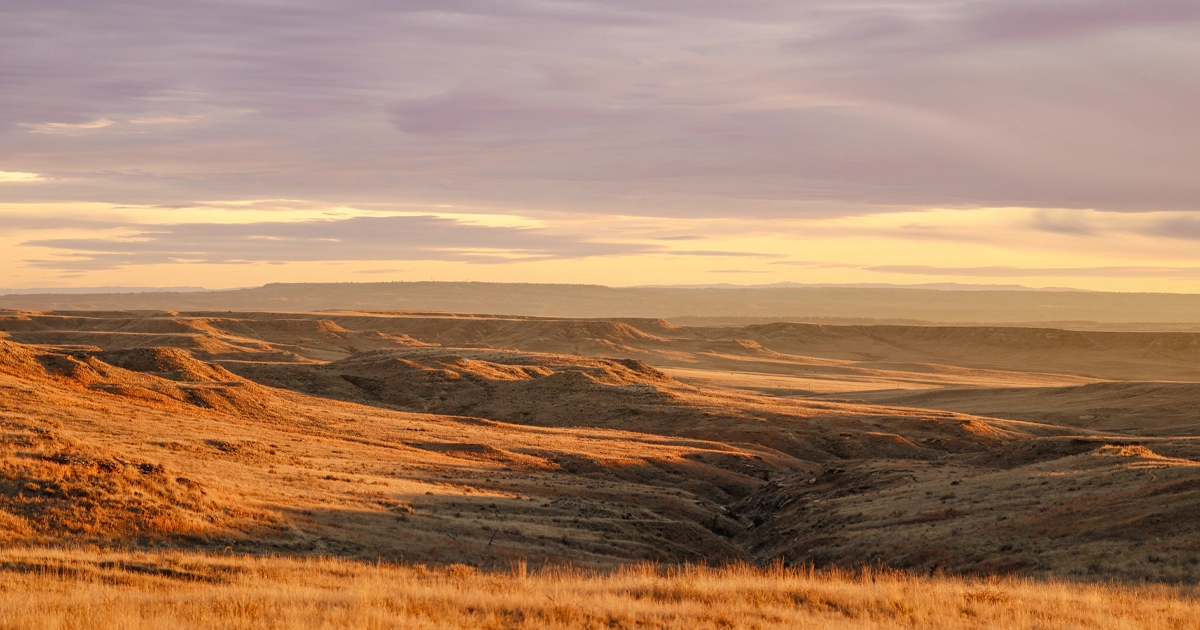
The enormous swath of khaki-colored ranchland in and around Pinon Canyon is environmentally-sensitive short grass prairie. Patchy, protein rich grasses that keep herds fed in the winter are interspersed with the kind of rugged scrub and rocky flatland that also nurtures dust storms. Even today, ruts made by pioneers’ wagons traveling along the Santa Fe Trail a century ago are plainly visible. Imagine what a 67-ton Abrams or an 18-ton Stryker on maneuvers can do, much less the impact of live-fire exercises in a place where lightning strikes spark grassfires that can burn hundreds of acres at a go.
Town and county governments throughout the area – except Trinidad itself — have passed resolutions against the expansion. A bipartisan coalition of state lawmakers pushed through the Colorado Legislature a largely symbolic measure in 2007 condemning expansion plans.
For opponents, the campaign has been one of battles won, campaigns lost, brilliant strategy, lawsuits, and holding tactics. Initially, the Army planned to seize the land through eminent domain, as it did back in the 1980s. The power to condemn private land for public use is nothing new. It’s right there in the last part of the Fifth Amendment of the U.S. Constitution:
“… nor shall private property be taken for public use, without
just compensation.”
But since many Colorado ranchers had been down this road before with the Army, they mobilized immediately and started beating down the doors of their legislators. The fight has been carried on for two years now. The two primary weapons have been legal documents and official filings. In an ironic twist, the Army has been bogged down with all sorts of red tape: studies and statements on environmental effects and historical impact. In 2007, expansion opponents won their first serious victory when Congress banned on any funding for eminent domain or expansion activities. U.S. Rep. Marilyn Musgrave (R-CO), aided by U.S. Rep. John Salazar (D-CO), pushed the ban through.
At press time, the nation’s largest land grab has been reduced to a stalemate, trench warfare at its finest. Congress has approved the ban for another year, through the end of fiscal 2009. But U.S. Rep. Doug Lamborn (R-CO), whose district includes Colorado Springs, wants the expansion. Lamborn has led the effort to allow the Army to circumvent the spending ban by attaching language to the 2009 Defense Authorization Act that allows the solicitation of “willing sellers.”
“The Army believes it can buy the land it needs from willing sellers,” Foster says. “The Army has no desire to assert its condemnation authority, does not feel such authority is needed in this case, and seeks only the ability to buy on the open real estate market like any other organization.”
Opponents say that this is an end around and a dirty trick. They say Lamborn’s maneuver is a checkerboard land grab that would make acquisition of other parcels inevitable by devaluing other ranchlands. Plus, it will intimidate owners, who worry they won’t get as much compensation should eminent domain come later. Live-fire war games and demands for access easements tend to drive down the values. They also spook cattle.
“(Salazar and Musgrave) authored legislation banning all funding for any expansion of the Pinon Canyon Maneuver Site; a majority of the U.S. House and Senate approved the bill; and President Bush, the commander in chief, signed it into law,” Robertson said in an email he sent me. “Is (Eastin) that unfamiliar with the chain of command that he believes he can go ahead and spend taxpayer dollars anyway?”
The most recent battlefront is over construction on the existing PCMS site. A non-profit group allied with Robertson’s organization called Not 1 More Acre! filed a lawsuit in the U.S. District Court for Colorado on April 23 to halt the construction of an encroaching 16-barrack military base on the western edge of the existing training site.
This construction is designed to demonstrate “need.” The Army plans to relocate military personnel to the area. The suit charges the Department of the Army with failure to comply with the National Environmental Policy Act of 1969 (NEPA) and failure to disclose the destructive environmental,cultural, and socio-economic impacts of the army’s proposed current expansion of Pinon Canyon Maneuver Site (PCMS) to encompass private property between La Junta, Trinidad, and Walsenburg.
Meanwhile, the Army is building its own “coalition of the willing” to strengthen its claims on the land around PCMS. Kimmie Lewis, a third-generation rancher, says the Army is cozying up with environmental groups which see potential gain in taking land from private ownership, even if some of the land would be sacrificed to the damage caused by armored and mechanized military exercises.
“The PCMS expansion plan incorporates a Private Lands Initiative, which is a cooperative effort between the U.S. Army Forces Command, The Nature Conservancy, and the U.S. Fish and Wildlife Service, which seeks to annex additional land around the borders of the installation, creating a buffer zone (and) removing even more land from productive purposes,” Lewis says. “It’s a strange coalition but it’s come together at several military sites.
The Nature Conservancy has been an active partner with the Pentagon since at least 2005, when the Bush White House urged “cooperation conservation” between the two as a way to expand the amount of land “protected” by the federal government, including the creation of environmental buffer zones around military bases. Senator Wayne Allard (R-CO) and Rep. Joel Hefley (R-CO) helped TNC acquire a $7 million
grant to secure a buffer zone south of Colorado Springs to protect the fort’s northern borders. These are called Army Compatible Use Buffers (ACUB), and they are legally binding agreement between an Army installation and another party that enables the other party to acquire land or interest in land from a willing private landowner in the vicinity of Army training areas. Fort Carson and eight other installations are currently enrolled in the “Active Conservation Buffer Program.
All of this – the uncovered plans, the lawsuits, the counter maneuvers, the political infighting – it takes its toll. It’s the uncertainty that’s the killer here. Even Sen. Ken Salazar (D-CO) – who has been trying to thread the needle between his ranching constituents and the demands of the Army – is frustrated. He told The Land Report that he still thinks a compromise can be reached that satisfies all.
“I am still hopeful that there is a way to find a win-win solution that strengthens the agricultural economy of southeastern Colorado and fulfills the needs of the Army. I have suggested several ideas to the Army, including leasing land from local landowners and opening some of the existing site to grazing. The Army has shown openness to some of these concepts, and Fort Carson officials are taking steps to work more closely with local communities to hear their concerns and ideas as well,” Salazar told me. “The cloud of uncertainty, however, is still hanging over the heads of local property owners, in large part because they still worry that the Army will use eminent domain to take their land. I have supported, and will continue to support, barring the use of eminent domain at Pinon Canyon. The residents should not have to live in fear of the Army taking their land.”
Rep. Musgrave concurs. “For the past two years I’ve worked on preventing the Army from spending any money on the expansion,” she tells The Land Report. “But (the Army) is very tenacious. They have time and all the things government has on their side.”
It’s this sort of scenario that has Mack Louden worried. He thinks one of the biggest problems expansion opponents face is that the opinion makers and major media types in Washington and New York can’t fathom the scale of acreage under discussion.
“For someone who pays $1 million for a 1,000-square-foot apartment or a quarter-acre lot, they think 100,000 acres is all the land in the world. Why not give up a little?” Louden says.
But in this part of the country a rancher needs up to 100 acres to support a single cow-calf pair. In the warmer months herds are fed grain. During the harsh winters they survive on protein-rich native grasses. Louden, whose own 30,000-acre ranch supports just 300 Red Angus, says that when all is said and done a rancher with his size operation is lucky to net $35,000 a year. Most ranchers and their wives work extra jobs to make ends meet or to get health insurance coverage.
Louden and I are driving down a dirt road that runs between along the fence line of the existing PCMS. Kennie Gyurman, who lost his ranch in the first PCMS back in 1983 and is still mad about that 25 years later, has joined us. Gyurman’s beat-up Ropers, faded Wranglers, and angry disposition come across anti-military, but once upon a time he worked for the Department of Defense just outside Denver.
“You can’t trust a thing they tell you,” Gyurman says. “They’ll say they want one thing and take another. They’ll say they just want this much, and then they’ll take everything. We have to stop them.”
Opponents of the expansion such as these two aren’t worried about their land. Gyurman’s already lost his, and Louden’s ranch isn’t even in the Army’s sites. Their position is as much philosophical as it is self-interest.
As Lon Robertson told me last year, “They say they need the land to help train our soldiers to fight for our rights. I thought one of our rights was the right to own property.”As for Louden, he sees a bigger problem than just one wing of the Pentagon making designs on a largely unknown piece of rural Colorado.
“The people are losing the government,” Louden says. “The Pentagon is going ahead with their plans despite all the studies they’re supposed to be doing. It affects everyone in this region, and they’re not even following their own rules.”
“This is one colossal land grab in Colorado,” says Rep. Musgrave, adding that she has little doubt the 2004 study where the Army eyes 7 million acres is the long-term goal. “And it’s always hanging over everyone. You can bet if there is (a permanent solution), we will find it. But bureaucracy has all the time in the world. They can be very patient and come back when this crowd gets worn down. I support the military with all my heart but they’re not right here. Fool me once, shame on you. Fool me twice, shame on me.”
“We are all Americans,” Louden says. “We all support our country and our military. But the military is supposed to answer to the people, and to serve to protect our rights. What is the military defending us from if they’re the ones who take our land?”
Field Report: The 2008 Presidential Campaign
October 22, 2008 by Trey Garrison
Filed under Feature, Field Reporters
With Sen. Barack Obama talking about raising long-term capital gains tax from the current rate of 15 percent, it should come as no surprise that some sellers might be a bit more motivated to unload property in the near future. “That’s the big problem—uncertainty from government and economy,” Charlie Israel of Outdoor Investment in Birmingham says. Read more
Field Report: Timberland
October 14, 2008 by Trey Garrison
Filed under Feature, Field Reporters, Trey Garrison
The following is excerpted from “Market Notes,” a series of interviews in the Fall 2008 issue of The Land Report by Trey Garrison featuring some of the top brokers nationwide. The complete version is available to subscribers.
“Good quality timberland is selling all day long,” says Mike Patten of National Farm & Forestry. Patten has been buying and selling land and timber since the 1970s and knows the territory. According to him, individual buyers ebb and flow according to market conditions, but investors of all stripes—institutional, public, and private—continue to look for deals on timberland.
“There’s strong competition for the tracts ranging from 10,000 to 50,000 acres among the TIMOs (timber investment management organizations), REITs (real estate investment trusts), investors—everyone is all over it. Any large tract gets snapped up real quickly if it’s not cut over. But it has to be realistically priced. There’s going to be some distressed properties or bargains. There are some super buys out there from time to time. But timberland hasn’t been affected by falling prices in other sectors. It’s a great long-term investment no matter what’s happening,” Patten says.
Eroding confidence in other types of real estate is another factor driving the increased wave of investment in timberland. So says Jonathan Burt at LandVest. “There’s an awful lot of money chasing more traditional timberland deals,” Burt says. “They’re shying away from retail and strategies where they sell to Baby Boomers. With all of the perceived risks in real estate, there are still a number of bright spots for land investors to pursue.”
According to Burt, these places include undiscovered and/or emerging markets, places like northern Alabama and eastern Oklahoma. “Right now the real play is timberland. Things that are attractive now are things that can generate cash. Buyers realize that liquidity is something that can come and go. Two years ago they could buy property with the expectation there would be a motivated buyer not too far down the road. Now you have to look at holding things longer, so they want the income opportunity. That’s why timberland is getting sexy again,” Burt says.
Corrections & Amplifications
An earlier version of this article incorrectly stated that Jonathan Burt was a forester and project manager for the Institutional Timberland Group. Mr. Burt is a forester and project manager for LandVest. The Institutional Timberland Group is a division of LandVest. The above article has been corrected.
Pinon Canyon: Under Fire Again
October 8, 2008 by Trey Garrison
Filed under Cattle, Farming, Feature, Federal Policy, Field Reporters, Trey Garrison, West
Fire destroyed Mack Louden’s century-old Marty Feeds building in Trinidad on September 15. Louden, a local rancher who has been spearheading opposition to Fort Carson’s proposed expansion of the Pinon Canyon Maneuver Site, had insurance on just a portion of the property. As I detailed in this report, the time constraints of his battle with the Army had forced him to shutter his feed store, which he was in the process of selling. Investigators have ruled out arson. Read more
Pinon Canyon: The Fight Goes to the Hill
September 29, 2008 by Trey Garrison
Filed under Cattle, Farming, Feature, Federal Policy, Field Reporters, Regional News, Topics, Trey Garrison, West

The U.S. Senate is close to approving a $72 billion military construction budget that would effectively prevent the Army from spending any money to expand the Pinon Canyon Maneuver Site for another year. But opponents of the expansion are by no means breathing easy. Read more
Pinon Canyon: Colorado Senator Ken Salazar Feels the Heat
September 23, 2008 by Trey Garrison
Filed under Cattle, Farming, Feature, Federal Policy, Field Reporters, Regional News, Topics, Trey Garrison, West

Pressure from grassroots opponents of the U.S. Army’s attempt to seize 420,000 acres of privately-owned land in southeast Colorado is starting to produce some results in Washington. While he’s been a lukewarm supporter of Colorado ranchers in their fight with the Department of Defense as it seeks to expand the Pinon Canyon Maneuver Site, U.S. Sen. Ken Salazar (D-CO) is feeling the heat now that the November elections are less than six weeks away. Read more
Pinon Canyon: The Opposition
September 16, 2008 by Trey Garrison
Filed under Feature, Field Reporters, Trey Garrison, West
Mack Louden’s most memorable feature isn’t his sunbaked skin or his steely eyes. It’s his determination. The man’s face is optimistically defiant, unbroken yet scarred, and colored by a tinge of melancholy and pessimism. Read more
Pinon Canyon: A Closer Look
September 8, 2008 by Trey Garrison
Filed under Cattle, Feature, Federal Policy, Field Reporters, Public Land, Trey Garrison, West

For more than a year The Land Report has been tracking the largest proposed seizure of private property by the federal government in modern history: the Battle for Pinon Canyon. It pits ranchers in southeast Colorado against an opponent that’s not used to losing ground wars: the U.S. Army.
America’s Greatest Landowners?
July 30, 2008 by Trey Garrison
Filed under Feature, Field Reporters, Trey Garrison
I always wanted to be a Cartwright. To me, Bonanza wasn’t just some paint-by-numbers Western. The villains weren’t Indians or desperados. They were politicians, bankers, and railroad types, all of whom were hankering to get their hands on a piece of the Ponderosa. Read more