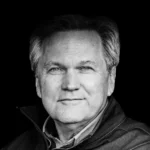

The Path to Perfection
December 15, 2012 by Eric OKeefe
Filed under Eric OKeefe, Feature
2012 has been a hallmark year for Jordan Winery. The Sonoma County landmark has celebrated its 40th anniversary with events and tastings in Miami, New York, Los Angeles, and Dallas. Those closer to the family know that the winery’s CEO, John Jordan, celebrated the big 4-0 this year, which leads one to ask which came first: John Jordan or his family’s winery? The answer is an amazing blend of nature and necessity.
On May 25, 1972, Sally Jordan gave birth to a baby boy at 8:05 a.m. in Denver. Minutes later, Tom Jordan kissed his wife and their newborn son goodbye, hurried to the airport, and flew from Colorado to California, where he proceeded to the Sonoma County Courthouse. After closing on some 275 acres of prune orchards in the Alexander Valley, he turned right around and flew home to Denver. By nightfall, he was in the Mile High City with Sally, John, and their oldest daughter, Judy. (Younger sister Jenny would join the brood a few years later.)
Soon a signature chateau, one that was inspired by Tom and Sally’s frequent trips to France, took shape on the drawing boards at the San Francisco architectural firm of Backen, Arrigoni & Ross. It was completed in 1976 just in time for the first Cabernet Sauvignon harvest.
Old World elegance influenced more than just the architecture. As plans for the chateau took shape, the Jordans were able to entice the legendary André Tchelistscheff to join their nascent enterprise as a consultant. Recognized internationally as one of the leading enologists of the 20th century, the Russian-born Tchelistscheff emphasized a winemaking philosophy that focused on balanced wines that were made in the vineyard — not in the cellar. Much to their credit, Tom and Sally eagerly embraced Tchelistscheff ’s style, and since their first vintage — 1976 — it has been the hallmark of Jordan’s award-winning Alexander Valley Cabernet Sauvignon.
It was Tchelistscheff who recommended that Rob Davis come on board at Jordan as winemaker. That was 36 years ago when the first Cabernet grapes were being harvested. Since then Davis has been a part of every vintage. Despite his death in 1994, so too has Tchelistscheff.
“André is still with me during my hikes and jogs up and down the wine rows,” Rob says. “He continues to whisper in my ear when I make my daily vine inspections and every hour I’m on the crush pad or in the cellar.”
There’s another familiar face at the winery these days, one who has been on the estate all his life. It’s John Jordan, who grew up exploring the 1,100 acres of rolling hills and valley floor that his parents turned into pioneering vineyards.
Since 2005, John has served as the winery’s CEO. He’s ever mindful of the task before him. “My parents had a vision for Jordan, the estate, and our wines,” John says. It’s clear that Tom and Sally’s son is intent on building on that foundation in ways that mirror his parents’ vision as well as augment it with his own talents and training. Since succeeding his father at the helm, John has been intent on enhancing the renown of his family’s flagship Cabernet Sauvignon and Chardonnay.
“My goal is the same as my parents’ — to make elegant, food-friendly wines,” he says over a family-style lunch on the spacious lawn in front of the chateau. He is adamant in this regard — even at his own expense. “Rob and his team judge our grapes just as rigorously as those we source. If they don’t make the cut, so be it.”
The results have been telling. “Big wines are attention-getters,” says Emily Wines, Master Sommelier at Kimpton Hotels and Restaurants. “But when you have food, you don’t want either to outshine the other. This is when wines with restraint are so critical and why Jordan is so successful.”
In the seven years since he’s taken the reins, John has already made his mark – from an operational standpoint as well as on the land. On the one hand, he must celebrate time-honored traditions, ones that have built the brand. Simultaneously, he must modernize a land-based business using twenty-first century technologies. Nuance definitely comes into play.
From the very start John kept an eye on the big picture. One of his first directives was to grow the sales force. In addition, he insisted that the customer base be expanded beyond established accounts. The timing of this initiative could not have been better. By 2008, an ominous cloud known as the Great Recession had begun to darken the U.S. economy. Yet demand for Jordan’s balanced Cabernet Sauvignons and Chardonnays remained strong.
Another major initiative was a comprehensive audit of the winery’s energy use. In the 1990s, Jordan had been recognized as one of the first wineries to be certified as a Sonoma Green Business. Yet decades after Tom and Sally built their chateau, it was obvious that more needed to be done. After reviewing the audit with Director of Operations Tim Spence, the two agreed that what was required was no small task: a complete overhaul of energy consumption on the estate.
“There are so many pieces to the puzzle,” Tim says. “We looked at everything.” Over a five-year span, from 2007 to 2011, a never-ending list of upgrades was made to the chateau, the facilities, and even the vineyards, including cool roofs, insulated doors, insulated piping, and LED lighting. The smallest differences mattered, which is why motion sensors were put in place to limit energy use by office equipment. The results were telling. By 2010, an estimated 11,945 gallons of gasoline were being saved, the equivalent of planting 38 acres of trees.
The jewel in the crown is a 454-kilowatt solar system that was installed in 2012. The array is positioned to capture maximum southern sun exposure and is strategically located out of sight from the estate. Initially projected to cover 75 percent of the winery’s electric needs, recent measurements show the panels could offset utility bills by 99 percent, a savings of $4.9 million over the next 30 years.
Not all of John’s innovations cost or are designed to save millions. Take, for instance, the staff’s iPads. The rationale — to increase efficiency and productivity — has worked to perfection, says Viticulturist Brent Young. “It’s all about using the latest technology to elevate quality of the grapes,” Young told Wine Business Monthly, which dubbed Jordan “the iPad winery.”
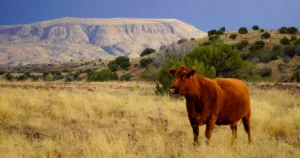
Despite a plethora of high-tech tools, the old ways definitely have a place at Jordan. Winemaking by-products are composted, not discarded. The kitchen staff grows many of its own vegetables. A rose garden now colors the hills. So do a long forgotten sight: cattle.
When Tom and Sally Jordan first bought in the Alexander Valley, the high country was home to herds owned by the Foppiano and Passalacqua families. A small herd of Mexican Corrientes, crossed with Texas longhorns, now call the winery home. “Why shouldn’t we have our own branded beef?” John asks. “We’ve got wine. We’ve got olive oil. And we certainly have land.”
So what’s next on the drawing board? The concept of an estate hotel has proven appealing. But John would only be willing to build one that meets the high standards already in place. “Everything people see taste, smell, or experience at Jordan reflects on the brand. And good experiences begin and end with staffing. There’s no end to these people’s ambition here,” he says.
Keep in mind that John Jordan is not speaking about just his employees either.
Download the digital version of The Land Report’s Winter 2012 magazine.
High Tide For Descendants
May 1, 2012 by Eric OKeefe
Filed under Eric OKeefe, Feature, Field Reporters
Great movies about landowners and their families have long been a staple of filmmakers. Gone With The Wind, Giant, and Shane immediately come to mind. Few in recent memory can equal the dream run The Descendants has enjoyed during the 2012 awards season. Honors have piled up, including Golden Globes for Best Drama and Best Actor (George Clooney). The Fox Searchlight film received five Oscar nominations — Best Picture, Best Actor, Best Director, and Best Film Editor — with Director Alexander Payne, Nat Faxon, and Jim Rash winning Best Adapted Screenplay.
In addition to this deluge of critical acclaim, The Descendants has been a resounding success at the box office. At press time on March 1, The Descendants had pulled in more than $130 million at box offices worldwide, a figure bound to increase in the aftermath of the Oscars. Scripted and directed by Alexander Payne (Sideways), the production was budgeted for a mere $20 million. As the lead, Clooney goes against character; Shailene Woodley and Amara Miller measure up as his two daughters. An old pro, Beau Bridges, plays a wonderfully conniving cousin. And Nick Krause is a total scene-stealer as a tagalong family friend.
The Descendants was adapted from Kaui Hart Hemmings’s acclaimed 2007 debut novel of the same name. At the center of Hemmings’s story is Matt King, Clooney’s character, a middle-aged father of two who is equal parts inept parent, shell-shocked husband, and reluctant Hawaiian land baron. King is neither hero nor anti-hero. He’s a flawed man who gets the wind knocked out of him by a series of surprises that are his own making as well as the legacy of his one-of-a-kind Hawaiian heritage.
In creating this pivotal character, Hemmings highlighted a rarefied group of Hawaiians: those who can trace their heritage back six and seven generations to the marriages of native Hawaiian royalty with white missionaries and landowners who settled on the islands. [For more insight, see “John Palmer Parker” of Parker Ranch fame in Land Report Winter 2008.]
In The Descendants, King’s great-great-grandmother, Princess Margaret Ke‘alohilani, is singled out as one of the last descendants of King Kamehameha (1758-1819). The princess not only gave her love to her haole banker, Edward King, but she also gave her lands. Centuries later, Matt King and his cousins are bound together by a priceless swath of Hawaii. The land itself is the focus of a critical subplot. As the sole trustee of his family’s holdings, Clooney’s character finds himself caught in merciless tug-of-war between a group of eager developers and his own greedy cousins.
Such a protagonist has immediate appeal to a certain style of filmmaker, and that was definitely the case with Alexander Payne. “The novel appealed to me because it’s an emotional story unfolding in an exotic locale,” Payne says. “It’s a story that perhaps could be told anywhere, but what made the book for me was its completely unique setting among the landed upper classes in Hawaii. It’s very specific to this place, yet it is also universal.”
Although the Hawaiian land baron has little in common with another dubious character of Payne’s creation — Paul Giamatti’s wonderfully neurotic Miles in Sideways — both are clearly uncomfortable in their own skin. Likewise, as in Sideways, which celebrated the wine-growing districts of Santa Barbara County, the setting held enormous appeal for Payne.
“On a filmmaking level, it was very interesting to me because I’ve never seen a filmic Honolulu. We see New York, Chicago, L.A., Miami, and Seattle, but this is a region we never see in films. There’s a whole distinctive social fabric to life in Hawaii, and that intrigued me. I love films with a specific sense of place. I started making movies in Omaha, then I went to Santa Barbara, and now I have ended up in Hawaii,” Payne says.
The Descendants was filmed on Oahu, Hawaii, and Kauai.
Sold! Fortress Cliffs Ranch
March 29, 2012 by Eric OKeefe
Filed under Conservation, Eric OKeefe, Feature, Field Reporters, Magazine, November 2008, Public Land, Recreation, Regional News, Southwest, Topics
MARCH 29, 2012 POST:
Texas Parks & Wildlife voted to sell 2,014 acres of the Fortress Cliffs Ranch adjoining Palo Duro Canyon State Park to Sooter Ranch of Perryton for $2.4 million. The acreage is under a conservation easement held by the Texas Parks & Wildlife Department.
Read more HERE.
SEPTEMBER 17, 2008 POST:
Almost 3,000 pristine acres valued at more than $5 million along the rim of Palo Duro Canyon has been sold to The Trust for Public Land (TPL), a nonprofit land conservation organization. After purchasing the Texas Panhandle property, TPL immediately transferred it to Texas Parks & Wildlife, thus increasing the size of Palo Duro Canyon State Park by nearly 10 percent.
“The sale of this property represents the core of our company’s mission,” says John Watson, President & CEO of Orvis/Cushman & Wakefield in Colorado Springs, which brokered the sale.
Watson spent more than a year spearheading the deal: securing the listing, seeking out TPL and introducing them to Texas Parks & Wildlife, and then patiently shepherding the transaction through numerous appraisals and reviews. “There is a finite supply of investment-grade recreational properties, and Orvis/Cushman & Wakefield’s goal is to find the best stewards for the protection and appreciation of the land,” Watson added.
A spectacular sporting and recreational property, the 2,864-acre Fortress Cliffs Ranch was recently appraised at $5.22 million ($1,800+ per acre). By deeding it to the State of Texas, TPL increased the size of the adjacent 29,187-acre Palo Duro Canyon State Park by almost 10 percent. “The rare chance to protect six miles of cliffs overlooking the Grand Canyon of Texas, to keep that bluff looking the way the first Texans saw it — this is unparalleled,” said Carter Smith, Texas Parks and Wildlife Department executive director. “I know all Texans can appreciate the significance of this acquisition for our park system. It’s for everyone alive today, and for generations to come.”
The deal closed on August 28.
Farmers Trump Speculators
February 29, 2012 by Eric OKeefe
Filed under Eric OKeefe, Feature
Thanks to the housing bust, undeveloped land in the exurbs is going back under the plow.
Farmland on the fringes of major metropolitan areas that was slated for development into single-family and multifamily residential properties in recent years is now being bought out of bankruptcy for pennies on the dollar. The proud new owners? In many instances, it turns out to be the savvy farmers who previously owned the land. Buoyed by the record rise in commodity prices and farmland values, agribusiness owners have moved into the driver’s seat.
The Wall Street Journal labels this new trend “a historic shift,”one that runs counter to demographic trends that date back to the end of World War II. According to a report prepared by the Lincoln Institute of Land Policy in conjunction with the Wisconsin School of Business, residential land values in the U.S. have fallen nearly 70 percent since peaking in the second quarter of 2006. By contrast, during that same period the value of cropland in the contiguous U.S. has risen close to 20 percent, according to the U.S. Department of Agriculture.
The Journal cited several eyeopeners in and around metropolitan Phoenix, a once-booming market that has become a poster child for the implosion of residential home values since the onset of the Great Recession. One hour south of the city in Eloy, the England family paid $731,000 to buy 430 acres of cotton fields in 2004. Five years later, they sold the entire parcel to a Milwaukee-based apartment builder for $8.6 million. The Englands just reacquired the same farm out of foreclosure for $1.75 million.
Some 30 miles west of Phoenix, the Vanderwey family runs 4,800 cows at their Grand View Dairy. The Vanderweys recently acquired a 760-acre tract in Buckeye called Liberty Farm. Once used to grow alfalfa and cotton, Liberty Farm was sold to real estate speculators for $40.8 million in 2005. The family recently bought it out of foreclosure for $8 million.
“These prices are becoming new normal,” Nick Vanderwey told the Journal.
Grand Canyon Lands Withdrawn from New Claims
February 1, 2012 by Eric OKeefe
Filed under Arizona, Eric OKeefe, Feature, Minerals, Public Land, Southwest
Secretary of the Interior Ken Salazar announced his decision to protect more than 1 million acres of federal lands surrounding the Grand Canyon and its vital watershed from additional uranium and other hardrock mining for the next 20 years. The Public Land Order to withdraw this acreage for 20 years from new mining claims and sites under the 1872 Mining Law is authorized by the Federal Land Policy and Management Act.
The withdrawn area includes 355,874 acres of U.S. Forest Service land on the Kaibab National Forest; 626,678 acres of Bureau of Land Management lands; and 23,993 acres of split estate—where surface lands are held by other owners while subsurface minerals are owned by the federal government.
Read the Interior Department press release here.
Ask the Expert: Dean Saunders
January 26, 2012 by Eric OKeefe
Filed under 2011 Winter, Agriculture, Conservation, Eric OKeefe, Farming, Feature
Eye on the Market: Dean Saunders has chaired the Florida Real Estate Commission, is certified as an Accredited Land Consultant (ALC), and was awarded the Certified Commercial Investment Member (CCIM) designation in 2010. The Land Report asked one of the country’s leading land brokers for his take on current market conditions.
You’ve got a long history on the land. You’re a sixth-generation Floridian with deep roots in agriculture. What keeps you going?
I love what I do. I love the people I work with. I love getting outside and looking at land. Every day I wake up, I can’t wait to get going. It’s fun, and I get paid to do it.
When you were in the Florida Legislature, you helped craft key conservation legislation. Can that work as an investment angle?
Definitely. I’ve got one client, a rancher, whose primary investment has been land over the last 15 years, he’s tripled his acreage by skillful use of conservation easements.
What’s the strategy?
He buys a piece of land for farming, hay, sod, and cattle. Then he sells a conservation easement. With the proceeds, he buys another piece of property and starts the whole process over again.
Who are your foreign investors?
It wasn’t too long ago that we had a bunch of Venezuelans trying to get their money out ahead of Chavez. Today’s market is primarily influenced by Canadians, Brits, some Germans, as well as South Americans.
Are they all about farmland?
Seems like everyone is, right? I’m a member of the realtors land institute, and a lot of my buddies in the Midwest and the Delta have seen land prices triple these past few years. A big part of that is commodity pricing, but there’s also the market. Investors are also looking for a safe haven for their money. You can’t earn anything from banks. The stock market is so volatile. But if you buy the right piece of land at the right price, you can generate a 5 percent return from cash rents. Rising commodity prices mean farmers can pay higher cash rents. This increases the value of the land. So people are buying farmland as fast as they can find it.
Trail Boss – The Bob Funk Story
October 28, 2011 by Eric OKeefe
Filed under 2010 Fall, Cattle, Eric OKeefe, Feature, Great Plains, Gustav Schmiege, West
The name says it all: The Big Event. Those who have never had the good fortune to set foot in the Express Ranches Sale Barn have no inkling of the beehive buzzing under the big top. In one corner, eager servers tote trays of tri-tip, biscuits, and brownies to buffet tables where more than 400 will break bread in the next 90 minutes. At the shoeshine stand, cattlemen and their brides queue up two and three deep to have their boots given that like-new look. Lording over the entire affair, auctioneer Eddie Sims barks out bids as the price of a half-interest in an Angus cow and her calf soars past $100,000.
Arms folded, eyes twinkling, Bob Funk sits in the middle of this extravaganza. Garbed in true cowman style, Funk’s distinguishing trait is actually his smile. Could it be because he’s chatting with his girlfriend and his son? Or is his contagious grin because friends have flown in from across the country? Then again, there’s a pretty good chance that Funk’s smile might be directly tied to the sound of Sims’s gavel, which just came down at $195,000.
At first glance, Funk’s credentials stand out as boardroom caliber, not the sales-barn sort. As the chairman and the chief executive officer of Express Employment Professionals, Funk oversees a thriving organization with more than 550 offices in four countries and projected revenues in excess of $2 billion this year.
The largest privately-held staffing company in the U.S., Express Employment is a heavyweight in the human resource industry. Unlike many of its competitors, Express Employment has gained market share during the economic uncertainties of the Great Recession. Through the second quarter of 2011, Express has seen double-digit growth for six consecutive quarters. Since 2009, the Oklahoma City company has nearly doubled in size. Sales are up a robust 92 percent.
Given this track record, it’s no surprise that the number of boards that vie for Funk’s time and support is mind boggling. Churches, schools, and even Uncle Sam have come calling. Funk was chosen as a director of the Tenth Federal Reserve District, the seven-state region that anchors the heart of the Great Plains. Initially appointed to the Oklahoma City branch, he then joined the board of directors of the Kansas City Fed, was chosen chairman, re-elected chairman, and, in 2007, selected as the chairman of the Federal Reserve’s Conference of Chairmen. Funk advised the Board of Governors of the Federal Reserve System, including former Fed chair Alan Greenspan and current chair Ben Bernanke. “Don’t go telling too many people that. They might hold it against me,” he says and bursts out laughing.
Yet the truth is Funk is equally at home on the range or behind a desk. For that matter, he can hold his own on the altar as well. Few people realize that this civic leader, this rancher and cowman is also an ordained minister who earned undergraduate and graduate degrees in theology from Seattle Pacific University while studying business. His broad range of interests is fueled by a level of energy that can best be described as boundless.
During a three-month span this summer, the 71-year-old journeyed to Italy to officiate at the wedding of a close friend, traveled to Scotland to dine with Prince Philip, landed not one but two hundred-pound halibut off Canada’s Queen Charlotte Islands, and escorted the Duke and the Duchess of Cambridge to the Calgary Stampede aboard an Express Ranches stagecoach that was drawn by four of his champion black-and-white Clydesdales.
The secret of his success? No matter the venue, Funk applies the lessons he learned from those he loved growing up on the land. These building blocks have led to a series of successes he readily admits he could never have imagined. They have allowed him to make countless acts of generosity. Most of all, they have given him a mission, one he pursues day in and day out: Bob Funk believes it is absolutely essential to instill those same lessons in the hearts and the minds of youngsters growing up today.
So it’s safe to assume that Funk grew up enjoying the many activities he endeavors to share with kids across Oklahoma, right? Think again.
“We were very poor at home,” says Bob’s older sister, Joanne Benton. “Bob didn’t get to go and participate in county fairs like most kids we knew growing up. He was too busy working for Adolph.”
The mere mention of this older cousin’s name puts a smile on Funk’s face. This tough taskmaster was the wellspring of Funk’s ferocious work ethic. In his barns and on his fields, Funk learned leadership tenets that would build a multi-billion-dollar company.
“Adolph Hanish started at 6:00 a.m. and finished milking 60 cows at midnight every night, seven days a week. And he didn’t think that was working too hard. He loved his cows. They were his life. Adolph taught me a good work ethic. So did Dad. Dad just loved to work. He loved the land. He loved his cattle. My dad worked cows at all times, even after he went broke in the dairy business. He spent more money on his cattle than he should have: the best hay, the best grain. After he went to work for the highway department, he still kept some cows. He’d go milk four cows by hand every morning, start his job at 8:00, finish at 4:30, and milk cows until 7:00 every night. And that was just standard for our family. Dad was a hard worker. He was a wonderful man,” Funk says.
The formative influence of these hardworking men had some unexpected consequences, namely, cheap shots from childhood friends. “Some of our cousins used to call Bob ‘nothing but a dumb farm boy,’” says his sister. “They would make fun of him for working so hard for Adolph.”
There are two sides to this anecdote, and they reveal the mettle of the man. Ask Bob Funk about his cousins’ taunts and he dismisses the personal discomfort that every adolescent endures. Instead, he speaks of the journey of a fellow human being.
“Adolph was a single man who never took a day off. His whole life was his cows. When I started working for him, he had gone 17 years without a day off. The Fourth of July, Thanksgiving, Christmas — he worked holidays, he worked when he was sick, he worked no matter what. I was glad to give him a break,” Funk says.
Ask his sister, however, and another side to her younger brother emerges. “Those boys couldn’t have known it, but what they were doing was challenging Bob. They challenged him to make something of himself, and he sure did,” Joanne says.
For some inexplicable reason, cousins have shaped Funk’s life. Hanish, his father’s cousin, helped mold the young boy into manhood. Decades later, one of his mother’s cousins opened a new chapter in his life by steering him out west.
Most Americans know Ed Pease for his service as an Indiana Congressman. But in Northern New Mexico, the Eagle Scout is known for his service at the legendary Philmont Scout Ranch. The 137,000-acre ranch is nestled in the Sangre de Cristo Mountains, the heart of the historic Maxwell Land Grant (see “Lucien Maxwell,” Land Report Fall 2008). The grant’s 1.7 million acres had been divvied up into a series of enormous ranches, and some 300,000 acres were acquired by legendary Oklahoma oilman Waite Phillips. It was his bequest that created the Scout Ranch.
In 1996, Pease learned that a key inholding was about to change hands. “Word got out that the Atmore Ranch was going to be sold and then cut up into 20-acre parcels. I support a landholder’s rights to do what they see fit with their property, but the idea of walking through a subdivision to get to the biggest mountain on Philmont ruins the concept of hiking through the wilderness, doesn’t it?” Pease asks.
Pease knew the clock was ticking. “In all the time I’ve known Bob, I never ever asked him to do anything financial. But this time I had to. I called him and made the pitch. Bob had never been a Scout as a kid. Growing up he was too busy working to have time to be a Scout. There was no reason for him to buy this ranch. But he knew what it would mean to generations of Scouts to come, so he went ahead and bought it,” Pease says.
Ten years after acquiring the Atmore, Funk expanded his New Mexico holdings when he bought from Brad Kelley the portion of Philmont that Waite Phillips kept for himself. Called the UU Bar Ranch, it is a Rocky Mountain paradise that rises from the high-desert rangeland at 6,000 feet to more than 11,000 feet above sea level in the Sangre de Cristos.
“The UU Bar is more like a state than a ranch,” says former Oklahoma Governor Frank Keating. “You have those alpine meadows, the beautiful forests, the abundant wildlife. It’s absolutely a colorful affirmation of the beauty of America, a spectacular picture-postcard ranch.”
Keating’s wife, Cathy, concurs. Like her husband, Oklahoma’s former First Lady has been a regular at the UU Bar since before Funk bought it.
“We’ve been elk hunting with Bob every year since he bought the Atmore. There’s really just nothing quite like that country out there. It’s just a very special place. You’re in God’s country. I love those moments at the UU Bar – the early morning breakfasts at the lodge that Ralph [Knighton] prepares, driving up to the meadows and waiting for the bugling to start. Then you hear the bugling and the thrill of the chase. I really don’t care if I shoot or not,” she says.
As memorable as a visit to the UU Bar may be, the vast property is an integral element of the Express Ranches portfolio. This multifaceted beef production entity is driven by one goal: better cattle. On a trip to New Mexico, Funk points out that yearling bulls are conditioned on the UU Bar before being taken back to Yukon and sold.
“Jarold likes to tell me we beta test our genetics at the UU Bar,” Funk says, referring to Jarold Callahan, president of Express Ranches. The two teamed up in the mid-1990s when Funk negotiated the purchase of the B&L Ranch and the B&L Angus cow herd near Shawnee from the Oklahoma Cattlemen’s Association Foundation. Up till then, Funk had focused primarily on Limousin cattle. With the purchase of the B&L, Angus cattle became the driver in the expansion of the Express Ranches brand and Callahan was put in charge. “I told Jarold, ‘You sold me these suckers. You come and make them pay,’” Funk says. And that’s exactly what those black-faced cattle have done. According to National Cattleman, Express Ranches is the nation’s largest seedstock operation. Judging from the strong sales numbers at this year’s Big Event, that ranking is safe and secure.
So what does this mean to Bob Funk? It goes without saying that there’s a sense of accomplishment. Back in 1996, he, Callahan, and their team set out to become No. 1, and they’ve done exactly that. It’s the same exact approach that Funk has taken at Express Employment Professionals: putting a team together, setting a high bar, and doggedly pursuing that goal. In three or four years, Express Pros will also be No. 1, Funk tells me.
Bob Funk Jr. is also drawn to the rhythm of the cattle business. His day job may be president of the Oklahoma City Barons, but in the back of his mind are lessons he learned years ago.
Like his father, he insists those lessons be shared. Both men are passionate supporters of the Oklahoma Youth Expo. The organization’s director, Jeremy Rich, tells me that thanks to the Funks, the Expo has gone from near extinction in 2001 to the largest junior livestock show in the nation. I think I know why.
“Growing up in Piedmont, I actually enjoyed working cattle,” Bob Funk Jr. tells me. “Dad used to take me out to feed. It was a hobby, for him and for us, getting up and going to feed the cattle in the morning. It was always fun. It never seemed like work. The best part was really just spending time with Dad.”
Coppola Completes Resurrection
September 15, 2011 by Eric OKeefe
Filed under 2011 Summer, California, Developers, Eric OKeefe, Feature, Field Reporters, Magazine, West
The award-winning filmmaker acquires fabled trademark, hires Chateau Margaux estate director.
In a July 2007 interview with The Land Report, Francis Ford Coppola spoke of his quest to return Gustave Niebaum’s renowned estate to its former glory. Founded in 1879, the Inglenook Winery was christened “the Queen of the Napa Valley” due in large measure to its renowned Cabernet Sauvignon. But beginning in the 1960s, Inglenook was parceled off in bits and pieces. “There are great old things that are broken apart and sold off … like the movie studios, for example. And that’s what happened to Inglenook,” Coppola said.
Coppola’s quest first took shape in 1975 when he acquired 1,560 acres of vineyards formerly on the estate as well as the home that once belonged to Niebaum (pictured right). Two decades later, Coppola acquired the remaining portions of the Niebaum Estate, including the stately chateau, which required two years to renovate.
This April, Coppola completed his quest when he acquired the iconic Inglenook trademark from The Wine Group. At the same time, he announced that renowned Bordeaux winemaker Philippe Bascaules, who has served as estate director at Chateau Margaux for the past 11 years, will become Inglenook’s estate manager and winemaker.
“There’s an interesting idea that the owner of a wine estate is part of the terroir, and it’s in this spirit that I’ve spent the last year assessing Inglenook’s future needs, including recruiting Philippe Bascaules, invigorating the vineyards, planning a new state-of-the-art winemaking facility, and focusing on what it would take to achieve my goal of restoring this property into America’s greatest wine estate,” Coppola said.
No financial terms were disclosed.
Indiana Farmland Reaches New Highs
August 12, 2011 by Eric OKeefe
Filed under Auctions, Farming, Feature, Field Reporters, Midwest, Regional News
Recent record-setting prices for prime Indiana farmland prompted The Land Report to reach out to Rex Schrader, chief financial officer of Schrader Real Estate & Auction Company. In late June, the company’s auction division sold properties in Spencer and in Randolph counties. Both auctions saw record prices per acre.
The Spencer County land sold at prices as high as $6,875 per acre, with most of the tillable land selling for $6,428 and $6,554 per acre. “We sold about 223 acres of this land in 2003 for $1,930 per acre, which was good at the time. It’s more than tripled,” said Schrader. Mason Seay, a longtime agriculture specialist for German American Bank, said the price was “the highest ever for land in Spencer County for row crop production.” Approximately 82 percent of the Spencer County land was tillable.
In the Randolph County auction, 551 acres sold to a single buyer for $2,677,500, or $4,859 per acre. “Like the Spencer County land, this property had appreciated considerably,” said Schrader. “The price varies according to quality and location, but across the board the clear direction is up.”
Schrader’s many years in the business led him to share some other observations on the current ag land market. “The larger the acreage offering, the more interest there is,” he says. “Ten years ago at a Schrader auction, a lot more buyers ended up on the winning end. More lots sold in smaller tracts. Today we’re seeing a trend of more and more farms being purchased in whole.”
Read the Chicago Fed’s most recent report on rising farmland values HERE.
Although some skeptics assert that the current market for top ag land has all the makings of a bubble, Schrader disagrees. ”I don’t believe it is a bubble. This market is based on income, on expected income. Commodity markets lead land prices. Follow corn prices over the past few years and you can see why land prices continue to rise,” Schrader says.
A second driver pushing up prices is basic economics. Schrader cites the limited supply of ag land and points out that those farms tend to remain tightly controlled by farmers or farming interests.
A third and final consideration is alternative investment vehicles. Anyone who has paid attention to the schizophrenic gyrations of the Dow this week knows that a low correlation exists between investing in equities and sleeping easy.
So who continues to push prices higher? Despite the entry of non-traditional investors into the market, Schrader sees farmers as the principal drivers. “The farmer is still the bull in the market place. They are the ones driving the market. Right now, the debt to asset ratio of most farmers is very low. They’ve made a lot of profit in the last three to four years. On top of that, other investors such as investment funds typically have to look at returns as a rigid guideline. That gives a farmer a little more leeway to pay a slight premium above the ratio of net income to purchase price.”
Schrader’s closing comments aren’t about land. They are about capital:
It’s amazing how much money is out there today. And it’s all waiting to pounce on the right piece of property. - Rex Schrader
Based in Columbia City, Indiana, Schrader Real Estate and Auction Company is a leading auctioneer of tillable farmland throughout the U.S. Individuals seeking additional information about the firm and its auctions may visit www.schraderauction.com or call (800) 451-2709.
Subscribe to the Magazine of the American Landowner HERE.
Ask the Expert: Chip Lenihan
July 21, 2011 by Eric OKeefe
Filed under 2011 Summer, Eric OKeefe, Feature, Public Land, Recreation, Residential Property, Water, West
2011 Market Update: Chip Lenihan has been fly-fishing Colorado’s best waters for 40 years. His side gig? Running the Telluride office of Fay Ranches as lead broker. The Land Report turned to this former mayor of Telluride for an update on today’s recreational properties market.
Describe today’s market in one word.
Value.
How is that manifested?
Buyers are willing to sit back and wait until they get real value for their money.
Who’s driving today’s market?
The biggest part of my business is families. Men tend to drive the decision-making on hunting properties and ag land, and women trend more in the direction of resort sales, ones that are closer in to town and that feature more amenities. But come rain or shine it’s families who are looking to enjoy the sort of lifestyle you can only find out in the great wide open.
What’s been the biggest surprise of 2011?
The number of investors parking their money in land. The capital is out there. But after what happened in 2008, no one is in a hurry to put it in traditional markets.
Elaborate.
Five years ago, land was a hot commodity. Everybody wanted to get on board before the train left the station. And that brought a lot of buyers with short-term horizons into our market. Today, investors recognize the value inherent in current markets. A good number of them are looking at land as a smart buy, one with proven returns, long range stability, plus big upside from a personal standpoint.
Public land. Do buyers want to border national forest or BLM, or should they steer clear?
Great question. if you’re scouting a potential property and it borders public land, it’s absolutely essential to determine how intensely it’s used. Are you up against an unused corner of a national forest? Great. That will add a 10% to 20% premium to the value of your property. Does a hunting outfitter operate a base camp right across your fence line that’s going to bring in 25 guns for deer and elk season? Might not be your cup of tea.