

Farmers Trump Speculators
February 29, 2012 by Eric OKeefe
Filed under Eric OKeefe, Feature
Thanks to the housing bust, undeveloped land in the exurbs is going back under the plow.
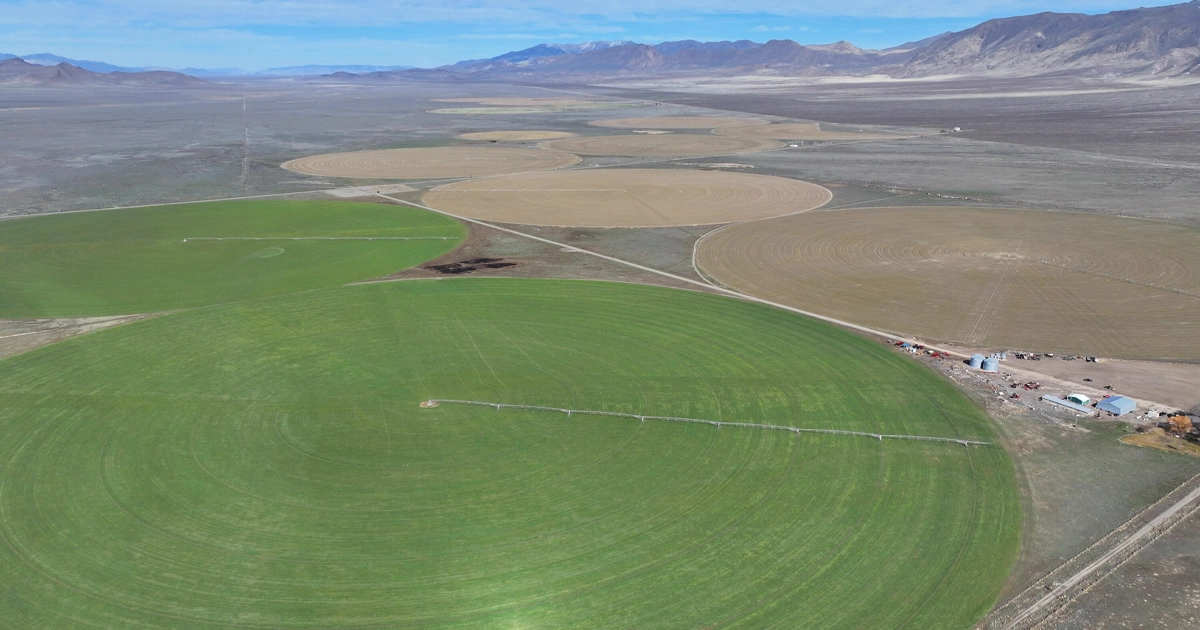
Farmland on the fringes of major metropolitan areas that was slated for development into single-family and multifamily residential properties in recent years is now being bought out of bankruptcy for pennies on the dollar. The proud new owners? In many instances, it turns out to be the savvy farmers who previously owned the land. Buoyed by the record rise in commodity prices and farmland values, agribusiness owners have moved into the driver’s seat.
The Wall Street Journal labels this new trend “a historic shift,”one that runs counter to demographic trends that date back to the end of World War II. According to a report prepared by the Lincoln Institute of Land Policy in conjunction with the Wisconsin School of Business, residential land values in the U.S. have fallen nearly 70 percent since peaking in the second quarter of 2006. By contrast, during that same period the value of cropland in the contiguous U.S. has risen close to 20 percent, according to the U.S. Department of Agriculture.
The Journal cited several eyeopeners in and around metropolitan Phoenix, a once-booming market that has become a poster child for the implosion of residential home values since the onset of the Great Recession. One hour south of the city in Eloy, the England family paid $731,000 to buy 430 acres of cotton fields in 2004. Five years later, they sold the entire parcel to a Milwaukee-based apartment builder for $8.6 million. The Englands just reacquired the same farm out of foreclosure for $1.75 million.
Some 30 miles west of Phoenix, the Vanderwey family runs 4,800 cows at their Grand View Dairy. The Vanderweys recently acquired a 760-acre tract in Buckeye called Liberty Farm. Once used to grow alfalfa and cotton, Liberty Farm was sold to real estate speculators for $40.8 million in 2005. The family recently bought it out of foreclosure for $8 million.
“These prices are becoming new normal,” Nick Vanderwey told the Journal.
Federal Grazing Fees Remain Unchanged
February 28, 2012 by Land Report Editors
Filed under Feature, Federal Policy, Field Reporters, Public Land
Uncle Sam announced that grazing fees in 16 Western states will remain the same as 2011. The new pricing structure goes into effect on March 1. A fee of $1.35 per animal unit month (AUM) will apply to nearly 18,000 grazing permits and leases administered by the Bureau of Land Management and more than 8,000 permits administered by the Forest Service. The fee per month applies to any of the following: one cow and her calf; one horse; five goats; or five sheep. Under an Executive Order issued in 1986, $1.35 per month is the minimum allowable fee.
Click here to read more.
2011 Land Report 100: Lykes Brothers Heirs
February 23, 2012 by Land Report Editors
Filed under 2011 Fall, Feature, Field Reporters
No. 12 Lykes Brothers Heirs
615,000 acres
The family holds 275,000 acres in Texas and 337,000 acres in Florida, and they’re serious about the stewardship of every square inch. The cattle operation is one of the largest in the country with equal emphasis on forage quality and nutritional value. The forestry division has worked with universities to develop a high-yielding eucalyptus as a future bioenergy feedstock. Its 52,000 acres of native pines in South Florida are pristine areas exclusively managed for wildlife habitat. Lykes Bros. also has a significant sugar cane operation, and the company is hard at work on a groundbreaking cellulosic ethanol facility that will convert renewable grasses to fuel.
Meet Frank Stronach
February 22, 2012 by Land Report Editors
Filed under Feature, Field Reporters
With its Magic Kingdom, Epcot, Hollywood Studios, and Animal Kingdom, Florida’s Disney World long reigned as the largest landowner in Marion County. Not anymore.
At 29,000 acres, Frank Stronach is the largest private property owner in Marion County, Florida. The Canadian billionaire has plans for a sprawling cattle ranch with tens of thousands of grass-feed, hormone-free cattle. The new cattle operation will be called Adena Springs Ranch, named after one of the five farms currently owned by Stronach.
Best known for his 3,800-acre Thoroughbred horse farm in Williston, the 79-yea- old started building his cattle operation less than seven years ago. Today, it includes approximately 400 cows at the Williston farm plus another 1,100 on other local properties. His goal is 30,000 head of cattle, if not more.
It takes some serious cash to buy the amount of land and cattle Stronach is after. But selling his interest in the international car parts company he created for reportedly $1 billion has certainly helped. Since 2010, he has used that money to purchase over 24,000 acres in the Fort McCoy area and another 36,000 acres in Levy County; some of the land will also be set aside for timber. The price tag for the land in both counties plus the beef processing operation is $80 million.
In addition to his beef cattle operation, Stronach has more plans for Marion County. Near the intersection of U.S. 441 and State Road 326, Stronach is building a world-class, 420-acre golf course, along with 120 homes on one-acre lots clustered throughout the links. He also owns another 800 acres nearby that will also be used for residential development.
According to the general manager of Adena Springs, Mark Roberts, who also oversees Stronach’s land purchases, “As much as he likes the horse business, he likes to build stuff. And his vision is like no one I’ve ever seen. Building and creating new things keeps him going.”
To read more, click HERE .
For Sale: Diamond B River Ranch
February 22, 2012 by Eddie Lee
Filed under Eddie Lee Rider, Feature, Montana
The majestic Diamond B River Ranch resides in the center of the Paradise Valley of the Northern Rockies, arguably the most scenic valley in Montana and noted for its abundant wildlife and fishing opportunities.
With beautiful views of the 10,921-foot Emigrant Peak towering above the landscape, significant Yellowstone River frontage and riparian areas, flowing spring waters, and close proximity to Yellowstone Park, Bozeman, and Livingston, the Diamond B has many assets that make it more valuable than most cattle operations could imagine.
“Standing on the bluff on the Diamond B property with views up and down the Yellowstone River and jagged peaks all around takes your breath away,” observes Greg Fay, of Fay Ranches, the listing brokerage. “With fine dining at Chico Hot Springs just 5 minutes from the ranch and Yellowstone Park just 20 minutes south, it’s tough to beat the location. It is not often that a ranch of this quality and size comes on the market in the Paradise Valley. This one is priced at an excellent value.”
The ranch, which includes 1± miles of Yellowstone River frontage, currently runs Angus cattle as well as bison and longhorn. It consists of 2031± deeded acres of spring dry land pasture, pivot, wheel and hand line irrigated hay and grass. The 550± acres of irrigated ground can produce 1,200 to 1,500 tons of hay per year with two cuttings. About 200± acres make up the riverfront riparian area where the ranch manager’s home, barns, corrals, two ponds, and springs are located.
Listing price currently is $12,500,000. For more information about this property, visit www.FayRanches.com.
Land Report Top Ten: February 2012
February 21, 2012 by Land Report Editors
Filed under California, Colorado, Feature, Field Reporters, Hawaii, Kansas, Montana, Texas, Wyoming
From the Lone Star State to Hawaii, here are America’s priciest properties, led by $175 million Jackson Land and Cattle Ranch, which is listed by Hall and Hall. Two new properties have joined this mix: Broken O Ranch in Montana and Hudye Farms along the Colorado-Kansas state line.
1. Jackson Land and Cattle: $175 million
These 1,750 acres are simply the most phenomenal property to come to the market in the Teton Valley in decades. Jackson Land and Cattle is one-of-a-kind in every respect: world-class improvements, including an equestrian center designed by Jonathan Foote, AIA; lack of any development restrictions; and don’t forget the stunning Teton views. Hall and Hall’s John Pierce has the listing.
2. Broken O Ranch: $132.5 million
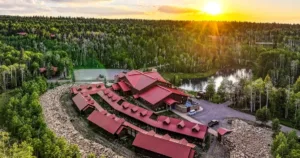
At 123,000 acres, this ranch (pictured above) has been in the making for the past 20 years. With its expansive cattle and farming operation, this ranch currently carries 3,500 mother cows plus 800 replacement heifers and 200 range bulls. The Broken O Ranch also contains Montana’s largest block of irrigated land, approximately 13,000 acres, and has historically averaged 25,000 tons of alfalfa hay and 700,000 bushels of small grain crops annually. Mike Swan of Bates Sanders Swan Land Company has the listing.
3. Walton Ranch: $100 million
This 1,848-acre working cattle ranch was pieced together by the Walton family beginning in 1958. The family placed the ranch under conservation easement in 1983. Billy Long and Ron Morris of Ranch Marketing Associates have the listing.
4. Ranch Dos Pueblos: $84 million
This oceanfront parcel is on the market for the first time in three decades. Spanning 2,175 acres just west of Santa Barbara, it’s one of the largest remaining ranches along the breathtaking Gaviota Coast. Kerry Mormann & Associates has the listing.
5. Big Creek Ranch: $59.9 million
Only eight miles from Steamboat Springs, 5,034-acre Big Creek Ranch offers rainbow and brook trout fishing along five miles of Big Creek as well as a half-mile of the Elk River. National forest borders 85 percent of the property, offering easy access to an additional 150,000 acres of pristine wilderness, including world-class trout fishing and hunting for elk and mule deer. A mix of forest and meadows provides ideal wildlife habitat and summer pasturage. Listed by Ron Morris and Billy Long of Ranch Marketing Associates.
6. Aspen Valley Ranch: $59 million
Billed as the largest ranch near Aspen in the Roaring Fork Valley, this ranch boasts senior water rights as well as over 800 acres and is located just 10 minutes from the Aspen airport. Joshua Saslove of Joshua & Co. has the listing.
7. Hana Ranch: $55 million
This 4,500-acre working ranch on eastern Maui surrounds the town of Hana. The property boasts two miles of Pacific oceanfront and rises over 2,200 feet up the slopes of Haleakala. Dan Omer of Island Sotheby’s International Realty has the listing.
8. Rockpile Ranch: $54 million
For only the third time in over a century, this 55,374-acre cattle ranch in the Davis Mountains of Far West Texas is on the market. Since 1992, the Rockpile has been owned by McCoy Remme Ranches (No. 41 on the 2011 Land Report 100). James King of King Land and Water is the listing agent.
9. Hudye Farm: $49 million
Spanning two states, Hudye Farm is the largest dryland and irrigated farm ever to be offered for sale in eastern Colorado and western Kansas. Assembled over the past ten years, this ranch includes 17,741 acres of high quality farmlands with excellent production history, topography, soils and water conditions. Located in the top grain growing region of this area, the crops grown are primarily corn and wheat. Bart Miller of Mason & Morse Ranch Company has the listing.
10. Dana Ranch: $45 million
With only two distinguished owners in nearly 100 years and an unmatched record of profitability, the Dana is considered by many to be the finest operating and recreational ranch in the Rocky Mountain West. Supporting 3,000 animal units on 59,000± acres, it boasts over 13 miles of superb fisheries and an incredible diversity of wildlife resources from elk to waterfowl to upland birds. Listed by Dave Johnson with Hall and Hall.
Click here to download a copy of the February 2012 newsletter.
Sold! Cropland in Vermilion County, Illinois
February 16, 2012 by Land Report Editors
Filed under Agriculture, Auctions, Feature, Field Reporters, Midwest
Located in Vermilion County, Illinois, five tracks of productive cropland were successfully sold this month at an auction that attracted nearly 100 people.
Auctioned by Murray Wise Associates, LLC, Track 5 contained 181 acres of Elliott Ashkum soil and was sold to a local investor for $7,200 per acre. Tracks 1-4, totaling 200 acres of Drummer Flanagan soil, were sold prior to the auction to an out-of-state investor for $2.2 million dollars.
All five tracks, which had been part of an old family farm for years, have been used to grow corn and soybeans.
2011 Land Report 100: Pingree Heirs
February 15, 2012 by Land Report Editors
Filed under 2011 Fall, Feature, Field Reporters
No. 8 Pingree Heirs
830,000 acres
The Pingree family has tended its Maine timberlands for almost two centuries. The family’s patriarch, David Pingree, made his first fortune in New England’s booming shipping trade. Pingree correctly forecast the demise of the whaling industry and hedged his bets by purchasing large tracts in the District of Maine as early as 1820, the year it became the country’s 23rd state. Today, the family’s Seven Islands Land Co. oversees forest land management on much of the acreage that was not placed in a historically large conservation easement. The family’s focus is to grow and manage natural resources with a view toward a stable, continuing forestry business. The family’s lands have been certified as an American Tree Farm by the Forest Stewardship Council and the Sustainable Forestry Initiative.
T. Boone Pickens: Good Stewardship, Good Business, Good Neighbors
February 14, 2012 by Land Report Editors
Filed under 2011 Winter, Feature
The value of Texas ranches has increased greatly as a result of recreational activity, and Boone was among the first to recognize this potential for landowners in the northern parts of Texas.
In fact, Pickens has bought a number of working livestock ranches, improved them with his wildlife enhancement programs, and resold them.
“We always made a profit from the ranch sales,” Boone said. “But what I really feel good about is knowing that we left the land in better shape than we found it.”
Since before statehood, Texas ranch values were harnessed to livestock production. When Pickens began his ranch real estate business, few prospective buyers were interested in wildlife value. That attitude has changed dramatically. Recreational use, primarily linked to hunting, is a major reason why land values in Roberts County have escalated over the past decade. In an era of shrinking wildlife habitat, land that was traditionally used for livestock production is more valuable when improved for wildlife. Much of the increased value in Roberts and surrounding counties is due to Pickens’ continued efforts to promote the area.
The astute businessman is also creating a template for his neighbors to use in dealing with energy companies, which often own rights to explore for gas and oil under private property. Like many modern landowners, Boone does not own all the minerals under his sprawling ranch. Standard agreements call for exploration crews to restore any damage caused by their heavy equipment. The usual phrase is “restore to original condition.” Pickens sued one company that offered to pay a $60,000 settlement for the damage its machines had done. Most landowners would have gladly cashed a $60,000 check and considered it a windfall. But Boone has spent a considerable fortune improving his ranch, and he had the receipts to show just how much it had cost to transplant native grasses and trees. In arbitration, Mesa Vista was awarded more than $1.5 million. He quickly informed his Roberts County neighbors of the award to help educate them on the importance of ensuring that oil and gas operators treat them equitably.
In another case, a grove of 144 hackberry trees stood in the path of heavy equipment. Pickens requested that the pipeline company rolling across the ranch give him notice when they neared the grove so he could use a tree spade to relocate the trees. The contractor waited until his crew was within a few working days of the grove to give notice. It wasn’t enough time to rescue that many trees, so the company brought in a bulldozer and leveled the grove, then offered to reseed the damaged area until grass was established. Due to courtroom renovation, that case was settled in 2010 with judge, jury, and witnesses crowded into a 20-by-30-foot training room at the Miami Fire Station. Mesa Vista won on all but one count. The 144 hackberries cost the company $1,000 each.
“What we’re trying to do is change the traditional way that land has been treated,” says Pickens. “It’s going to be treated with respect.”
Roberts County sits over the Ogallala Aquifer, the largest groundwater reservoir in the United States and one of the largest in the world. The aquifer extends across eight Great Plains states and covers 174,000 square miles, much of the region sparsely populated. The Ogallala Aquifer is estimated to contain over three billion acre-feet of water, stretching from South Dakota to Midland, Texas. The Ogallala holds enough water to cover all fifty states with eighteen inches of water.
Boone’s geology background made it obvious to him that water would eventually become more valuable than oil. When he bought the first small piece of the ranch that would become a showplace, he knew there was groundwater beneath the sandy soil. He had no idea how much water was there, nor did anyone else at that time understand the eventual importance of a natural resource that most Americans took for granted. You turned on the faucet and the water came out. It was cheap and it was abundant, at least in the 1970s.
“When I made the first land purchase in 1971, we started drilling water wells for windmills and discovered that it was almost impossible to drill a dry well,” recalls Pickens. “The water was important for my wildlife plan, and that’s how I used it. We buried PVC waterlines to create a system of artificial creeks. Permanent water holes were created at intervals along the waterlines to provide surface water for all wildlife and for the quail in particular. The water was great, and it was readily apparent that our system of artificial creeks helped the quail, even in years when we didn’t get much rain. It took a while for me to realize that Roberts County was sitting over a veritable ocean of pure water, and it took even longer for the potential of that resource to sink in.”
Pickens wasn’t the first to buy water rights in the Panhandle, but with his legendary insight he soon realized that these vast water resources could and should benefit more than recreational ranching. Texans can cut back on the use of oil and natural gas and develop alternative energy sources, but they can’t do without water for a growing population. Aggregated in a partnership with fellow landowners, Boone has focused on the important role that the stranded, surplus water could play. He has championed prudent and equitable water use, believing the valuable underground resource can be redistributed from an area of low population and abundant water to cities where population growth overwhelms the water supply.
With the Panhandle’s relatively few inhabitants, about 95 percent of water use goes to irrigation. Boone believes this is no longer the best use for such a valuable resource. Although farmers don’t use nearly all the water under their land, they object to the idea of water being moved from the Panhandle to densely populated cities. But Pickens sees no difference between moving surplus water to an area where it can be used and hauling locally raised crops out of the region to distant markets. And farmers are actually getting less for the water when mandated through grain production. “I’d like to see the legislature place all of the Ogallala Aquifer under a commission that would treat all landowners equally. The landowner would have an option of selling his water into the grid or using it to irrigate crops. Everyone would get the same amount of water.”
Pickens’ idea could have far-reaching consequences for wildlife. In a meeting at the offices of the Lubbock Avalanche Journal, he got into a conversation with the newspaper’s ombudsman, a woman whose family owned a farm north of Lubbock. Boone was outlining how the water could be better used. One of the executives said Boone’s ideas were bad because the Panhandle economy was built on farming. The ombudsman, however, was interested in what Pickens had to say because she knew her family was tired of farming.
“Well, you could sell the water that you’re now using to irrigate crops,” Boone said. “If you sell the water, you’ve got two options for what to do with the land.” He went on to explain that the family could either switch to dryland farming (growing crops that do not need to be irrigated) or put the land into a conservation reserve program (CRP), which pays farmers to let fields lie fallow. In fifty years, the fallow farmland reverts to a pristine prairie.
“Nobody loses in a deal like this,” says Pickens. “Whether you use water to irrigate crops or sell it for municipal use, everybody should have the same allocation — one acre-foot per surface acre of land. I think most people would choose to sell their water and let the land return to native habitat. We have the potential here to restore 23 million acres of wildlife habitat. In some of the Plains states, I’ve heard people get excited about saving several thousand acres of pristine prairie. Wouldn’t it be great for Texas to reclaim most of the Panhandle for wildlife?”
Moreover, Boone’s emphasis on wildlife and his desire to expand and improve his ranch holdings has put Roberts County and the entire Panhandle on the map of desirable areas to buy for recreational property, escalating real estate values. His focus on wildlife habitat and his water play have arguably brought more than $200 million into the Panhandle since 1997; that figure could increase dramatically by 2020. He’s been like a one-man chamber of commerce for a region that most Texans know only because they drive through it en route to New Mexico or Colorado.
Boone Pickens will be remembered as a good steward, a good businessman, and a good neighbor. He is a true advocate for change, a tireless steward of the land, a friend of wildlife, and a business genius whose selfless business deals will benefit the residents of Roberts County for generations to come, the generations he has yet to touch.
Reprinted by permission of Collectors Covey Gallery. Copyright© 2011 T. Boone Pickens. All Rights Reserved. www.collectorscovey.com.
Land’s Best Friend: Little Big Hound
February 9, 2012 by Land Report Editors
Filed under 2011 Winter, Feature, Field Reporters
Throughout the rural South, hunters rarely use the word “beagles.” Rather, they speak of their “rabbit dogs.” Beagles trail rabbits and hares with more enthusiasm and efficiency than any other canine.
But as any versatile hunter knows, a good beagle will also trail and flush upland game birds within shotgun range, and most can be taught to retrieve. If I were choosing a first hunting dog for a youngster, I’d pick a beagle from an established working bloodline. That’s what my father did when he presented me with a beagle pup for my tenth birthday. His training advice? Make friends with my new pup. Teach him his name and to come when I call him. Then take him hunting. He’ll figure out the rest. Good advice.
Yes, beagles are as independent as they are affectionate. They must range widely to locate game, and then trail with no help from a handler.
But independent doesn’t mean stubborn or untrainable. If you’re flying into the U.S. from another country, you’re likely to be greeted at the luggage carousel by a member of the Department of Agriculture’s Beagle Brigade. Just try to slip a single slice of a prohibited fruit or meat product past one. She’ll bust you and look so cute doing it, you’ll want to scratch her ears while you’re being written up.
Do:
• Watch your beagle’s weight. Hounds love to eat.
• Take your pup afield regularly.
Don’t:
• Tolerate disobedience. Beagles will try you.
• Shoot over your pup before she’s become a maniacal rabbit hunter.