

Sold! Nebraska’s Circle Cross Ranch

On the Block: Circle Cross Ranch in Nebraska

Update 12/2011

Forty-three minutes into the auction, the entire Circle Cross Ranch in Valentine, Nebraska sold for $11.75 million. The winning bidders, cattlemen Danny Weinreis of Minatare, Neb., and Gene Weinreis of Golva, N.D., along with their brothers, plan to continue operating Circle Cross as a cattle ranch. According to Danny Weinreis, “It’s really great cattle country here. We’re cow-calf operators. That’s what we’re looking for: a good feed base and a place to run mother cows.”

Auctioned by Hall and Hall, the auction attracted some of Cherry County’s largest landowners and about 30 bidders from across the country.

###

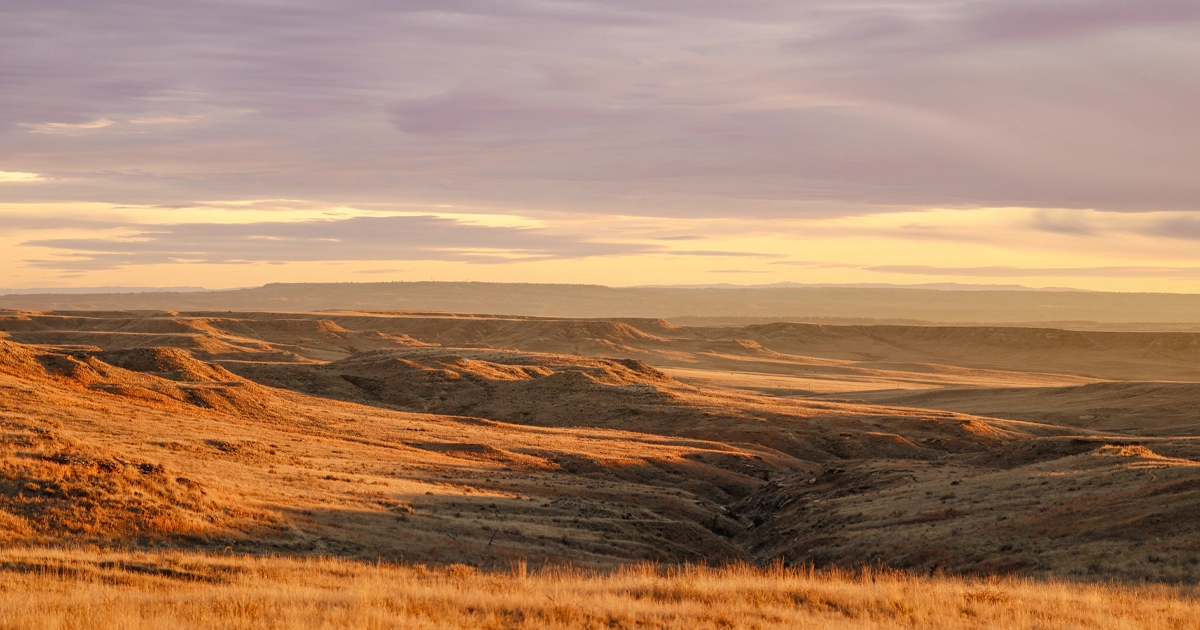
Nestled in the Sandhills region of Northwestern Nebraska lies the spectacular 40,520± acre Circle Cross Ranch. Tucked in against the Niobrara National Scenic River, the Circle Cross  is located about 20 minutes southwest of the Nebraska town of Valentine. The Circle Cross includes 12,020± deeded acres, a 16,500± acre permit in the McKelvie National Forest, 3,400± acres of private and state lease,  and some 8,600± acres of additional private leases.

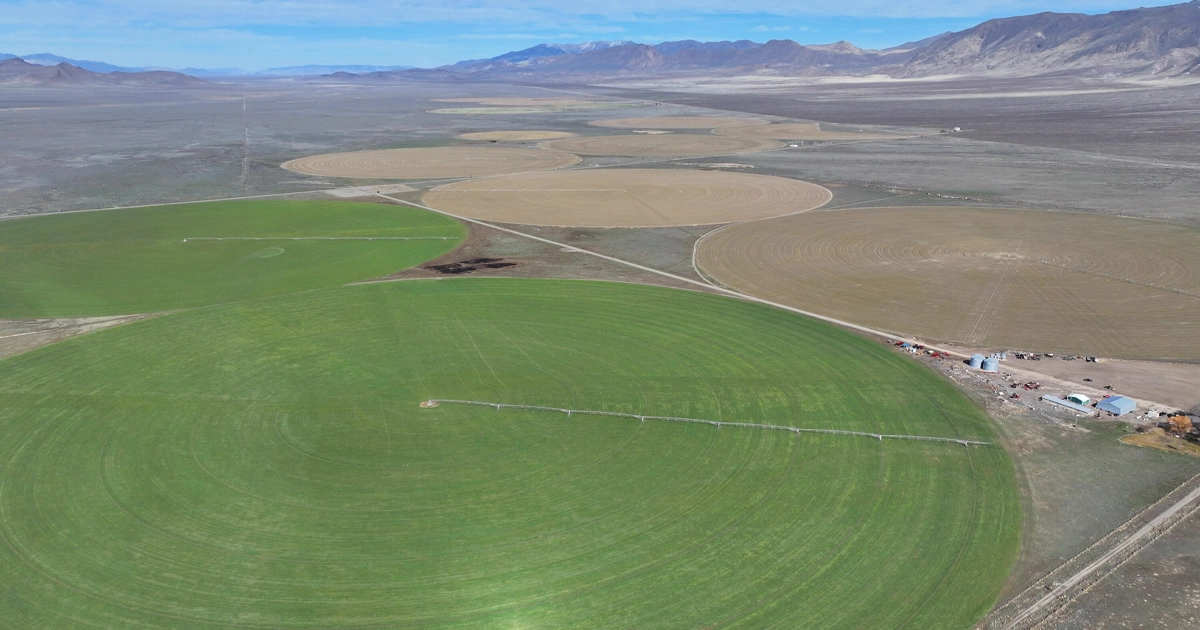
The ranch is irrigated by several wells on the property as well as pumps drawing water from the Niobrara. Approximately 1,100 acres of the ranch are irrigated through 7 pivot irrigation systems. The water is of excellent quality and abundant. Several stock tanks and ponds also dot the landscape around the ranch.

Cattle thrive on the Circle Cross’s vast grasslands and prairies. In addition, hay, corn, and other crops can be easily grown thanks to the well-developed irrigation system on the property.

Driving through the ranch you’ll find open plains, rugged terrain, and scenic trails following the river and through its many wooded areas. The land use permits on the adjacent Samuel R. McKelvie National Forest add additional grazing and recreational opportunities.

The Circle Cross is an ideal setting for operating a cattle operation, for crop production, or for a country gentlemen’s ranch and getaway.

Date: 10:00 a.m. Central Time, December 2, 2011

Location: Valentine, Nebraska

For more information or to receive a detailed brochure:
Hall and Hall Auctions
(800) 829-8747
www.HallandHall.com 

Trail Boss – The Bob Funk Story

Trail Boss - The Bob Funk Story

The name says it all: The Big Event. Those who have never had the good fortune to set foot in the Express Ranches Sale Barn have no inkling of the beehive buzzing under the big top. In one corner, eager servers tote trays of tri-tip, biscuits, and brownies to buffet tables where more than 400 will break bread in the next 90 minutes. At the shoeshine stand, cattlemen and their brides queue up two and three deep to have their boots given that like-new look. Lording over the entire affair, auctioneer Eddie Sims barks out bids as the price of a half-interest in an Angus cow and her calf soars past $100,000.

Arms folded, eyes twinkling, Bob Funk sits in the middle of this extravaganza. Garbed in true cowman style, Funk’s distinguishing trait is actually his smile. Could it be because he’s chatting with his girlfriend and his son? Or is his contagious grin because friends have flown in from across the country? Then again, there’s a pretty good chance that Funk’s smile might be directly tied to the sound of Sims’s gavel, which just came down at $195,000.

At first glance, Funk’s credentials stand out as boardroom caliber, not the sales-barn sort. As the chairman and the chief executive officer of Express Employment Professionals, Funk oversees a thriving organization with more than 550 offices in four countries and projected revenues in excess of $2 billion this year.

The largest privately-held staffing company in the U.S., Express Employment is a heavyweight in the human resource industry. Unlike many of its competitors, Express Employment has gained market share during the economic uncertainties of the Great Recession. Through the second quarter of 2011, Express has seen double-digit growth for six consecutive quarters. Since 2009, the Oklahoma City company has nearly doubled in size. Sales are up a robust 92 percent.

Given this track record, it’s no surprise that the number of boards that vie for Funk’s time and support is mind boggling. Churches, schools, and even Uncle Sam have come calling. Funk was chosen as a director of the Tenth Federal Reserve District, the seven-state region that anchors the heart of the Great Plains. Initially appointed to the Oklahoma City branch, he then joined the board of directors of the Kansas City Fed, was chosen chairman, re-elected chairman, and, in 2007, selected as the chairman of the Federal Reserve’s Conference of Chairmen. Funk advised the Board of Governors of the Federal Reserve System, including former Fed chair Alan Greenspan and current chair Ben Bernanke. “Don’t go telling too many people that. They might hold it against me,” he says and bursts out laughing.

Yet the truth is Funk is equally at home on the range or behind a desk. For that matter, he can hold his own on the altar as well. Few people realize that this civic leader, this rancher and cowman is also an ordained minister who earned undergraduate and graduate degrees in theology from Seattle Pacific University while studying business. His broad range of interests is fueled by a level of energy that can best be described as boundless.

During a three-month span this summer, the 71-year-old journeyed to Italy to officiate at the wedding of a close friend, traveled to Scotland to dine with Prince Philip, landed not one but two hundred-pound halibut off Canada’s Queen Charlotte Islands, and escorted the Duke and the Duchess of Cambridge to the Calgary Stampede aboard an Express Ranches stagecoach that was drawn by four of his champion black-and-white Clydesdales.

The secret of his success? No matter the venue, Funk applies the lessons he learned from those he loved growing up on the land. These building blocks have led to a series of successes he readily admits he could never have imagined. They have allowed him to make countless acts of generosity. Most of all, they have given him a mission, one he pursues day in and day out: Bob Funk believes it is absolutely essential to instill those same lessons in the hearts and the minds of youngsters growing up today.

So it’s safe to assume that Funk grew up enjoying the many activities he endeavors to share with kids across Oklahoma, right? Think again.

“We were very poor at home,” says Bob’s older sister, Joanne Benton. “Bob didn’t get to go and participate in county fairs like most kids we knew growing up. He was too busy working for Adolph.”

The mere mention of this older cousin’s name puts a smile on Funk’s face. This tough taskmaster was the wellspring of Funk’s ferocious work ethic. In his barns and on his fields, Funk learned leadership tenets that would build a multi-billion-dollar company.

“Adolph Hanish started at 6:00 a.m. and finished milking 60 cows at midnight every night, seven days a week. And he didn’t think that was working too hard. He loved his cows. They were his life. Adolph taught me a good work ethic. So did Dad. Dad just loved to work. He loved the land. He loved his cattle. My dad worked cows at all times, even after he went broke in the dairy business. He spent more money on his cattle than he should have: the best hay, the best grain. After he went to work for the highway department, he still kept some cows. He’d go milk four cows by hand every morning, start his job at 8:00, finish at 4:30, and milk cows until 7:00 every night. And that was just standard for our family. Dad was a hard worker. He was a wonderful man,” Funk says.

The formative influence of these hardworking men had some unexpected consequences, namely, cheap shots from childhood friends. “Some of our cousins used to call Bob ‘nothing but a dumb farm boy,’” says his sister. “They would make fun of him for working so hard for Adolph.”

There are two sides to this anecdote, and they reveal the mettle of the man. Ask Bob Funk about his cousins’ taunts and he dismisses the personal discomfort that every adolescent endures. Instead, he speaks of the journey of a fellow human being.

“Adolph was a single man who never took a day off. His whole life was his cows. When I started working for him, he had gone 17 years without a day off. The Fourth of July, Thanksgiving, Christmas — he worked holidays, he worked when he was sick, he worked no matter what. I was glad to give him a break,” Funk says.

Ask his sister, however, and another side to her younger brother emerges. “Those boys couldn’t have known it, but what they were doing was challenging Bob. They challenged him to make something of himself, and he sure did,” Joanne says.

For some inexplicable reason, cousins have shaped Funk’s life. Hanish, his father’s cousin, helped mold the young boy into manhood. Decades later, one of his mother’s cousins opened a new chapter in his life by steering him out west.

Most Americans know Ed Pease for his service as an Indiana Congressman. But in Northern New Mexico, the Eagle Scout is known for his service at the legendary Philmont Scout Ranch. The 137,000-acre ranch is nestled in the Sangre de Cristo Mountains, the heart of the historic Maxwell Land Grant (see “Lucien Maxwell,” Land Report Fall 2008). The grant’s 1.7 million acres had been divvied up into a series of enormous ranches, and some 300,000 acres were acquired by legendary Oklahoma oilman Waite Phillips. It was his bequest that created the Scout Ranch.

In 1996, Pease learned that a key inholding was about to change hands. “Word got out that the Atmore Ranch was going to be sold and then cut up into 20-acre parcels. I support a landholder’s rights to do what they see fit with their property, but the idea of walking through a subdivision to get to the biggest mountain on Philmont ruins the concept of hiking through the wilderness, doesn’t it?” Pease asks.

Pease knew the clock was ticking. “In all the time I’ve known Bob, I never ever asked him to do anything financial. But this time I had to. I called him and made the pitch. Bob had never been a Scout as a kid. Growing up he was too busy working to have time to be a Scout. There was no reason for him to buy this ranch. But he knew what it would mean to generations of Scouts to come, so he went ahead and bought it,” Pease says.

Ten years after acquiring the Atmore, Funk expanded his New Mexico holdings when he bought from Brad Kelley the portion of Philmont that Waite Phillips kept for himself. Called the UU Bar Ranch, it is a Rocky Mountain paradise that rises from the high-desert rangeland at 6,000 feet to more than 11,000 feet above sea level in the Sangre de Cristos.

“The UU Bar is more like a state than a ranch,” says former Oklahoma Governor Frank Keating. “You have those alpine meadows, the beautiful forests, the abundant wildlife. It’s absolutely a colorful affirmation of the beauty of America, a spectacular picture-postcard ranch.”

Keating’s wife, Cathy, concurs. Like her husband, Oklahoma’s former First Lady has been a regular at the UU Bar since before Funk bought it.

“We’ve been elk hunting with Bob every year since he bought the Atmore. There’s really just nothing quite like that country out there. It’s just a very special place. You’re in God’s country. I love those moments at the UU Bar – the early morning breakfasts at the lodge that Ralph [Knighton] prepares, driving up to the meadows and waiting for the bugling to start. Then you hear the bugling and the thrill of the chase. I really don’t care if I shoot or not,” she says.

As memorable as a visit to the UU Bar may be, the vast property is an integral element of the Express Ranches portfolio. This multifaceted beef production entity is driven by one goal: better cattle. On a trip to New Mexico, Funk points out that yearling bulls are conditioned on the UU Bar before being taken back to Yukon and sold.

“Jarold likes to tell me we beta test our genetics at the UU Bar,” Funk says, referring to Jarold Callahan, president of Express Ranches. The two teamed up in the mid-1990s when Funk negotiated the purchase of the B&L Ranch and the B&L Angus cow herd near Shawnee from the Oklahoma Cattlemen’s Association Foundation. Up till then, Funk had focused primarily on Limousin cattle. With the purchase of the B&L, Angus cattle became the driver in the expansion of the Express Ranches brand and Callahan was put in charge. “I told Jarold, ‘You sold me these suckers. You come and make them pay,’” Funk says. And that’s exactly what those black-faced cattle have done. According to National Cattleman, Express Ranches is the nation’s largest seedstock operation. Judging from the strong sales numbers at this year’s Big Event, that ranking is safe and secure.

So what does this mean to Bob Funk? It goes without saying that there’s a sense of accomplishment. Back in 1996, he, Callahan, and their team set out to become No. 1, and they’ve done exactly that. It’s the same exact approach that Funk has taken at Express Employment Professionals: putting a team together, setting a high bar, and doggedly pursuing that goal. In three or four years, Express Pros will also be No. 1, Funk tells me.

Bob Funk Jr. is also drawn to the rhythm of the cattle business. His day job may be president of the Oklahoma City Barons, but in the back of his mind are lessons he learned years ago.

Like his father, he insists those lessons be shared. Both men are passionate supporters of the Oklahoma Youth Expo. The organization’s director, Jeremy Rich, tells me that thanks to the Funks, the Expo has gone from near extinction in 2001 to the largest junior livestock show in the nation. I think I know why.

“Growing up in Piedmont, I actually enjoyed working cattle,” Bob Funk Jr. tells me. “Dad used to take me out to feed. It was a hobby, for him and for us, getting up and going to feed the cattle in the morning. It was always fun. It never seemed like work. The best part was really just spending time with Dad.”


Larry Ellison Expands Lake Tahoe Holdings

 Larry Ellison, a true connoisseur of land, expands to the Lake Tahoe area

Larry Ellison, a man who “views prime real estate as scare commodity that can’t easily be replicated,” is expanding his holdings in the Lake Tahoe area, a region well known for its pristine waters and world-class skiing.

Regarded as one of the country’s largest consumers of trophy real estate, Mr. Ellison is the third-richest American with a net worth of $33 billion according to Forbes. Since the mid-1990s, Mr. Ellison has amassed hundreds of millions of dollars worth of top-shelf properties around the world, including five adjacent lots in Malibu; a mansion formerly owned by the Astor family in Newport; a historic garden property in Kyoto, Japan; and a 249-acre estate in Rancho Mirage that includes a private 19-hole golf course.

Once Mr. Ellison finds an area he likes, he will typically purchase multiple properties that are adjacent to one another and then combine them into a single, sprawling compound. He also purchases other lots nearby to increase his total holdings in a specific area.

According to public records, Mr. Ellison began purchasing in the Lake Tahoe area in 2006 and since then has created three noncontiguous lakefront parcels in eight separate deals.

Click HERE to read the full article in the Wall Street Journal

Trend Watch: Income-Producing Properties

Check out this informative video from ranch brokers Ken Mirr and Jeff Hubbard of Mirr Ranch Group.

Ranch brokers Ken Mirr and Jeff Hubbard discuss the increase in demand they are seeing for income-producing properties for sale. These ranch experts suggest that this type of ranch, coupled with recreational values, makes for a truly special property. Thunder Ranch, a Utah ranch for sale, is used as an example.

2011 Land Report 100: J.R. Simplot Heirs

October 19, 2011 by  
Filed under 2011 Fall, Feature

 2011 Land Report 100: J.R. Simplot Heirs

No. 19 J.R. Simplot Heirs

408,663 acres

J.R. Simplot first found success in the potato business. Today, the company he founded operates more three dozen farms and over a dozen ranches in Idaho, Nevada, Oregon, and Utah. Its efforts in conservation and sustainability were recognized by the U.S. Department of Energy, which invited the company to help develop a new voluntary energy management system as a road map for other industrial facilities.


Fay Ranches

2011 Land Report 100: Briscoe Family

October 19, 2011 by  
Filed under 2011 Fall, Feature

2011 Land Report 100: Briscoe Family

No. 13 Briscoe Family

560,000 acres

The heirs of Dolph Briscoe, Jr., are continuing the legacy of the late two-time Texas governor. The family’s Briscoe Ranch is headquartered outside Uvalde, but it spreads across nine counties in the Lone Star State. Dolph Briscoe, Sr., a cattle rancher, began the family’s love affair with the land, but it was his son who greatly expanded the Briscoes’ holdings. Today, the third generation of the family guides the ranching operations.


Fay Ranches

2011 Land Report 100: Stan Kroenke

October 19, 2011 by  
Filed under 2011 Fall, Feature

 2011 Land Report 100: Stan Kroenke

No. 10 Stan Kroenke

740,000 acres

Stan Kroenke is perhaps most famous for his extensive ownership interests in various professional sports franchises: the NFL’s St. Louis Rams, the NBA’s Denver Nuggets, the NHL’s Colorado Rapids, and MLS’s Colorado Rapids, along with a controlling stake in the English Premier League’s Arsenal FC. But he’s also made a name for himself in the West with his Cedar Creek Ranch, PV Ranch, and Q Creek Land & Livestock Company. If you find yourself at Kroenke’s Pepsi Center in Denver to watch his Nuggets play, try a buffalo burger at his Blue Sky Grill, supplied by his herd at Q Creek.


Fay Ranches

On the Block: 600+ Acres in Kentucky and Tennessee

On the Block: 600+ Acres in Kentucky and Tennessee

Five tracts in Western Tennessee and Kentucky totaling more than 600 acres will be auctioned on October 27. In addition to a considerable recreational component, the tracts are heavily timbered. According to Roebuck Auctions founder John Roebuck, these tracts are ideal investment opportunities that feature great hunting. A past president of the National Auctioneers Association, Roebuck has spent more than three decades in the auctioneering profession.

The breakdown on the tracts by location is as follows:

  • 243± acres in McNairy County, Tennessee
  • 195± acres in Hardeman County, Tennessee
  • 9± acres in Hardeman County, Tennessee
  • 58± acres in Hardin County, Tennessee
  • 103± Acres in Calloway County, Kentucky

More details on the tracts, which will be auctioned by Roebuck Auctions on Thursday, October 27, is available HERE.

Date:  Thursday, October 27, 2011 at 6:07 p.m. CDT

Location:
Selmer Airport Hanger (SZY)
2282 Airport Rd
Selmer, TN 38375

Roebuck Auctions
(901) 763-2825

Sold! Colorado’s Banning Lewis Ranch

Banning Lewis Ranch in Colorado Springs is sold to Ultra Resources

This week, Ultra Resources confirmed that the company had purchased 18,000 acres of the Banning Lewis Ranch for $20 million. With the sale now complete, the U.S. Bankruptcy Court and the City of Colorado Springs will need to determine whether the city land-use agreements related to the city’s 1988 annexation of the ranch should remain intact.

Confirming the purchase of the ranch, an Ultra spokeswoman said that the company expects to drill for oil and natural gas on the ranch. And it appears that the Banning Lewis deal may be just one part of Ultra’s plans for drilling in the area, as the company paid $1.67 million in July and August to Denver-based Pine Ridge Oil & Gas for leases on nearly 100,000 acres of land in eastern El Paso County and an exploratory well east of Fountain.

According to Colorado Springs Mayor Steve Bach, the sale of most of Banning Lewis Ranch to Ultra means “there is a real possibility that the Banning Lewis Ranch will not be built into residential and commercial neighborhoods as previously expected.”

In a statement, Colorado Springs City Attorney Chris Melcher said that the city will continue negotiations with Ultra “to reach a satisfactory resolution of the annexation issues, but if that effort is not successful the city intends to seek enforcement of all rights and responsibilities under the agreement in the Colorado bankruptcy court of Colorado state court.”

Click HERE to read more.


2011 Land Report 100: Archie Aldis Emmerson

October 13, 2011 by  
Filed under 2011 Fall

 2011 Land Report 100: Archie Aldis Emmerson

No. 3 Archie Aldis Emmerson

1,870,000 acres

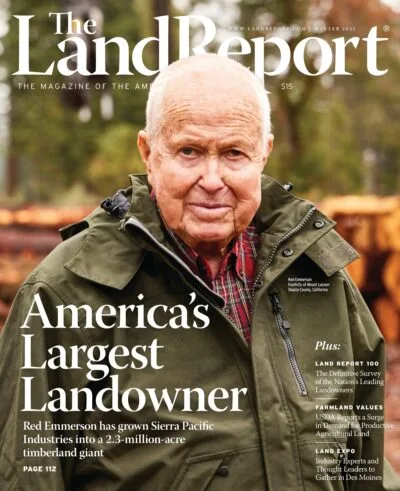
Emmerson’s Sierra Pacific Industries (SPI) added to its holdings in 2011. The third-generation, family-owned forest products company is the second- largest lumber producer in the U.S. and is committed to managing its lands in a sustainable manner. SPI prides itself on protecting the environment while providing quality wood products and renewable power. Sierra Pacific collaborated with the U.S. Fish and Wildlife Service and California Department of Fish and Game in helping the Pacific fisher flourish in the Sierra Nevada, where it has been largely absent for 100 years. In addition, Emmerson’s company donated over 10 miles of the historical Amador Foothills Railroad to the Amador County Historical Society and the RRC Historical Society to ensure the preservation of this piece of history.


Fay Ranches

Next Page »