
Ask the Expert: Chip Lenihan

Chip Lenihan

2011 Market Update: Chip Lenihan has been fly-fishing Colorado’s best waters for 40 years. His side gig? Running the Telluride office of Fay Ranches as lead broker. The Land Report turned to this former mayor of Telluride for an update on today’s recreational properties market.

Describe today’s market in one word.
Value.

How is that manifested?
Buyers are willing to sit back and wait until they get real value for their money.

Who’s driving today’s market?
The biggest part of my business is families. Men tend to drive the decision-making on hunting properties and ag land, and women trend more in the direction of resort sales, ones that are closer in to town and that feature more amenities. But come rain or shine it’s families who are looking to enjoy the sort of lifestyle you can only find out in the great wide open.

What’s been the biggest surprise of 2011?
The number of investors parking their money in land. The capital is out there. But after what happened in 2008, no one is in a hurry to put it in traditional markets.

Elaborate.
Five years ago, land was a hot commodity. Everybody wanted to get on board before the train left the station. And that brought a lot of buyers with short-term horizons into our market. Today, investors recognize the value inherent in current markets. A good number of them are looking at land as a smart buy, one with proven returns, long range stability, plus big upside from a personal standpoint.

Public land. Do buyers want to border national forest or BLM, or should they steer clear?
Great question. if you’re scouting a potential property and it borders public land, it’s absolutely essential to determine how intensely it’s used. Are you up against an unused corner of a national forest? Great. That will add a 10% to 20% premium to the value of your property. Does a hunting outfitter operate a base camp right across your fence line that’s going to bring in 25 guns for deer and elk season? Might not be your cup of tea.

For Sale: NC Waterfront Development Opportunity

NC Waterfront Development

Ever considered owning your own business on the water? Then take a close look at this one-of-a-kind opportunity to acquire a prime .66-acre parcel on the Atlantic seaboard in the heart of one of North Carolina’s most popular tourist venues.

IMPROVEMENTS

The structures consist of a fully restored 1926 Sears & Roebuck Craftsman home and an adjacent boathouse. The home features 5 bedrooms, 3 full baths, kitchen, dining and living rooms. There is a covered front porch and a large deck on the rear of the house. The house itself has been highlighted in promotional literature for the area and is ideally suited for development as a bed and breakfast.

The large 30′ x 40′ boathouse was used by the original owner for building boats. This is a unique structure and would be ideal for many different uses.  On the water at the back of the property stands a pier with six boat slips. Currently there are six sailboats moored in the slips and and a seventh at the end of the pier. The slips rent for $1,000 per year (payable in January) and produce a steady revenue stream.

LOCATION

Manteo can be found in the heart of North Carolina’s Outer Banks on the eastern side of Roanoke Island along Shallowbag Bay. Dare County is prime tourist destination. These .66 acres are adjacent to downtown Manteo within walking distance of the waterfront boardwalk and a short distance from Festival Park. Nearby tourism interests, businesses, and parking are already in place. The Lost Colony and the beaches of the Outer Banks are only a few minutes away, including high traffic attractions such as Nags Head and Kitty Hawk.

DEVELOPMENT OPPORTUNITIES

This .66-acre tract is zoned B-1, which includes bed and breakfasts, apartments, hotels, motels, and similar businesses that provide overnight accommodations. B-1 also includes restaurants and retail businesses.

ADDITIONAL INFORMATION

Please contact Briggs Neal at (252) 480-1200 or email Briggs at sailmanteo@gmail.com.


For Sale: Canadian River Ranch

Canadian River Ranch

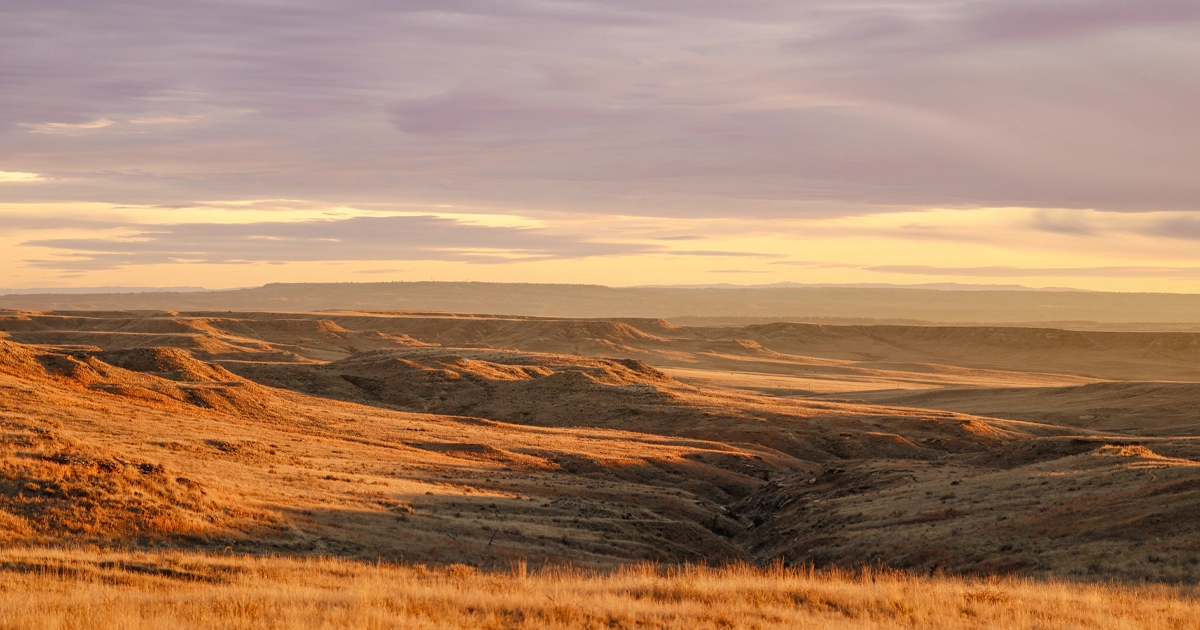
Anyone familiar with the history of the American West knows the legend and lore that surrounds the historic XIT Ranch, whose 3 million acres encompassed the bulk of the western edge of the Texas Panhandle. The Canadian River Ranch covers some 111 square miles of the old XIT, including substantial frontage on both sides of its namesake, the Canadian River. The ranch’s varied topography rises from wide river bottoms to iconic mesas, but throughout its history it has been operated as a commercial cattle outfit.

Located 65 miles northwest of Amarillo, the ranch can also be accessed via a paved 4,500-foot land strip situated close to the headquarters. The ranch’s 7,000-square-foot, 6-bedroom, 6½-bathroom lodge is just one of many well maintained improvements, which include a ranch manager’s house, pilot’s quarters, barns, pens, and housing for the hands.

These 71,059 acres combine to form one of the largest contiguous land holdings inthe Texas Panhandle. The ranch is watered by 26 miles of the Canadian River. Not surprisingly, the Canadian River Ranch boasts exceptional hunting. Two state record mule deer have been recently harvested, and elk, bear, and mountain lion have also been sighted.

$33.753 million ($475 per acre)
(806) 763-5331
www.chassmiddleton.com

Ashe Takes Oath as Fish & Wildlife Director

Dan Ashe

Dan Ashe was sworn in as the 16th director of the U.S. Fish and Wildlife Service on June 30. President Obama had nominated Ashe to head up the nation’s principal federal agency dedicated to the conservation of fish and wildlife and their habitats last December. Thanks to his father’s 37-year career at Fish and Wildlife, Ashe is in fact a lifelong veteran of the service. After receiving his Master’s degree from the University of Washington, the Atlanta native spent 13 years working on Capitol Hill before joining Fish and Wildlife. He subsequently served as the service’s assistant director for external affairs from 1995 to 1998, as the chief of the National Wildlife Refuge System from 1998 to 2003, as science advisor to the director of the service from 2003 to 2009, and, most recently, as the service’s deputy director for policy.

Said Interior Secretary Ken Salazar, “Dan Ashe has served with distinction and integrity in the Fish and Wildlife Service for more than 15 years. He has worked tirelessly to prepare the Service to meet the resource challenges of the 21st century, and his leadership and vision have never been more necessary. I’m excited to work with him to foster innovative science-driven conservation programs and policies to benefit our nation’s fish and wildlife and its habitat.”

Said Ashe, “I’m humbled by the trust that the Secretary and the President have placed in me, and most of all, by the responsibility of leading the finest wildlife conservation organization in the world. As director, I will strive to create an atmosphere where we can bring to bear our collective imagination, our tenacity, and our commitment to public service to address today’s challenges to the future of our nation’s fish and wildlife heritage.”

Read more HERE.


For Sale: Elk Song

Elk Song

My journey to Elk Song began with a dream: a dream cut short by an old war injury. The dream belonged to my grandfather, who owned a fine sub-irrigated sandhill cattle ranch in Eastern Colorado that I cheated for more than 25 years, cheated against beef in favor of a waterfowl and upland bird paradise. Population growth and pressure to turn it into an irrigated farm dictated that I walk away from the only home I had ever known and seek a new world.

TEXT & PHOTOGRAPHY BY ROSS SEYFRIED
PUBLISHED SUMMER 2011

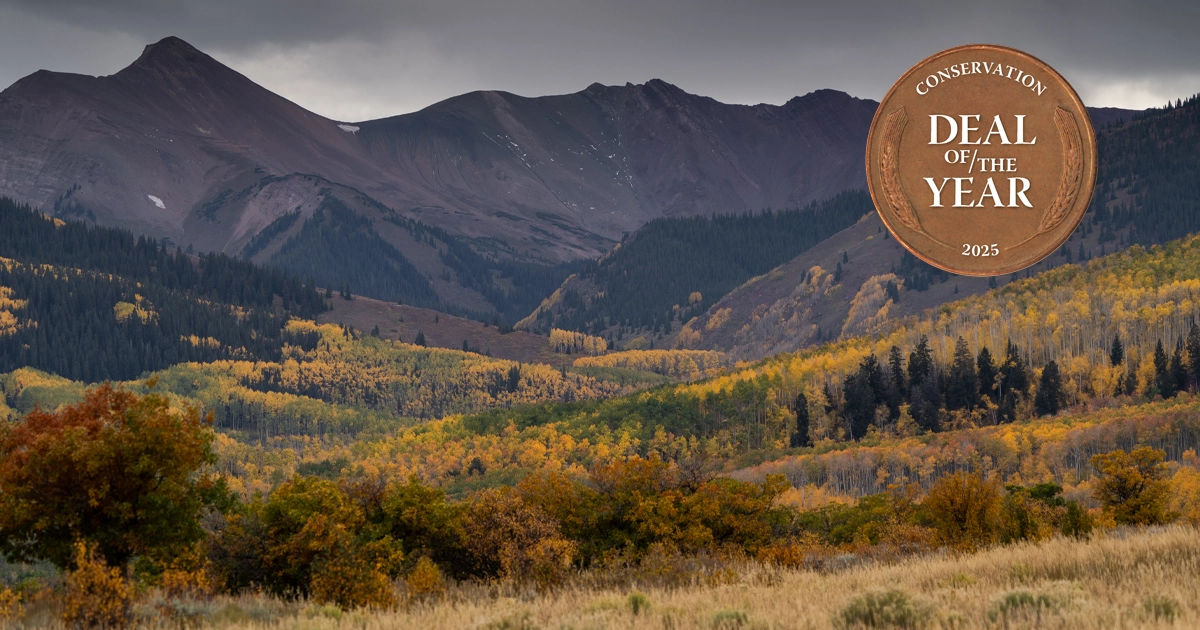
Several years of searching led me to the Blue Mountains in Eastern Oregon and another dream; one tarnished by abuse but not without hope. I found a magnificent raw canvas, canvas smeared with overgrazing and unreasonable logging, but it was a canvas that begged for a gentle hand that might return it to its pre-European glory. My dream began the day after Thanksgiving some 15 years ago with a pre-dawn ride over a goat-trail road that topped a ridge and offered a vista of several miles. Before me I saw four broad open ridges. Each was cut by dark timber, and all were covered with elk. I had just found 7,000 acres crisscrossed by 12 miles of flowing streams and cloaked with 4,000 acres of timber. That was the good news.

The bad news was that down low a substantial portion of the riparian areas resembled dirt ditches. Overgrazing had taken a terrible toll. Higher up, half of the timber had been plundered in the most irresponsible way. And the native elk herd? It had been savagely overhunted. No matter how hard I looked, I could find no branch-antlered bulls. The small forest folk were also missing. What to do? The first thing I did was buy the property. Then I brought my son on board to help. I had hunted much of the western United States and a good bit of the rest of the world, and I had never seen any- thing that approached the majesty of this ranch, even in its abused state. To the east, it was four miles to a hospital, a four-year university, grocery stores, and an interstate. To the west, one could ride a horse 100 miles and not cross a highway. My next step was the logging contract: stop the greedy plunder that cut all of the good and left only a little bad timber. I forced the logging company to implement the sort of sustainable practices it preached in its advertisements but failed to follow on my land. It would log in a sustainable and responsible manner. Doing this would leave significant stands of high-quality timber and millions of young, healthy trees for the future. Now it was time to face my cattle dilemma.

A good number of locals and even some game department personnel believe that “if you take the cows off, the elk will leave.” According to this old saw, livestock eat bad grasses and leave the good for the elk. After nearly 50 years as a cattle rancher, I have yet to encounter the Hereford that chooses to abide by this theory. Thus, no cattle grazed on our mountain that first spring. Elk numbers soared. Many hundreds of cow elk had wee spotted calves that scampered in the tall grass and wildflowers that reached their mamas’ bellies. To say that the elk were delighted with the absence of the bovines is an understatement. These happy elk were the most vocal I had ever heard; their sounds resembled humpback whales and created the soul, and name, of Elk Song. That fall dozens of rifles were silenced. I am not anti-hunting. I am a licensed guide and professional hunter. But the boys of Elk Song needed a break. When autumn returned we saw a few four-point bulls. A year later we thrilled when we saw a six-point. At the end of the third year, the September rut was a sight to behold. Instead of the occasional squeal of a yearling spike, dozens of deep bugles echoed across the ranch. The nearly perfect grazing habits of the elk allowed native grasses and forbs to repopulate and the general condition of the range to greatly improve. The entire ecosystem began to thrive. Black bears fattened on the berries in hawthorn thickets in the creek bottoms. Coyote returned. Snowshoe hares and red digger squirrels enticed eagles. The occasional cougar track suggested all was well. Grass and sedges returned and gave the wild rainbows shelter and more insects. On the fourth summer we brought in 175 cow-calf pairs to graze. They came in May and left in mid-June while all of the grass was green. This kept the cattle from destroying the riparian areas in late summer. Domestic cattle have a place in paradise, but they don’t rule Elk Song.

After 15 years we are almost there, almost at a state of pure wildness. Now we almost do not notice a big six-point bull. Most days we see dozens of them along with bear, deer, turkey, grouse, rabbit, squirrel, coyote, cougar, and trout. One evening last September, we counted 200 cow elk on a ridge. There were 43 six- and seven-point bulls with them, and the bugles and screams of a hundred more bulls echoed out of the canyons and thickets. Yes, the timber is still young, but it is thick and wonderful. Elk Song is indeed wild, and ever evolving toward 200 years ago. And now it is time for change once again. To the many who question our sanity for leaving the paradise that is Elk Song I say it is not by choice, but to bring an end to hostilities caused by a family member. It is time to pass the torch, to allow another to hold the reins and experience the wonder of Elk Song. We will begin again, returning to our roots on the Great Plains where waterfowl and upland birds thrive, and find another canvas on which to create wildness once more.

Elk Song’s 7,198 acres are listed with Oregon Land and Wildlife for $8.585 million.
For more information, contact:

Tim O’Neil
www.landandwildlife.com
(541) 480-3682

Land Report July 2011 Newsletter

Kimberlin Ranch

Land Report July 2011 newsletterThere’s a lot of ground to cover in the July edition of The Land Report newsletter: auctions, equities, timberland, and several political developments affecting landowners, ranging from the passage of key legislation by the Texas Legislature to the appointment of Dan Ashe to head the federal agency that many landowners know on a firsthand basis, the U.S. Fish and Wildlife Service.

From a research standpoint, a new frontrunner has emerged atop The Land Report Top Ten, which features the country’s leading investment quality land listings. Count on The Magazine of the American Landowner to follow the $100 million listing of Wyoming’s Walton Ranch by Ranch Marketing Associates in the months ahead.

For more up to the minute reports on listings, sales, and countless other stories pertaining to land and landowners, be sure to follow The Magazine of the American Landowner on Facebook and Twitter.

P.S. Our award-winning quarterly magazine is available in a print version via subscription.