
Market Watch: JOE Announces New COO
March 31, 2011 by Land Report Editors
Filed under Feature, Field Reporters, Recreation, Residential Property, South, Timber
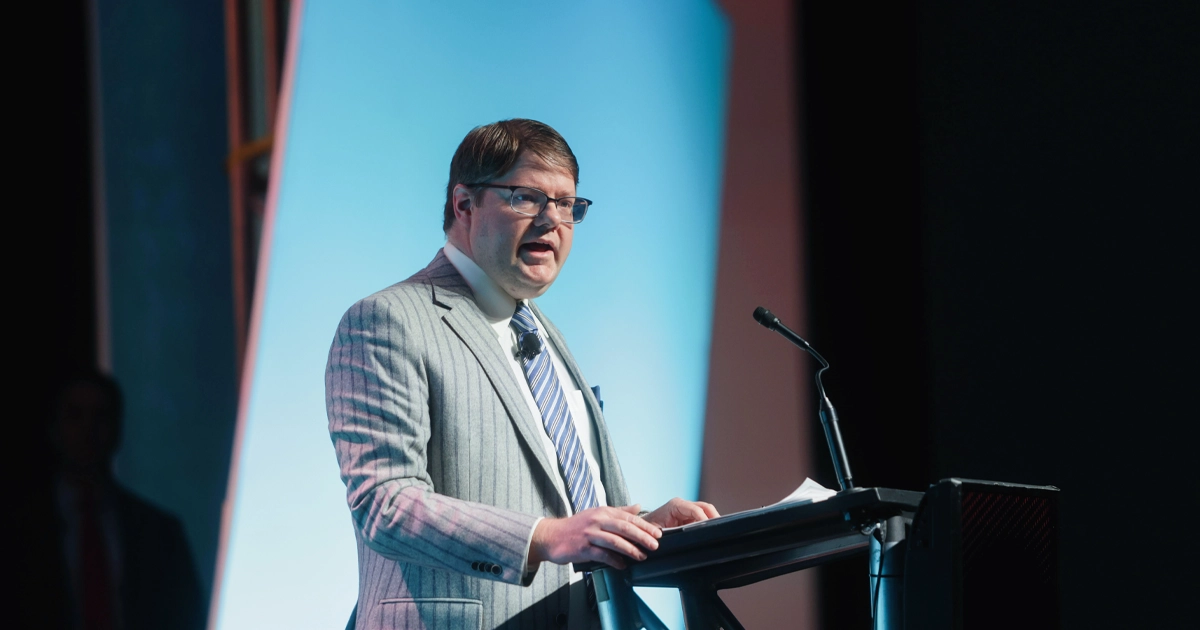
The St. Joe Company (NYSE: JOE) has appointed veteran real estate executive Park Brady to be its chief operating officer. Brady will report to the executive committee of the company’s board of directors, which includes Chairman Bruce Berkowitz and Interim CEO Hugh Durden.
Brady’s appointment is the latest in a series of steps taken since the late February resignation of President and CEO Britt Greene.
Also stepping down were board members Michael Ainslie, John Lord, and Walter Revell. Among the new directors proposed by the company’s largest shareholder, The Fairholme Fund, were Berkowitz, Durden, and former Florida Governor Charles J. Crist.
The St. Joe Company is one of Florida’s largest real estate development companies and Northwest Florida’s largest private landowner with approximately 576,000 acres of land, concentrated primarily between Tallahassee and Destin.
Joe Montana: The Land Report Interview
March 30, 2011 by Eric OKeefe
Filed under 2011 Spring, Equestrian, Farming, Feature, Field Reporters, Hunting, Magazine, Pacific, Recreation
At Villa Montana, Joe Montana does not talk about football. At all. Meet the man on his Sonoma County getaway and all he talks about are his wife, their two girls and two boys, and the memories they share on their breathtaking 503-acre estate. And Italy. The one thing the guy will not stop talking about is Italy.
“If you can believe it, some idiot drove across the Ponte Vecchio in his rent car,” Montana says. As his face lights up in a contagious smile, it’s clear that the idiot Montana is referring to would be the four-time Super Bowl winner himself.
“I’m looking at my GPS, and it said to get back to the villa where Jennifer and I were staying I needed to turn right. The pillars weren’t up on the Ponte Vecchio, so I follow the GPS and I turn right,” he says. And with that, the Hall of Famer etched his name in the history books yet again by driving across one of the most celebrated landmarks in all of Florence.
“I get to the other side, and this cop has his hands up” – Montana raises both hands in a mock “Have you lost your mind?” sort of look – “and he gives me a tongue lashing in Italian. I didn’t understand a single word he said, but I knew exactly what he was saying.”
Stories like this and his amazing wine country estate are two of the new chapters in his life that have been written since he hung up his helmet and retired from the NFL in 1995. With his football career behind him, kids and family became his life, which is why Villa Montana turned into such an important project for him and his wife.
Conveniently located just an hour and a half north of San Francisco, the ranch became the family’s great getaway. Cookouts and campouts quickly replaced practices and game days. Acres and acres of rolling hills were explored. So, too, were the year-round creeks that wind their way through the hollows and the draws that crease the terrain.
A full-size basketball court was built for Nate and Nick, and Alexandra, Elizabeth, and Jennifer got their own professional-grade equestrian center, complete with 17 heated stalls. A skeet shooting range was built in a secluded pasture. Naturally, Joe was the only member of the family who engaged in all of the above. Although he’s in his mid-50s now, his boundless energy is readily apparent. The natural athlete makes time to work out four or five times a week.
Building Villa Montana was an epic undertaking, a monumental, three-year labor of love for Joe and Jennifer. Joe’s mother was born in Italy. He treasures these strong ties, and during his playing days the couple brought back only memories from their trips overseas. “Actually, the truth is on every trip I always brought back a few extra pounds. Jen is one of the lucky few who can eat anything she wants and actually lose weight. Different story with me,” he says.
The couple built a home in Atherton, a Bay area community south of San Francisco, and they infused it with their shared love of all things Italian. By the time they decided to embark on Villa Montana, they were old pros in the Tuscan tradition. When their Atherton builder got a call about a villa that was being torn down, he and Jennifer were on the first flight out of San Francisco. Not long afterwards, hand-hewn beams, Baroque wood portals, and artifact Italian fireplaces were en route to Northern California.
By the time the Montanas broke ground on their new country home, it was clear that a masterpiece was in the works. Although the house itself is almost 10,000 square feet, its three bedrooms and the adjacent studio where Jennifer likes to paint offer an intimacy that personalizes it in a family-friendly way. That’s especially obvious in the kitchen, which may well be the busiest intersection on the property.
Throughout the main residence, a fascinating array of old and new presents itself: hand-worked iron elements and flat-screen TVs, ancient stone floors, and a state-of-the-art outdoor grill. In the massive great room, the 22-foot-tall ceiling compels your gaze upward and outside to stunning views of Mount Saint Helena, the tallest point in the Mayacamas. Beneath the imposing massif, a tapestry of vineyards and pastures unfolds across Knights Valley, one of Sonoma’s original American Viticultural Areas.
Despite its artistic feel, Villa Montana is user-friendly, built with an active, energetic family in mind. An endless array of patios, terraces, and courtyards encircle the villa and give it a great indoor-outdoor feel. A bocce court, a swimming pool, and a Jacuzzi can all be found in close proximity to one another just a few steps from the kitchen. Drain spouts emerge from hand-plastered walls. Potted plants and crawling vines bring color to pale stone. It’s wonderfully relaxing, which is ultimately the most inviting—and appealing—aspect to Villa Montana. It’s definitely made for entertaining: two people, 20, or 200.
Unfortunately, Villa Montana sits in silent splendor much of the time these days. No longer can Nate and Nick be found playing on its hills. Nate has just moved to Bozeman where he will play ball for Montana, and Nick is a Washington Husky. With Alexandra and Elizabeth in San Francisco and Los Angeles, their papa admits that his days on the ranch have dwindled to a shadow of their former number. “Jennifer and I are too busy chasing our kids to give this property the time it deserves,” he says.
With that in mind, the Montanas have listed Villa Montana with Avram Goldman and Tim Hayden at Pacific Union International’s Sonoma and St. Helena offices for $35 million.
“It’s a Picasso,” Goldman says. “A rare jewel. A once-in-a-lifetime opportunity. The antiquities and artwork make you feel like you’ve come upon a 500-year-old Tuscan villa. Yet it has every convenience and amenity imaginable. I’ve been in real estate more than three decades, and I promise you that you would be hard-pressed to find a home like this anywhere, Italy included.”
In addition to the 9,700-square-foot villa, the ranch includes a pool and spa, a guest house, a caretaker’s residence, a gym, an equestrian center, a basketball court, a bocce court, the skeet shooting range, and an olive farm. As Joe puts it, “It’s time someone else started making memories here.”
Learn more about Villa Montana HERE.
For Sale: Oregon’s Wild Billy Lake
March 29, 2011 by Land Report Editors
Filed under 2011 Spring, Feature, Pacific, Recreation
Wild Billy Lake operates as a fly-fishing lodge with a long list of repeat clients who use drift boats, prams, canoes, belly boats, and motor boats. Located in Klamath County, the property sits at the confluence of the Sprague and the Sycan Rivers in the heart of Oregon’s best fly-fishing country. The 1,020-acre property completely surrounds its namesake, 200-acre natural lake.
$4.105 million
(866) 734-6100
Live Water Properties
Minnesota Power to Expand Bison Wind Farm
March 28, 2011 by Stephen O'Keefe
Filed under Energy, Feature, Field Reporters, Great Lakes, Great Plains, Stephen OKeefe
Minnesota Power has notified the North Dakota Public Service Commission of its intent to begin the second phase of the Bison Wind Farm project in central North Dakota. The additional capacity will increase total power generation to 185 MW. The Bison 2 wind project will use 35 3-megawatt turbines manufactured by Siemens AG. Further expansion of the Great Plains wind farm is planned to meet Minnesota’s mandate for 25 percent of its electricity from renewable resources by 2025.
“The timing is fortunate for expanding our renewable energy production,” said Alan Hodnik, president and CEO of Minnesota Power’s parent company, ALLETE. “Development of Bison 2 will leverage substantial investments we’ve already made in North Dakota and take advantage of the federal production tax credit and a very competitive wind turbine market.”
“Bison 2 will be very economical for our customers,” Hodnik added. “This project is an example of our larger strategy of meeting the demands of a changing energy landscape, reducing our overall reliance on fossil fuels, and making effective use of existing transmission capacity.”
Electricity generated by the Bison Wind Farm travels to Minnesota via transmission lines used for coal-generated power from the Milton Young station near Center, North Dakota.
Read more HERE.
Editor of The Land Report Discusses Rural Land Trends
March 25, 2011 by Land Report Editors
Filed under Eric OKeefe, Video
For Sale: Montana’s Engwis Ranch
March 18, 2011 by Eric OKeefe
Filed under 2011 Spring, Cattle, Eric OKeefe, Feature, Recreation, Residential Property, West
Three and a half miles of the Yellowstone River course through this 5,500-acre ranch, which features stunning views of the Absaroka, Beartooth, and Crazy Mountain ranges. A Yellowstone Valley gem, the Engwis features 900 irrigated acres, all mineral rights, significant water rights, and a 9,500 S.F. main residence. A newly constructed indoor riding arena also includes an attached guest house.
$15.5 million
(970) 769-8989
www.engwisranch.com
Market Watch: Chicago Fed Cites Surge in Midwest Land Prices
March 17, 2011 by Eric OKeefe
Filed under Farming, Feature, Field Reporters, Great Lakes, Midwest
Agricultural land values in the Seventh Federal Reserve District jumped 12% in 2010, according to the Federal Reserve Bank of Chicago. The district encompasses key portions of America’s Corn Belt, including Illinois, Indiana, Iowa, Michigan, and Wisconsin. The increase was the second largest on record over the last three decades and was greatest in Iowa, where values soared a whopping 18 percent.
According to the Chicago Fed’s newsletter, “Slightly more than half of the respondents expected farmland values to keep rising during the January through March period of 2011.”
Read the Chicago Fed’s AgLetter HERE.
Land Report 100: D.K. Boyd
March 16, 2011 by Land Report Editors
Filed under 2011 Spring, Feature
Long before there was The Social Network, there was D.K. Boyd, pictured here with mentor Ted Gray (left) and wife T.J. (center).
Passionate about property rights, Boyd places great value on shared knowledge. “It’s kind of the old cowboy approach to life,” he says. Boyd trades tips with fellow landowners about laws, rules, regulations, and rights, including the rights of oil and gas, pipeline, and utility companies. “We give up 100 percent of the knowledge we have and are pretty bold about asking for theirs. The way I approach it is network, network, network. We tend to migrate toward like-minded individuals and try to distance ourselves from the rest. If they have similar ethics and integrity it’s a beautiful arrangement.”
As a teenager, he recognized the rewards of land ownership doing day work for Fort Stockton-area ranchers. “It allowed me to be exposed to a tremendous amount land in that part of the world and learn a lot about ranching. That’s really where it all started.”
Boyd’s father worked for Exxon. His mother was in the banking business. His mentors were property owners and landowners, including rancher Ted Gray, who was based out of Alpine. Boyd’s favorite read is Barney Nelson’s The Last Campfire, a chronicle of Gray’s decades-long career. “At the time that I was first started getting to know Ted, he owned ranches, banks, and was one of the largest ranchers in the Davis Mountains/West Texas area. That he would take time to work with a young guy like me … you can’t put a value on that. He’s kind of my John Wayne.”
Boyd pieced together his land portfolio with wife T.J. at his side. He acquired the 137,372-acre Frying Pan Ranch in 1996 and the 106,065-acre LE Ranch in 1998. The two cattle operations are among the most historic in West Texas/Southeast New Mexico.
Boyd ranked 34th on the 2010 Land Report 100. His holdings top out at 290,624: 243,664 deeded acres mixed in with some state and private leases. He pursues additional landholdings every day. He and T.J. live part-time at the Frying Pan. She’s involved in office and ranch operations, and son Clay (one of five offspring) deals primarily with surface agreements, pipeline right-of-ways, and environmental assessment.
Boyd subscribes to the Boy Scout approach: “We need to leave something for future generations that’s better than what we have. If someone is a slash-and-burn type operator, coming in and breaking up land and selling it to the highest bidder, or selling off small parcels, they’re not interested in the preservation of the body of the land or environmental and resource development. So there’s really very little we have in common. You have to look at the long-term. Because the land’s going to be there forever.”
The Land Report Spring 2011
March 15, 2011 by Land Report Editors
Filed under Back Issues, Field Reporters
NFL Hall of Famer Joe Montana headlines the Spring 2011 issue of the Magazine of the American Landowner with an exclusive interview. Travel to Sonoma County for a behind-the-scenes look at Villa Montana, the stunning 503-acre estate that has been the Montana family’s wine country getaway since Joe’s retirement from the NFL.
Also in the spring issue, a Special Report on America’s Top 30 Auction Houses. This annual rundown features the nation’s leading auctioneers and is an indispensable resource for anyone thinking of investing in land.
Each issue of The Land Report can be accessed via your laptop, on your iPad or iPhone, with your Blackberry, as well as on your Android.
Click HERE or just type in the following URL: http://read.dmtmag.com/issue/27294.
For Sale: Colorado’s Dallenbach Ranch
March 8, 2011 by Eric OKeefe
Filed under Conservation, Eric OKeefe, Feature, Field Reporters, Hunting, Public Land, Regional News, Topics, West
Spring 2011 Pricing Update: Colorado’s 130-acre Dallenbach Ranch now offered for $21 million.
The year was 1973, and Wally Dallenbach’s racing career had shifted into high gear. Thanks to back-to-back-to-back wins for Patrick Racing on the Indy car circuit, he had the opportunity to fulfill his dream of buying a piece of property in Colorado. And as Peppy Dallenbach points out, it was definitely her husband’s dream, not hers. “I was perfectly happy back home in New Brunswick where our families lived,” she says.
Years before, however, Wally had promised himself that he and Peppy would make the Rocky Mountains their home. The seed had been planted in 1960 on their honeymoon when the couple made a stop in Aspen. “It was all hippies and dogs back then,” Wally says. The New Jersey native was already making a name for himself as a drag racer and a stock car racer; his open cockpit racing days were still to come. But already he knew that he had fallen for the small-town charm and scenic beauty that can be found a short drive down just about every road that crisscrosses the Colorado Rockies.
It would take more than a decade to fulfill that promise, but he finally closed on a beautiful old homestead just outside of Basalt in 1974. Thanks to more than half a mile of frontage on both sides of the Frying Pan River, a dozen cabins dotted its 100-plus acres. Known to anglers as the Wooden Handle, the breathtaking encampment had also served as base camp for hikers and hunters who roamed the millions of acres of the White River National Forest bordering the property.
“Growing up on the ranch was like growing up in Disney World,” says Wally Dallenbach Jr. Like his father and his brother, he pursued a career in racing, and his training ground was the mountains and valleys surround his family’s ranch.
“We rode dirt bikes in the summertime. We rode snowmobiles in the winter time. There was everything a kid could want to do. It was a great place for my sister and brother and I to grow up,” he says.
In the 1970s, Basalt was nowhere near the cosmopolitan getaway is has since become. Paul Dallenbach recalls “a whopping 400 people” living there when the family first arrived, and going to Basalt High School had nowhere near the cachet of archrival Aspen High School. “That’s all right,” he says. “We beat them in every sport they played.”
Like many overachievers, Wally brought his work home. In his case, it took the form of a Honda 350. One summer day, he loaded Wally Jr. on the back of that dirt bike, and the two took off for a great old mining town called Ouray. The next day father and son went over Engineer Pass to Lake City. If this sounds like too much fun, now you know where the Colorado 500 got its start. Since 1976, the charity ride has raised more than $1 million for the Red Cross, area schools, churches, and hospitals, and countless other beneficiaries. A Who’s Who in racing has showed up to ride, including Parnelli Jones, Rick Mears, Roger Mears, Roger Penske, a whole host of Unsers, and of course all the Dallenbachs.
A disappointing number of sports stars plow their money into poor investments. Not Wally Dallenbach. In the early 1970s, the legendary Indy car racer took his winnings from the California 500 and bought an absolutely stunning piece of property along the banks of Colorado’s Frying Pan River just outside Basalt. In the 35 years since then, Wally and his wife, Peppy, not only raised a family but they also bettered the lives of thousands of Coloradoans through their own amazing race, the Colorado 500.
After 180 Indy car races, Wally’s career behind the wheel took a sharp turn; for the next 23 years he would serve as CART’s chief steward. Since his retirement in 2003, he and Peppy spend as much time as possible following the fortunes of their grandchildren. Although Paul and his wife, Dana, are right next door in Basalt, Wally Jr.’s family is in Texas and Colleen’s is in Indianapolis. Convenient airport connections have become a top priority.
With that in mind, the Dallenbachs decided to sell the ranch. Mark Weida, a suspension specialist who has worked on racing cars for 30 years, introduced the couple to Chip Lenihan, a great wit who proudly describes himself as “the last Republican mayor of Telluride.” In addition to being a longtime ranch broker, Lenihan had another equally important qualification. He is an avid fly-fisherman.
The Fay Ranches broker sees enormous upside. “The right investor can acquire this incredible piece of property and then recoup a substantial percentage of the purchase price with a conservation easement,” he says.
Another big plus is the ranch’s Eagle County setting. “You’re right next door to Pitkin County, which is probably the most restrictive county in the Colorado. Everything from subdivision to structure size is strictly controlled through the county planning process. Eagle County also has a comprehensive planning department, but it is much more private property rights-oriented and much more smart growth-oriented,” he says.
One final attribute stands out. Says Lenihan, “It’s the lower part of the Frying Pan, so you’ve actually got a mix of trout that migrate up from the Roaring Fork. There are all sorts of little shallows and ripples, and there’s one deep pool that’s always good for a 20-incher.”
Try putting a price on that.
Take a tour of this one-of-a-kind property HERE.