
For Sale: Craig Ranch

Craig Ranch

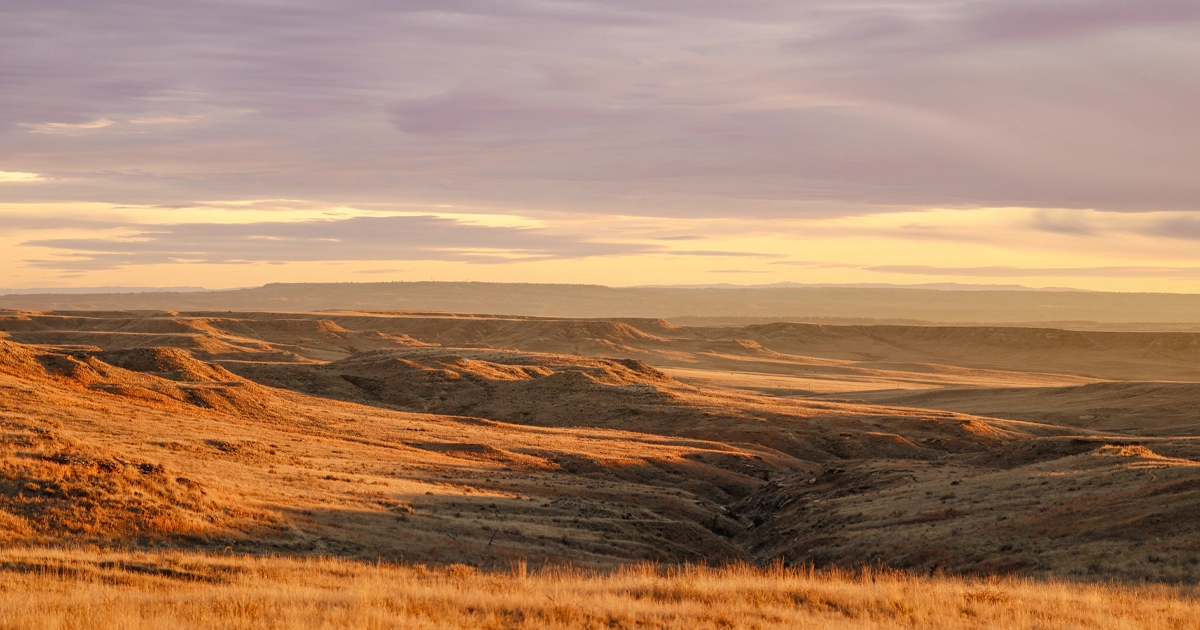
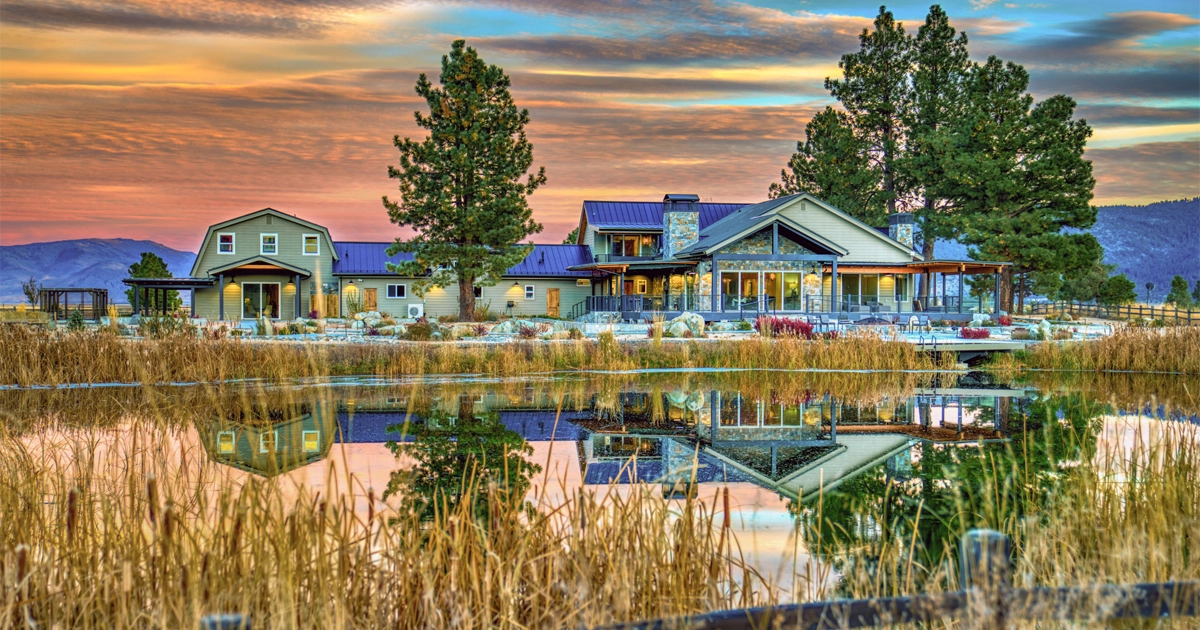
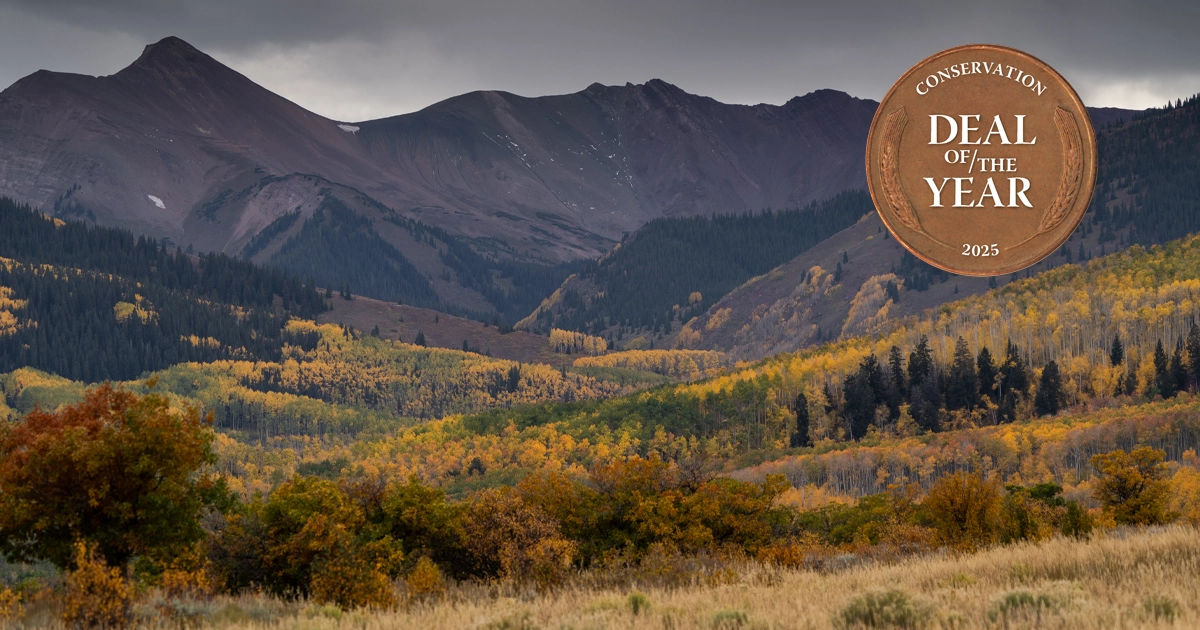
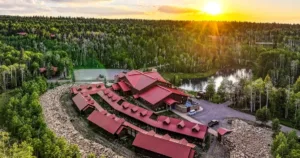
One of the last remaining large parcels near Aspen, the 838 acres that comprise Craig Ranch are a Pitkin County landmark and feature diverse ecosystems that range from a mile of pristine frontage on both sides of Woody Creek to sub-alpine zones at 10,000 feet.

$43 million
(970) 928-7100
www.ranchland.com

Power Struggle

Trinchera Peak

Louis Bacon fends off utility companies as they try to build transmission lines across his Colorado ranch. He also adds North Carolina’s Orton Plantation to his portfolio.

In 2007, London-based hedge fund manager Louis Bacon claimed his place on The Land Report 100 when he paid the heirs of Malcolm Forbes $175 million for Southern Colorado’s Trinchera Ranch. The 171,400-acre property is a haven of biodiversity and includes three of Colorado’s majestic Fourteeners. In the three short years since, Bacon has been recognized as a keen steward of the land; he’s even been singled out by Colorado’s Division of Wildlife for his support in their management of several species.

Not surprisingly, Bacon opposes Xcel Energy and Tri-State Generation and Transmission Association’s proposed $180 million transmission line project across his ranch. “Having helped many others in their fights against outside, profitoriented polluters, I couldn’t shirk this battle when I know there is so much at stake for the San Luis Valley residents, the range, the environment, the animals, and for all of Colorado,” he told The Denver Post via email.

Bacon enjoyed a well-established reputation as a land steward prior to buying Trinchera. He has put conservation easements on several trophy properties, including the Sound of Music Ranch on Wilson Mesa outside of Telluride, Cow Neck Farm in the Hamptons, and Robins Island in Peconic Bay at the eastern end of Long Island.

In November, the Raleigh native added another signature property to his portfolio when he closed on North Carolina’s historic Orton Plantation, a colonial estate that was originally owned by an ancestor named Roger Moore. The 8,300-acre landmark had been owned by the Sprunt family since 1884 and is crowned by the last remaining pre-Civil War manor house on the Lower Cape Fear. (The grand structure was spared by Union forces, who used it as a military hospital.) According to the Wilmington Star News, revenue stamps associated with the deeds put the sale price of the Brunswick County estate at $45 million.

Land Report 100: William Noble Lane II

William Noble Lane II

Bill Lane believed in taking the “steeper path to the farther goal.” A visionary with an independent spirit, Lane’s love of the land and the Western lifestyle led him to resurrect New Mexico’s legendary Bell Ranch and return it to its former grandeur. The Bell and Lane’s other significant landholding, 7,600-acre Eldon Farms in rural Rappahannock County, Virginia, have been enjoyed by generations of the Lane family and have also served the public by preserving two beautiful and historic natural resources.
Lane’s road to the Bell Ranch began in 1947. A naval aviator during World War II, Lane, his brother, and a close friend made a modest investment in a struggling manufacturing company with sales of $250,000 and 20 employees. Under his leadership, General Binding Corporation grew into an industry giant. By 1967, the company, which by then had gone public, operated 17 plants around the world with offices in more than 50 countries and sales in excess of $20 million.
But business wasn’t Lane’s only strong suit. The Milwaukee-raised mogul possessed an uncanny ability to identify one-of-a-kind properties. His first major foray was in Virginia’s Piedmont Country. In the early 1960s, he discreetly acquired farm after farm in the heart of the Blue Ridge Mountains: Rappahannock, Culpeper, and Madison counties. Through more than 40 purchases, he assembled almost 9,300 contiguous acres. Devoted primarily to cattle as well as orchard and row crops, Eldon Farms evolved into one of Virginia’s largest private land holdings.
In 1969, Lane’s search for a sprawling spread led him to Northern New Mexico and the iconic Bell Ranch 150 miles east of Santa Fe. The Bell’s 130,855-acre headquarters had been the keystone of the historic Pablo Montoya Land Grant, a massive 655,468-acre holding whose storied past dated back to 1824. When Lane purchased the tract in 1970, it was the largest sale in the Southwest in decades. Lane made clear his intention to “keep the ranch running like it has been in the past—a real working ranch for the production of fine cattle.” The Bell Ranch became his passion, and, within a few years, he had increased its size to over 290,000 acres, almost half the size of the original Montoya grant.
Bill Lane’s ability to start small but think big was echoed in many aspects of his life, including his business career and his land holdings. Beginning with Eldon Farms and subsequently on the Bell Ranch, his wisdom in selecting properties with enduring value is even more apparent today than when he acquired them 40 and 50 years ago—a testament to his love of land.

Bill Lane believed in taking the “steeper path to the farther goal.” A visionary with an independent spirit, Lane’s love of the land and the Western lifestyle led him to resurrect New Mexico’s legendary Bell Ranch and return it to its former grandeur. The Bell and Lane’s other significant landholding, 7,600-acre Eldon Farms in rural Rappahannock County, Virginia, have been enjoyed by generations of the Lane family and have also served the public by preserving two beautiful and historic natural resources.

Lane’s road to the Bell Ranch began in 1947. A naval aviator during World War II, Lane, his brother, and a close friend made a modest investment in a struggling manufacturing company with sales of $250,000 and 20 employees. Under his leadership, General Binding Corporation grew into an industry giant. By 1967, the company, which by then had gone public, operated 17 plants around the world with offices in more than 50 countries and sales in excess of $20 million.

But business wasn’t Lane’s only strong suit. The Milwaukee-raised mogul possessed an uncanny ability to identify one-of-a-kind properties. His first major foray was in Virginia’s Piedmont Country. In the early 1960s, he discreetly acquired farm after farm in the heart of the Blue Ridge Mountains: Rappahannock, Culpeper, and Madison counties. Through more than 40 purchases, he assembled almost 9,300 contiguous acres. Devoted primarily to cattle as well as orchard and row crops, Eldon Farms evolved into one of Virginia’s largest private land holdings.

In 1969, Lane’s search for a sprawling spread led him to Northern New Mexico and the iconic Bell Ranch 150 miles east of Santa Fe. The Bell’s 130,855-acre headquarters had been the keystone of the historic Pablo Montoya Land Grant, a massive 655,468-acre holding whose storied past dated back to 1824. When Lane purchased the tract in 1970, it was the largest sale in the Southwest in decades. Lane made clear his intention to “keep the ranch running like it has been in the past—a real working ranch for the production of fine cattle.” The Bell Ranch became his passion, and, within a few years, he had increased its size to over 290,000 acres, almost half the size of the original Montoya grant.

Bill Lane’s ability to start small but think big was echoed in many aspects of his life, including his business career and his land holdings. Beginning with Eldon Farms and subsequently on the Bell Ranch, his wisdom in selecting properties with enduring value is even more apparent today than when he acquired them 40 and 50 years ago—a testament to his love of land.

America’s Best Brokerages: Harrigan Land Company

Hunter Harrigan

Dave and Hunter Harrigan (pictured here) are the father-and-son team who run Harrigan Land Company. Based in Colorado, the two cover a far-ranging territory that includes Wyoming, Utah, New Mexico, and Oklahoma.

Last week The Land Report caught up with Harrigans en route from their Colorado headquarters to Southwest New Mexico, where they have the listing on the $25 million Southern Cross Ranch, one of the finest elk hunting properties in the Lower 48.

“We’ve been real lucky these last few years. We specialize in elk hunting. That’s what we enjoy doing. That and fly-fishing. We only list ranches that we like, ones with big bulls and trout fisheries,” Hunter says.

A recent trend that Dave singles out is the focus by buyers on large parcels at low per-acre prices. “When you start putting big elk into the picture, if the price per acre seems reasonable, you get bigger bang for your buck. Plus, it’s a great place for people to park some money,” he says.

Hunter concurs. “Larger recreational ranches at a low price-per-acre is the trend we’re seeing. Like the Mangas Ranch. We just closed on it – 12,000 deeded and 60,000 leased – and it’s right next to the Southern Cross in Southwest New Mexico.

2010 Sales: < $50 Million

What Attracts Clients:“We deal only in larger fly-fishing and elk-hunting properties,” says Hunter.

Market Observation: “We’ve seen buyers looking for somewhere to park their money and ride the storm out.”

Harrigan Land Company
www.harriganland.com
(800) 524-1818

State of Georgia Acquires 10,015 Acres

Forest land
In December, the Georgia State Properties Commission unanimously approved the acquisition of 10,015 acres of land in Houston County for $28.7 million from Oaky Woods Properties LLC. The Middle Georgia acreage is part of 16,000 acres in Oaky Woods west of the Ocmulgee River already under lease by the state.

At $2,865+ per acre, the acquisition cost is almost double the property’s price in 2004, which is when the State of Georgia declined the opportunity to acquire it previously.

For Sale: Texas’s Jubilee Ranch

Jubilee Ranch

In addition to its many improvements, this Bosque County ranch is a short drive to Dallas (2 hours), Fort Worth (90 minutes), and Austin (two hours). Numerous structures can be found on its 1,045 acres, including a custom 6,500-square-foot main house, an adjacent guest house that boasts more than 3,000 square feet, horse barns, and a historic Norwegian settler house.

$5.7 million
(254) 675-3818
United Country Bosque Properties

Indiana Farmland Skyrockets in Q4

Indiana Farmland

A combination of global and regional factors, including increased demand for grain, falling yields, and rising commodity prices, propelled the value of top-tier Indiana farmland as much as 25 percent in the final quarter of 2010.

The usual rate? Over the last 25 years, Indiana farmland values have appreciated 5.4% annually. As 2010 came to a close, that number doubled and in some cases more than tripled.

“It’s just been astonishing,” farm manager Steve Slonaker told The Indianapolis Star. “The fourth quarter was the biggest increase I’ve ever seen in farmland value,” said Slonaker, who also brokers for Schrader Real Estate & Auction Co.

Read the entire story HERE.

Land Report Top Ten – February 2011

Rancho Dos Pueblos

From the Lone Star State to Hawaii and the Atlantic to the Pacific, here are America’s priciest properties, led by $90 million Rancho Dos Pueblos, pictured here, which is listed by Kerry Mormann.

1. Rancho Dos Pueblos: $90 million
This impressive oceanfront parcel is on the market for the first time in three decades. Spanning 2,175 acres just west of Santa Barbara, California, it’s one of the largest remaining ranches along the breathtaking Gaviota Coast. The 2,000 northern acres are available separately for $19 million. Kerry Mormann & Associates has the listing.

2. Aspen Valley Ranch: $59 million
Billed as the largest ranch near Aspen in the Roaring Fork Valley, this ranch boasts senior water rights as well as over 800 acres and is located just 10 minutes from the Aspen airport. Joshua Saslove of Joshua & Co. has the listing.

3. Robert Taylor Ranch: $56 million
112 acres in Los Angeles’s tony Brentwood enclave. The expansive ranch house, which was designed by Robert Byrd, features 17 bedrooms and 17 bathrooms. Joyce Rey of Coldwell Banker Previews International has the listing.

4. Hana Ranch: $55 million
This 4,500-acre working ranch on eastern Maui surrounds the town of Hana. The property boasts two miles of Pacific oceanfront and rises 2,200 feet up the slopes of majestic Haleakala. Dan Omer of Island Sotheby’s International Realty has the listing.

4. Rockpile Ranch: $55 million
At the Rockpile Ranch, the Old West and cutting-edge range management blend seamlessly. For only the third time in over a century, this 55,374-acre cattle ranch in the Davis Mountains of Far West Texas has come on the market. Since 1992, the Rockpile has been owned by McCoy Remme Ranches (No. 51 on the 2010 Land Report 100). James King of King Land and Water is the listing agent.

6. Villa Montana: $49 million
Piecing together 500 acres in California’s wine country is an achievement in itself, one that only a pro such as Joe Montana could pull off. Included on the Hall of Famer’s estate are an equestrian center, a full-sized basketball court, a working olive farm, and a 9,700-square-foot Tuscan-inspired residence. Avram Goldman of Pacific Union International has the listing.

7. Flying Dog Ranch: $46 million
This Aspen landmark sits on 245 acres that include nearly a mile of Collins Creek and Woody Creek. In addition, the Flying Dog has a great neighbor: the White River National Forest, whose two million acres feature some of Colorado’s top fishing and hunting. Lynne Kirchner of Amoré Realty has the listing.

8. Dana Ranch: $45 million
Over the last 95 years, this landmark holding has had just two owners. The Dana Ranch has won numerous conservation awards. The ranch supports 3,000 animal units on 59,000 total acres (45,000 deeded plus 14,000 acres of captive State leased lands). The profitable cattle operation also boasts extraordinary wildlife and fishery resources. Listed by Dave Johnson with Hall and Hall.

8. Tyndal Point: $45 million
55 acres at the east end of Long Island feature 3,000 feet of shoreline views as well as several residences, a deepwater dock, and an orchard. Scott Strough of Strough Real Estate Associates shares the listing with Gary DePersia of The Corcoran Group.

10. Craig Ranch: $43 million
This 838-acre ranch sits 20 minutes from Aspen, offers stunning views of the Elk Range, and features one mile of frontage on both sides of Woody Creek. Co-marketed by Mason Morse Ranch Company and Mason Morse Real Estate’s Aspen office.

America’s Best Brokerages: Hall and Hall

February 15, 2011 by  
Filed under 2010 Winter, Feature, Field Reporters

Hall and Hall

Since 1946, Hall and Hall has done it all: mortgages, appraisals, and now auctions through offices in Montana, Wyoming, Idaho, Colorado, Texas, and Kansas. Its unique brokerage structure encourages a total team approach by sharing profits among all 17 partners when a sale closes. Chairman Doug Hall (left) and CEO Jim Taylor (right) believe this profit-sharing strategy is one of the many attributes that enables Hall and Hall to stand out in such a competitive market.

2010 Sales: > $100 Million

Market Observations: “The market for ranches with recreational and scenic overtones was very slow for the first half of 2010, but it seems to have picked up substantially in the last six months. This is particularly true at the high end of the market: properties priced from $10 million to $45 million,” says CEO Jim Taylor. “On the price front, sellers and buyers are more easily able to find common ground than what we have seen over the last couple of years. Sellers have accepted the new reality that prices are going to settle significantly below 2005 levels for some time to come. Buyers seem to be comfortable locking in their investments at that level, particularly on some of the legacy ranches,” Taylor adds.

2010 Standout: “Hall and Hall has always believed that investment quality rural land should be a recognized asset class for major investment portfolios. Clearly the rest of the world is beginning to come around to our way of thinking. It is fair to say that, unlike virtually every other asset class from stocks and bonds to rare art, rural real estate has suffered from lack of liquidity,” Taylor says. “It is our belief that we have reached a point where the auction process, which is used for every other class of investment asset, can be used successfully to render this asset class liquid. This is now possible because of advances in technology that allow bidders to view, analyze, and bid remotely. There is also a growing pool of potential bidders that include end users, individuals, hedge funds, pension funds, and private equity. “To that end, we are launching Hall and Hall Auctions. Scott Shuman, who ran auctions for Schrader/Westchester, has joined our partnership. His innovative and transparent methods will bring a higher level of liquidity to investment quality rural real estate and serve as a perfect complement to more traditional marketing methods,” he says.

Hall And Hall
www.hallhall.com
(406) 656-7500

Market Watch: Chesapeake Sells $2.16B Eagle Ford Stake

Chesapeake Oil Rig

The China National Offshore Oil Corporation (CNOOC) has purchased a 33.3% undivided interest in Chesapeake Energy’s 600,000 net oil and natural gas leasehold acres in the Eagle Ford Shale in South Texas. The deal was CNOOC’s first to close in the U.S. since its failed 2005 Unocal bid.

Deal terms included $1.08 billion in cash, plus an additional $40 million payment adjustment at closing. CNOOC has also agreed to fund 75% of Chesapeake’s share of drilling and completion costs up to $1.08 billion, which Chesapeake expects to occur by year-end 2012.

Chesapeake CEO Aubrey McClendon, who also is a Land Report 100er, said , “We are very pleased to have partnered with CNOOC Limited in completing our fifth industry shale development transaction. We look forward to accelerating the development of this large domestic oil and natural gas resource, resulting in a reduction of our country’s oil imports over time, the creation of thousands of high-paying jobs in the U.S. and the payment of very significant local, state and federal taxes.”

Next Page »