
Landmark Sale of 310,000 Acres Completed
January 26, 2011 by Eric OKeefe
Filed under Montana, Regional News, Timber, West
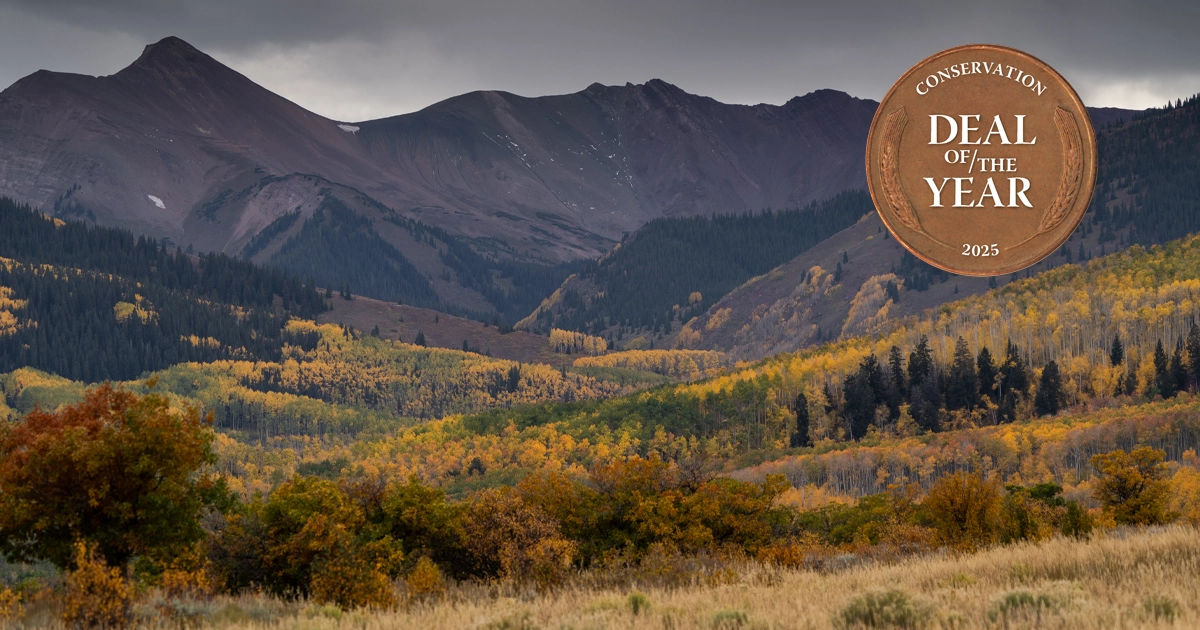
In one of the largest conservation purchases to date, Plum Creek (PCL) completed the sale of a huge swath of Western Montana to the U.S. Forest Service and Montana’s Fish, Wildlife and Parks Department. Swiss philanthropist Hansjorg Wyss jump-started the deal with a $25 million donation that he subsequently upped to $35 million. Other funding sources included the State of Montana, which contributed $65 million, and the Department of Agriculture, whose $250 million expenditure was arranged by Sen. Max Baucus.
Sold! Montana’s N Bar Ranch
January 26, 2011 by Eric OKeefe
Filed under Cattle, Conservation, Eric OKeefe, Feature, Hunting, West
The Wall Street Journal reports that Land Report 100er Tom Siebel has sold Montana’s iconic N Bar Ranch, 62,091 contiguous acres in the Snowy Mountains. The Journal reports that the buyer was a Texas limited partnership principally owned by Dan and Farris Wilks, co-founders of Frac Tech, a Texas-based oil-field drilling-services firm.
Located approximately 90 miles north of Billings and 35 miles southeast of Lewiston, the N Bar totals 62,091 acres, including 51,409 deeded, 4,875 BLM leased, 1,920 Montana leased, and 3,887 privately leased. Joel Leadbetter at Hall and Hall had the $45 million listing; final sales numbers were not disclosed.
The historic N Bar has an imposing legacy and predates Montana statehood. Its headquarters compound, which was established in 1885, is listed on the National Register of Historic Places. Under Seibel’s stewardship, the N Bar made balancing cattle operations with wildlife needs a top priority. According to the ranch website:
With respect to livestock, the N Bar Ranch has retained the best genetics of the N Bar-registered Angus lines. Current management has transformed the ranch into a commercial cow/calf/yearling operation running 1,000 cows with the intention of carrying the calves over to yearlings. A conservative estimate of capacity—at 30 acres per animal unit—is more than 2,000 animals; however, in keeping with present management’s emphasis on maintaining top quality wildlife habitat, the ranch currently supports approximately 1,500 head of cattle.
Read more HERE.
Harry Patten Honored By Horatio Alger Association
January 25, 2011 by Land Report Editors
Filed under Developers, Feature, Recreation, Residential Property, Timber, Topics
“Let me tell you a story.”
It’s the signature line of real estate pioneer Harry Patten (shown here with much of the Patten clan). No matter if he’s addressing industry leaders, encouraging his companies’ managers, or explaining business fundamentals to school kids visiting the Patten Family Foundation’s Finance Park at the Junior Achievement World Huizenga Center, it’s the way Harry shares a lifetime of insights and experiences.
Effective storytelling is an art, a crucial means of conveying concepts and instilling purpose, and one of its greatest practitioners was the American author Horatio Alger, whose “rags to respectability” novels featured poor boys who made good through “pluck and luck.” Over a century ago, Alger published more than 100 of these stories, and their impact was such that in 1947 the Horatio Alger Association of Distinguished Americans was formed to build on his legacy. To date, the association has awarded $87 million in scholarships to at-risk students who were determined to earn a college degree. It also recognizes leaders who, like Alger’s heroes, have risen to great heights from humble origins “through honesty, hard work, self-reliance, and perseverance.” Ray Kroc has been honored by the Horatio Alger Association. So have Bob Hope, T. Boone Pickens, Oprah Winfrey, and Tom Brokaw. In April, this distinguished group will be joined by 11 new members, including Leonardo DiCaprio, Michael Bloomberg, and Harry Patten.

Harry Patten
Harry’s own story took shape five decades ago when he single-handedly pioneered the development, marketing, and sale of rural land. To hear him tell this tale is to marvel at the characters he has befriended throughout his career, individuals such as the brilliant mutual fund manager Sir John Templeton, whose investment acumen helped propel Patten Corp.’s 1985 IPO and made it the third-best percentage gainer on the New York Stock Exchange the following year. Templeton’s investment in Patten Corp. and his subsequent interest in owning land became the springboard for a valued friendship. The memory of another key ally, a former board member who played a crucial role in Patten Corp.’s success, brings to mind the current real estate market. “One of the reasons we’re very, very aggressive about buying land right now is that it reminds me of the opportunities in Texas in the 1980s. It was John Connally who opened up my eyes to the great values there. My son, Michael, and I went down and looked at a lot of real estate and a lot of ranches and eventually purchased our first Texas ranch from Gov. Connally. Back then was a great buying opportunity, and today’s market has the potential to be just as good. Or even better,” Harry says.
The Patten family’s ties to land date back to the Great Land Rush of the 1890s. The family homesteaded in North Dakota, but harsh winters and hostile Indians forced them back east. But Harry Patten Sr. had caught the land bug. In 1899, he paid $20 for his first parcel: 300 acres in Eastern Massachusetts. “My dad was a trader who bought and sold land, cattle, horses, timber. I was born being in business. He drilled it into me,” Harry says. This training led Harry to single out two factors: an endless stream of Bostonians and New Yorkers who wanted to own a few acres, and rural New Englanders who had their life savings tied up in farms but didn’t know the first thing about marketing. In stepped Harry Patten.
When Harry took his company public in conjunction with Drexel Lambert in 1985, annual sales rocketed from $18 million to $33 million and then $76 million. By 1988, revenues eclipsed the $100-million-mark. The Wall Street Journal described the rise of Harry Patten in a front page profile that ran above the fold:
“Sometimes it’s a place in the woods, a few hours’ drive from Boston and New York, where yuppies can rough it in their L.L. Bean boots. Other times it’s a pristine view of a sparkling Maine lake, a panorama of Vermont’s Green Mountains or a plot outside a picture-post-card Adirondack village. No matter. What’s important is that ‘people develop an emotional attachment to a piece of land,’ says Mr. Patten. ‘That makes it easy to sell.’”
Patten Corp. (now the publicly-traded Bluegreen Corporation) and National Land Partners/National Timber Partners, Harry’s current companies, have generated billions in revenues thanks to sold-out developments in 48 states and several Canadian provinces. But many current opportunities have little to do with the Pattens’ original business model. Nowadays, Harry and Michael, along with grandsons Brian and John Patten, sift through opportunities forwarded by bankers, other lenders, and even former competitors. While bankruptcy protection has become the refuge of some companies, the Pattens are working with hedge funds, pension funds, and international investors. Their lengthy track record and strong financial statements affirm their industry-leading status.
A new chapter in Harry’s story is titled the Patten Family Foundation. Harry’s philanthropy supports organizations that focus on health, education, and financial literacy. A particular passion of his has been educating children about the free enterprise system through Junior Achievement. The foundation funded Finance Park at the Junior Achievement World Huizenga Center, which opened in 2009 and now educates over 40,000 students per year. Harry is also a long-term supporter of Massachusetts General Hospital, and his foundation remains actively involved as the hospital expands its facilities and conducts major medical research. Recently he was asked to serve on the President’s Council at Massachusetts General. With his daughter Andrea, he co-wrote What Kids Need to Succeed, a book that outlines the four foundations of adult achievement: perseverance, hard work, discipline, and giving back to one’s community. What Kids Need to Succeed has been translated in four languages.
But Harry has no time to slow down. His deal-making acumen recognizes enormous opportunities in the current market for his family-owned businesses. An ever increasing number of entities seek to partner with him in new and promising ventures. And the success of his philanthropic efforts only makes him want to give more. “There are too many opportunities out there for me to even think about retiring,” he says.
Then he quickly adds, “Which reminds me … let me tell you a story.”
Energen Moves Into the Permian Basin
January 18, 2011 by Eric OKeefe
Filed under Minerals, Regional News, South, Texas
Birmingham-based Energen Corp. (EGN) announced the purchase of more than 40,000 acres in West Texas from SandRidge Energy (SD) in Loving, Reeves, Ward, and Winkler counties. Energen says it has identified 62 potential drilling sites in the 3rd Bone Spring play. At a vertical depth of 10,500 to 11,500 feet, the typical Bone Spring well has estimated ultimate recovery of 400,000 to 500,000 barrels of oil equivalent. The company will pay $110 million plus standard closing adjustments. Energen is budgeting $7.5 million per well for drilling and completion costs.
New York’s Deep Hollow Ranch Sells for $11 Million
January 18, 2011 by Eric OKeefe
Filed under New York, Northeast, Regional News
The country’s oldest working cattle ranch was bought by J. Crew CEO Millard Drexler. The 17.8-acre tract at the easternmost end of Long Island is steeped in history. In addition to its legacy as a cattle ranch, it served as quarantine site for Col. Theodore Roosevelt and his 1st United States Volunteer Cavalry (aka the Rough Riders) after their victorious charge up San Juan Hill. Paul Brennan of Prudential Douglas Elliman Real Estate represented the sellers, Gardner and Diane Leaver.
Iowa Farmland Moves Up 13%
January 18, 2011 by Eric OKeefe
Filed under Farming, Midwest, Regional News
The Chicago Fed reports that farmland values rose 10% in the Seventh Federal Reserve District, which covers all of Iowa, the southern two-thirds of Wisconsin, the northern half of Illinois, the northern two-thirds of Indiana and the southern three-fourths of Michigan. The biggest year-over-year increase was registered in Iowa, where values were up 13% versus 2009, due in part to the limited supply of top-tier property and strong demand for American crops.
Land Report January 2011 Newsletter
January 3, 2011 by Eric OKeefe
Filed under Auctions, Cattle, Conservation, Energy, Newsletter, Public Land
2011 has shot out of the gate in a hurry. In the last 60 days, we’ve tracked in excess of $100 million in high-profile closings. (Remember 2009? As I recall the figure about this time two years ago was closer to $100,000.) Easements, auctions, sales – the year is off to a rousing start and some of the more notable transactions, including the sale of the N Bar Ranch, are featured in our January Land Report newsletter.
Thanks to rising prices, inflationary fears, and a strong pipeline, expect this pace to continue into the spring. For more up to the minute reports, follow The Magazine of the American Landowner on Facebook and on Twitter.
P.S. Our award-winning quarterly magazine is available in a print version by subscription.