


Market Report: New England Timberland

Regional Spotlight: New England Timberland
 
Looking to get into the New England timberland market? Check out out our market report inside. Read more

Idaho Ranchers Challenge Taylor Grazing Act

BY JOSEPH GUINTO
PUBLISHED NOVEMBER 2007

When the U.S. Supreme Court convened in October, the men (and woman) in black did not discuss landowner water rights. And for a pair of longtime Idaho ranchers—and perhaps other landowners—no news might mean bad news.

For the moment, the court has made no decision on whether to take up the case of Joyce Livestock vs. the United States. Earlier this year, Joyce and LU Ranching won a ruling against the federal government in Idaho’s Supreme Court in a potentially precedent-setting case of grazing rights.

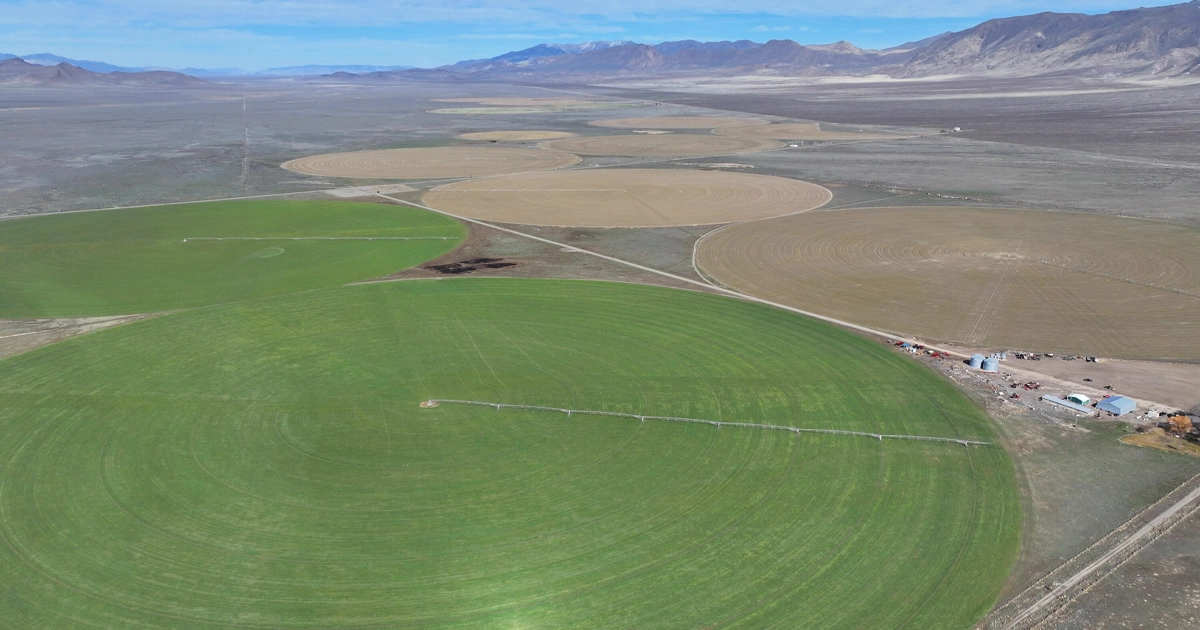
Ranchers have long been subject to the rules set by the Bureau of Land Management under the 1934 Taylor Grazing Act. That act allows federal officials to set the terms under which ranchers can use public lands, including whether and how much water can be used.

But in 2005, Joyce and LU challenged that law as it applied to Idaho’s Snake River Basin. They argued that because they had operated in the area for more than 100 years—long before the Taylor Act—they had established water rights that the government could not remove.

By February of this year, their case reached the Idaho Supreme Court, which ruled in favor of the livestock firms. But the court did not allow the companies’ claim to have the U.S. government pay their $1.3 million court fees. Idaho’s Supreme Court said the government did not act frivolously. The ranchers argued that the Equal Access to Justice Act—a law intended to prevent the government from running roughshod over small businesses and individuals by prolonging expensive litigation—entitled them to court costs. But the Idaho court said it had no jurisdiction to rule on that claim, leaving the U.S. Supreme Court as the last resort.

With the court’s docket already set until next year, precedent-watchers will have to wait on a final outcome.

BLM Makes Push to Buy Western Land

BY JOSEPH GUINTO
PUBLISHED NOVEMBER 2007

Under a federal law, the BLM, an arm of the Department of the Interior, has begun buying private properties that carve into federal wildlife refuges, national parks, national forests, and their ilk, making those lands difficult to access or manage. Though the law—the Federal Land Transaction Facilitation Act—was passed in 2000, federal agencies had not used it to make a land acquisition until this fall. In September, the BLM, working with the Forest Service, the National Park Service, and the Fish and Wildlife Service, offered $18 million to snap up 19 parcels of private land in seven states. Overall, some 9,000 acres of land were acquired in New Mexico, Idaho, Arizona, Colorado, Wyoming, Oregon, and California.

The last of those states provides a good example of the law’s intent. The BLM and other agencies spent $850,000 to buy 321 acres near the Coachella Valley Fringe-toed Lizard Preserve, a tongue-twisting federal wildlife refuge near Palm Springs. The preserve features both sand dunes and rocky hills and is home to the threatened fringe-toed lizard, which is found nowhere else in the world. The reason the BLM wanted the land was that it separated the preserve from the Joshua Tree National Park.

The equally tongue-twisting Federal Land Transaction Facilitation Act can also work the other way around. In cases where federal lands are isolated by surrounding private properties, making them of little value to the government, the BLM can offer those parcels for sale. It can also sell off lands that have clear residential or commercial worth. The BLM has made $95 million from such sales so far.

Most of that money is required to go to further land acquisitions, like the purchases the BLM made in September. “These purchases promote conservation while helping ensure efficient and effective public lands management,” said Lynn Scarlett, deputy secretary of the U.S. Department of the Interior, during the dedication ceremony for the Coachella Valley property.

And if you’re wondering: No, this is not eminent domain. The act stipulates that government agencies only buy property from willing sellers.

Texas at the Vortex of Wind Power Debate

November 1, 2007 by Grant Gannon  
Filed under November 2007, Regional News, Southwest

El Capitan stands as a stone sentinel, a jagged limestone monolith that buttresses the southern flank of the tallest mountain range in Texas. It is imperious and daunting, the most visible landmark for hundreds of miles. Except, that is, from where I’m standing. Here, on a remote ranch in the Delaware Mountains, the huge massif is obscured by a cluster of Zond wind turbines, 38 of them, each about 200 feet high. Read more

America’s Aristocrats: Gardiner’s Island

Fly into JFK, look toward the setting sun, and you see Manhattan, the city that never sleeps, the Big Apple. Turn the other direction, however, and drive two hours east—past the scenic Southampton Golf Club and Napeague State Park—and you’ll take in a much different vista: a land where time stands still. Read more